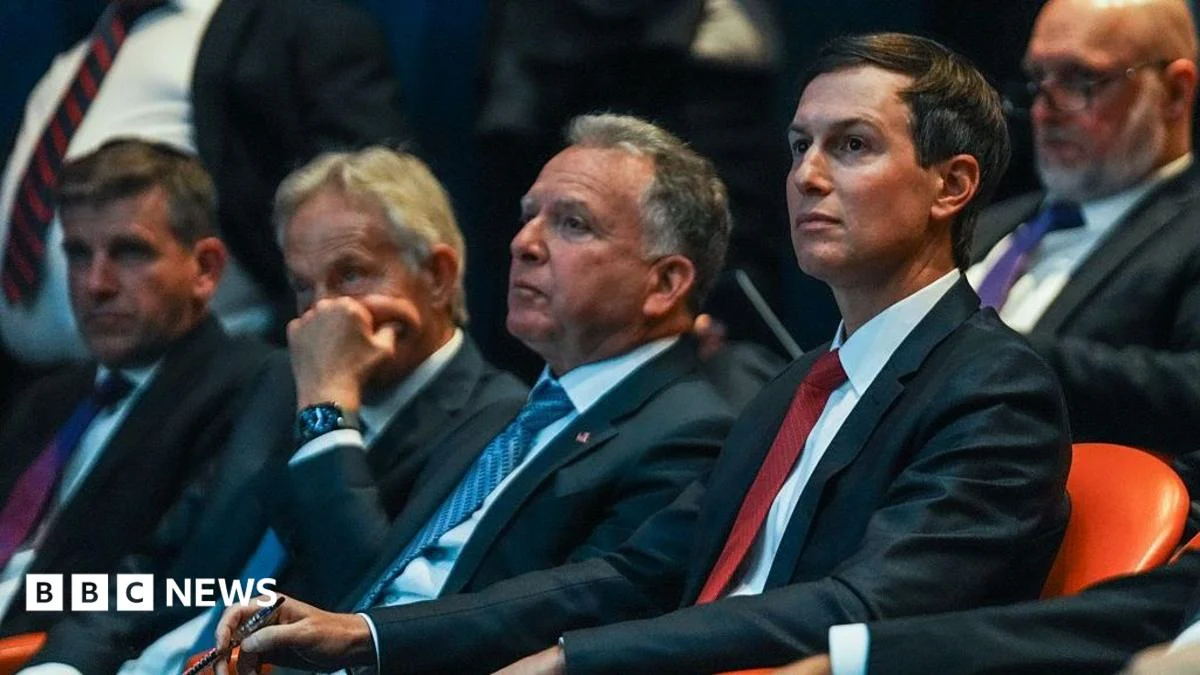
Trump’s Board of Peace has announced a $2.45 billion plan aimed at beginning the reconstruction of Gaza, BBC News reported. The figure was revealed during a meeting of the group’s board held on the sidelines of the United Nations General Assembly in New York.
The announcement marks one of the most high-profile proposed funding commitments for Gaza’s post-conflict rebuilding efforts, though details about implementation, timeline, and participating organizations remain undisclosed in the available reporting. The Gaza reconstruction plan was introduced without additional specifics regarding scope, phases, or oversight mechanisms.
Key Facts
- A $2.45bn Gaza reconstruction plan was announced by Trump’s Board of Peace.
- The announcement occurred during a board meeting at the UN General Assembly in New York.
- The meeting took place on the sidelines of the annual UN gathering.
- The plan targets the beginning of reconstruction efforts in Gaza.
- BBC News was the source reporting the announcement and funding figure.
What happens next?
The rollout of the proposed Gaza reconstruction plan now depends on how member states and international donors respond to the $2.45 billion figure. Because the board that announced the plan operates outside traditional UN channels, questions remain about whether existing aid frameworks can absorb or coordinate this level of funding. No timeline for fund disbursement or project approval has been published, leaving stakeholders uncertain about when—or whether—the commitment will translate into physical rebuilding work on the ground.
Historically, large-scale Gaza reconstruction efforts have required multilateral backing and security guarantees. Past initiatives have faced delays due to funding shortfalls and access restrictions. Without clarification on how this board intends to distribute funds or collaborate with established humanitarian actors, observers say the practical path forward remains unclear.
Who is affected?
The proposed Gaza reconstruction plan would directly affect residents of the Gaza Strip, who have faced repeated cycles of infrastructure damage and limited access to basic services. International donors and aid organizations monitoring the situation will likely assess whether the announced funding aligns with verified needs on the ground. Regional governments involved in past reconstruction efforts may also be expected to engage with the initiative, depending on how coordination unfolds.
Since no specific implementing partners or governance structures have been named, uncertainty remains about how affected communities will participate in planning decisions. The absence of named officials or detailed program design makes it difficult to evaluate the plan’s potential reach or accountability measures.
How did we get here?
The announcement emerged during the 79th United Nations General Assembly, an annual forum where world leaders often unveil policy proposals and funding commitments. By choosing to present the plan through Trump’s Board of Peace rather than conventional diplomatic or UN mechanisms, the initiative highlights alternative channels for shaping international narratives around Gaza’s future. BBC News coverage focused primarily on the funding figure and venue, without delving into the board’s mandate or membership.
Past Gaza reconstruction efforts—such as those following the 2008–2009 and 2014 conflicts—were coordinated through UN agencies and donor conferences. This latest proposal introduces a new actor into that landscape, raising questions about alignment with existing frameworks without providing comparative context in the source material.
What We Know — and What We Don’t
Verified by the source:
- The board announced a $2.45bn reconstruction funding figure.
- The announcement took place during a board meeting at the UN General Assembly.
- BBC News reported the story.
Still unconfirmed:
- No details on implementation, timeline, or oversight.
- No named officials or partner organizations identified.
- No confirmation of disbursement mechanism or governance structure.
- No independent verification of board authority or funding source.
This development sits within the broader context of ongoing global attention on Gaza, where reconstruction discussions frequently intersect with diplomatic negotiations and humanitarian appeals. While the Gaza reconstruction plan carries significant potential financial weight, its credibility and effectiveness will ultimately depend on transparency, coordination, and follow-through—elements not addressed in current reporting.
What to watch
Observers will be watching for further clarification from the board or its representatives regarding how the proposed Gaza reconstruction plan will be implemented. Additional reporting from independent sources or official documentation may help confirm key aspects of the initiative.