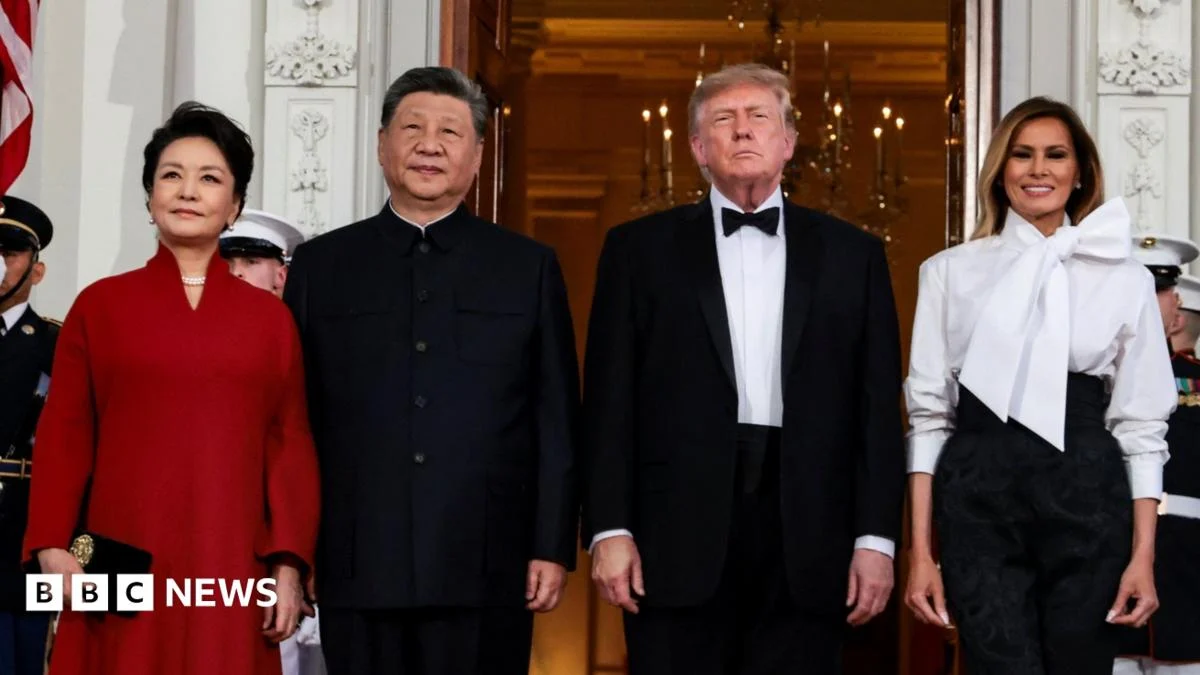
During Chinese President Xi Jinping’s first visit to Washington in over a decade, U.S. President Donald Trump extended a two-month truce on escalating tariffs, offering a temporary reprieve in the brewing trade conflict between the two nations. The day was marked by traditional diplomatic ceremony and formal exchanges, underscoring the significance of the meeting amid growing global concern over protectionist policies.
The tariff truce signals a potential pause in punitive measures that had threatened to disrupt international supply chains and strain economic ties across multiple sectors. Both sides acknowledged the need for continued dialogue to resolve lingering disagreements over trade practices and market access. While no final deal was announced, the gesture reflects a mutual interest in stabilizing a relationship that has become increasingly strained over intellectual property rights and regional security concerns.
Key Facts
- Xi’s first visit to Washington in a decade
- Display of pomp and pageantry
- Trump offered guest a two-month truce on tariff war
- Summary sourced from BBC News
Diplomatic Pageantry Sets Stage for Talks
The visit unfolded with ceremonial honors typical of high-level state diplomacy, highlighting the symbolic importance of President Xi’s presence in the U.S. capital. These formal welcomes often serve dual purposes: projecting respect and signaling openness to cooperation even as underlying disagreements persist.
A decade has passed since the last such visit, making this encounter particularly notable in an era defined by shifting alliances and economic nationalism. The elaborate arrangements reflect both nations’ recognition of their interconnected roles on the global stage—politically, economically, and strategically.
This backdrop of pomp and ceremony provided context for substantive negotiations behind closed doors. While public events capture headlines, the core of any breakthrough typically lies within private discussions where leaders weigh competing priorities without media scrutiny.
What Happens Next After the Truce?
The two-month window granted by President Trump allows for continued negotiations while halting immediate escalation of additional tariffs. During this period, teams from both governments are expected to engage in detailed discussions aimed at addressing core issues like technology transfer, market access, and intellectual property protections.
Historically, short-term truces have allowed space for deeper alignment—or exposed further fractures if progress stalls. With midterm elections approaching and economic indicators sensitive to trade dynamics, domestic pressures may influence negotiating positions in the coming weeks.
Amid uncertainty, businesses remain cautious, awaiting clearer signals about long-term policy direction. Whether this truce evolves into a lasting agreement or simply delays renewed friction depends largely on developments behind the negotiating table.
What We Know — and What We Don’t
Verified by the source:
- The event involved formal diplomatic displays during Xi’s visit to Washington
- The tariff truce lasted approximately two months
- The summary originated from BBC News reporting
Still unconfirmed:
- Exact duration or scope of specific trade concessions discussed
- Names of officials involved beyond the two presidents
- Specific terms of reference agreed upon during bilateral talks
Why It Matters
Trade tensions between major economies directly affect consumer prices, job markets, and investor confidence worldwide. This temporary tariff truce offers brief relief to industries exposed to cross-border commerce, but lasting stability hinges on whether negotiators can translate goodwill into concrete policy alignment.
For global readers reliant on affordable goods, stable employment, or predictable market conditions, the outcome carries tangible consequences extending far beyond political rhetoric.
What To Watch
Stakeholders should monitor developments in early 2019, when the truce expires, to see whether follow-up agreements emerge or if renewed tariff actions resume. Updates will likely appear through official channels and reputable news outlets including BBC News and other war-geopolitics sources.
Further clarity may also surface via statements from economy and markets analysts tracking trade flows and policy shifts.