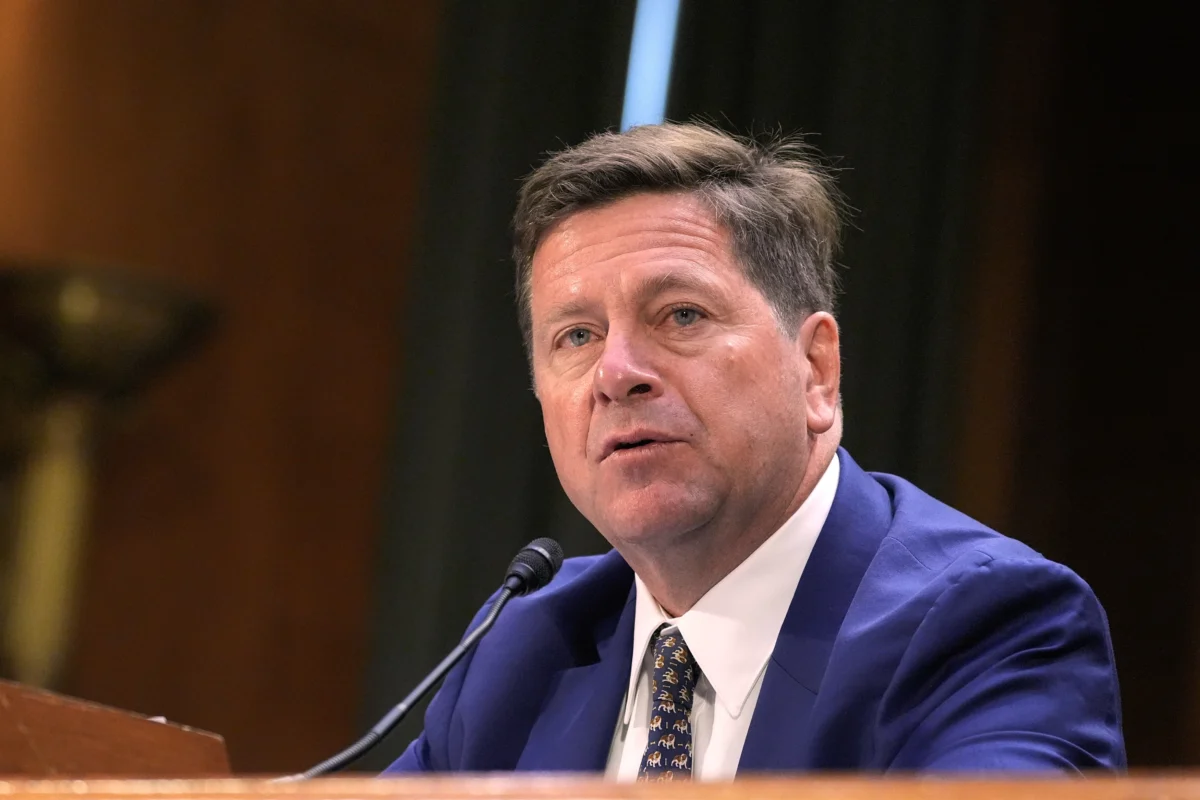
Trump Names National Intelligence Chief Jay Clayton as New AI Czar
President Trump has appointed national intelligence chief Jay Clayton as the new AI czar, tasking him with leading the White House’s newly formed ‘Super Intelligence Force.’ The unit will coordinate government engagement with artificial intelligence.
Clayton’s dual role overseeing both national intelligence and AI strategy raises questions about how responsibilities will be divided and whether the new office will reshape existing federal technology policy frameworks.
KEY FACTS
- Jay Clayton named as new AI czar.
- He will lead the White House’s Super Intelligence Force.
- The force will coordinate government engagement with artificial intelligence.
- President Trump made the announcement.
- Clayton remains national intelligence chief.
How Did We Get Here?
In recent years, artificial intelligence has become central to national security, economic planning, and public services. Governments worldwide are racing to establish dedicated oversight bodies. Trump’s creation of the Super Intelligence Force reflects a broader push to centralize AI leadership under one coordinator.
The appointment of Jay Clayton signals an effort to align intelligence capabilities with AI development. His background in both law and national security positions him at the intersection of policy and emerging technology.
Questions remain about how the Super Intelligence Force will interact with existing agencies like the National Institute of Standards and Technology or the Defense Advanced Research Projects Agency.
What Happens Next?
Details about the Super Intelligence Force’s structure, budget, and reporting lines have not yet been disclosed. Analysts expect more information during upcoming congressional hearings, where lawmakers may question how AI policies will integrate with current intelligence and defense operations.
The success of the initiative may depend on coordination between the private sector and federal agencies. Industry leaders are watching closely for guidance on standards, ethics, and regulatory frameworks.
For now, the focus remains on implementation and clarity around jurisdictional boundaries.
WHAT WE KNOW — AND WHAT WE DON’T
Verified by the source:
- President Trump named Jay Clayton as the new AI czar.
- Clayton leads the White House’s new Super Intelligence Force.
- The force coordinates government engagement with artificial intelligence.
- Clayton continues serving as national intelligence chief.
Still unconfirmed:
- The official start date of the Super Intelligence Force.
- The budget allocated to the new office.
- How responsibilities will be split between Clayton’s roles.
- Whether any legislation supports the force’s creation.
WHY IT MATTERS
This appointment marks a significant step in how the U.S. governs emerging technologies. As AI influences everything from healthcare to cybersecurity, centralized coordination could affect innovation timelines, privacy protections, and global competitiveness — making this a pivotal policy development for citizens and businesses alike. [Focus: AI regulation, national strategy]
WHAT TO WATCH
Members of Congress have signaled interest in reviewing the Super Intelligence Force during upcoming oversight sessions. Officials have not yet commented publicly on operational priorities.