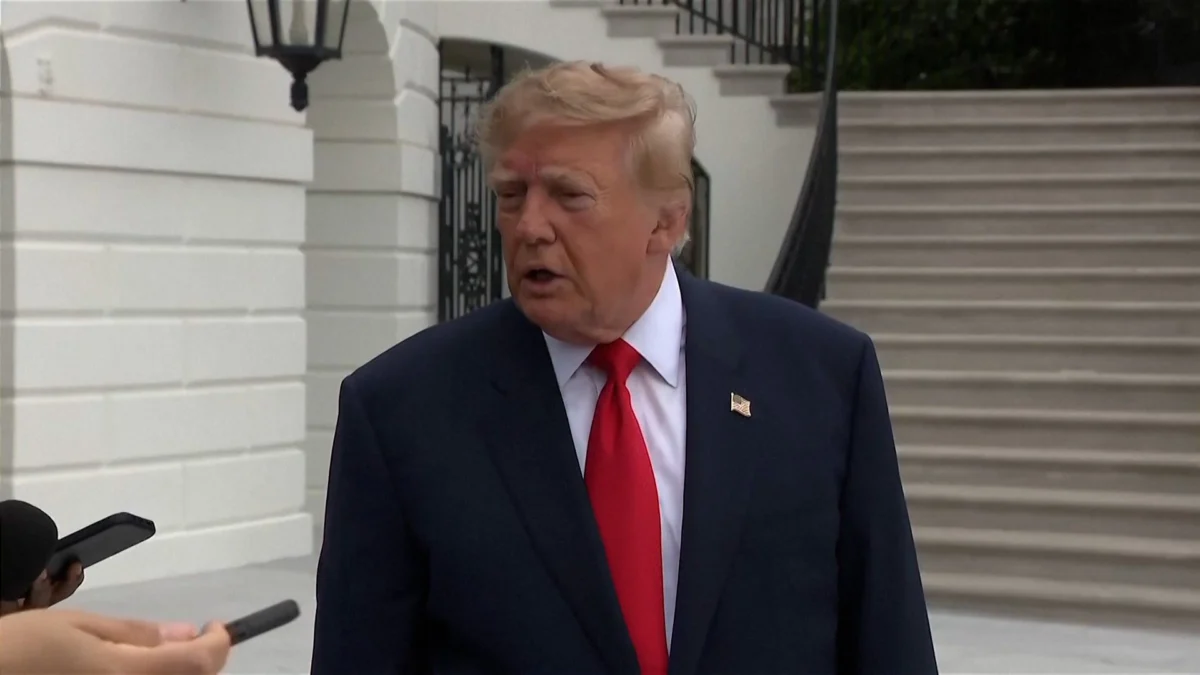
President Donald Trump said the United States may join Saudi-led strikes against Yemen’s Houthis, following a reported attack on a Riyadh airport. The statement marks a potential shift in U.S. involvement in the ongoing conflict in Yemen, where Saudi Arabia has been conducting military operations against Houthi forces for years. Trump’s comments came amid heightened tensions in the region, though no specific timeline or military details were provided at this time. The development raises questions about how increased U.S. participation might affect the already volatile situation in Yemen and broader Middle East dynamics.
Key Facts
- Trump said the U.S. “may” join Saudi strikes on Houthis.
- The strikes follow an attack on Riyadh airport.
- The Houthis are based in Yemen.
- No further details on U.S. involvement were given.
What Happens Next?
The extent of possible U.S. involvement remains unclear. While President Trump indicated that America could support Saudi actions, he did not specify whether this would involve direct military engagement, logistical assistance, or intelligence sharing. Regional analysts note that deeper U.S. involvement could draw Washington more significantly into a complex civil war that already involves multiple foreign actors. For now, no formal decision has been announced, and spokespeople for the White House or Pentagon have not released additional guidance on operational plans. Observers are watching closely for any official statements or congressional briefings that may outline future steps.
Who Is Affected?
The people most directly affected by any escalation include civilians in Yemen, who continue to face severe humanitarian crises amid years of conflict. The Houthis control large parts of northern Yemen and have been engaged in fighting with a Saudi-backed coalition led by Saudi Arabia and the UAE. Increased U.S. involvement risks widening the scope of hostilities, potentially leading to more casualties and displacement. Additionally, regional allies such as Iran, which supports the Houthis, may respond to perceived U.S. aggression. Meanwhile, domestic political pressure within the U.S. Congress could shape whether and how any new authorization for military action moves forward. International humanitarian organizations are also monitoring developments closely, particularly regarding their ability to deliver aid under worsening conditions.
How Did We Get Here?
Saudi Arabia initiated its military campaign in Yemen in 2015 aiming to restore the internationally recognized government after the Houthis seized parts of the country. Since then, the war has resulted in one of the world’s worst humanitarian disasters, with millions displaced and millions more facing famine-like conditions. In recent months, cross-border clashes and missile attacks have intensified, including incidents near major cities like Riyadh. This latest announcement by President Trump suggests that the U.S., previously cautious about deeper entanglement, may be considering a more active posture alongside its Gulf ally.
What We Know — and What We Don’t
Verified by the source:
- President Trump stated the U.S. may join Saudi strikes targeting Houthis.
- A Riyadh airport attack preceded the statement.
- Saudi Arabia leads ongoing military operations in Yemen.
- The Houthis are active participants in the Yemen conflict.
- No formal U.S. commitment or operational plan was disclosed.
Still unconfirmed:
- The nature or scale of potential U.S. involvement.
- Details surrounding the alleged Riyadh airport attack.
- Official responses from Yemeni factions or other regional powers.
Why It Matters
Whether the U.S. formally joins Saudi-led operations would mark a significant evolution in American foreign policy toward the Middle East, especially given past efforts to reduce direct military footprint in the region. Escalation could reshape alliances, trigger new waves of migration, and complicate global energy markets. It also underscores how quickly geopolitical flashpoints can shift when high-profile leaders signal openness to renewed intervention. Understanding these implications helps readers grasp not only what is happening today but also what stakes lie ahead for peace and stability across the globe.
This developing story will be updated as more information becomes available through verified reporting channels.
What To Watch
Critics warn that expanded participation without clear objectives exposes U.S. forces to greater risk while prolonging a bloody stalemate with no visible endgame. Congressional oversight committees have signaled intent to scrutinize any request for new war powers, citing precedent from prior interventions. Meanwhile, humanitarian groups fear worsening access restrictions for aid delivery if fighting escalates around key infrastructure zones. Public opinion polls show declining support among Americans for foreign entanglements, adding domestic pressure even before troops deploy. All eyes now turn to Washington for clarity on next steps.