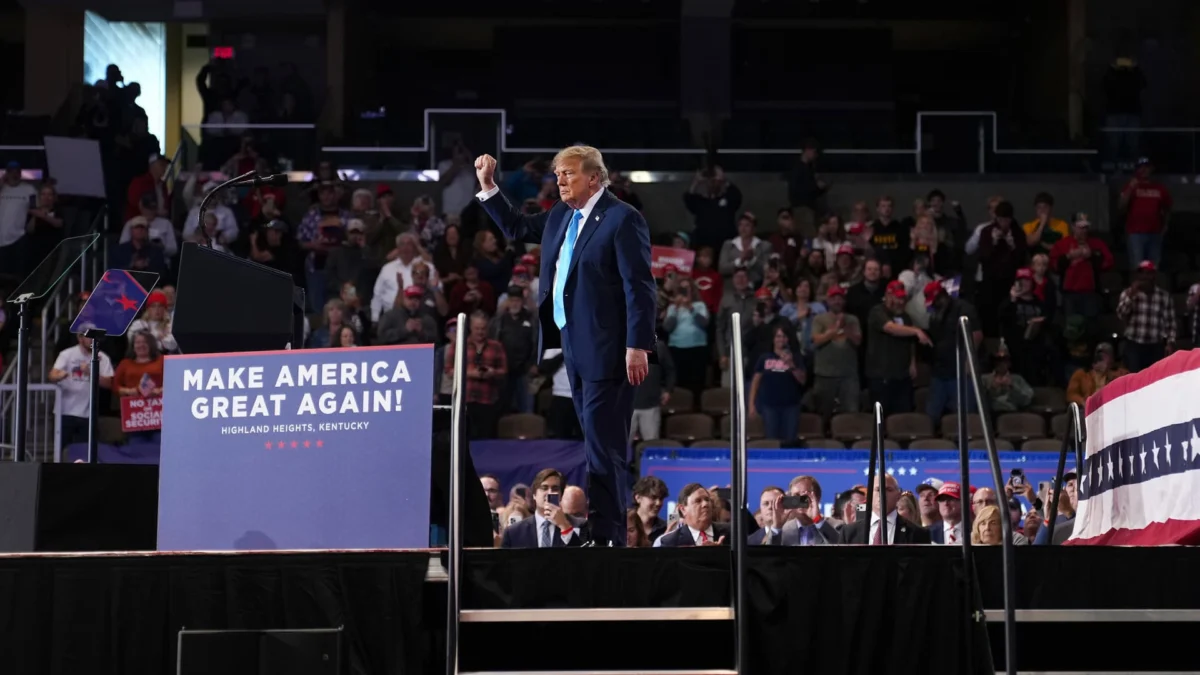
Donald Trump used a recent Kentucky campaign rally to underscore what he described as his considerable personal and political power, framing it as a driving force for Republican turnout in the looming midterm elections. His message of strength comes amid broader voter sentiment suggesting many Americans believe he prioritizes his own interests over the country’s.
The Kentucky appearance is part of a familiar pre-midterm pattern in which sitting presidents travel to key states to rally the base and amplify their leadership brand. For Trump, these events serve both to energize supporters and to project an image of command ahead of electoral tests that often function as referendums on the incumbent administration.
KEY FACTS
- Trump touted his power at a Kentucky campaign rally.
- The rally aimed to energize voters ahead of midterm elections.
- More Americans now see Trump as looking out for his own interests, not the country’s.
- His self-proclaimed power clashes with voter frustration.
The Story
What happens next?
Trump’s emphasis on personal authority during the Kentucky stop fits a broader strategy of using high-profile events to set the tone for the electoral calendar. Midterm rallies typically focus on base mobilization rather than persuasion, and presidents often rely on them to counterbalance negative polling narratives. Whether this messaging shifts voter perceptions in the weeks before Election Day remains uncertain.
Political analysts note that presidential approval tends to decline in midterm years regardless of messaging, which makes rallies like the Kentucky event a calculated effort to reinforce loyalty among core supporters. The challenge for any incumbent is balancing confidence with the appearance of detachment from public concerns, especially when surveys indicate doubts about serving national interests.
Who is affected?
Republican candidates in competitive House and Senate districts will likely lean on Trump’s visit to claim a tie to presidential leadership, even in areas where his approval ratings lag. Voters who are dissatisfied with the direction of the country may find the contrast between asserted power and perceived self-interest reinforcing of their skepticism.
Democratic opponents, meanwhile, can use the same rally footage to argue that Trump’s focus on personal strength distracts from policy outcomes. The interplay between these competing frames often defines how midterm campaigns unfold in the media cycle.
How did we get here?
Presidential campaigning before midterms has evolved into a near-constant rhythm of rallies, interviews, and endorsements since the modern primary system took hold. Trump’s approach, which blends personal branding with party messaging, reflects a style that blurs the line between governing and campaigning more than many predecessors.
Verified by the source:
- Trump spoke at a Kentucky campaign rally.
- The rally was intended to energize voters ahead of midterm elections.
- Polls show increasing numbers of Americans view Trump as serving his own interests rather than the country’s.
- Trump described his own power during the event.
- Voter frustration appears to conflict with Trump’s self-proclaimed strength.
Still unconfirmed:
- Specific policy announcements made during the rally.
- Exact crowd size or audience composition.
- Names of other political figures who attended.
- Direct quotes from Trump’s speech.
- State-level polling data from Kentucky specifically tied to the event.
Why It Matters
The tension between asserted presidential power and public trust has implications far beyond a single rally. When voters question whether an elected leader serves the broader national interest, it can reshape electoral dynamics, influence legislative priorities, and alter how future administrations communicate with their base. This rally illustrates how messaging strategies may diverge from measurable approval trends.
What To Watch
Follow-up polling in Kentucky and neighboring battleground states will show whether the event shifted voter engagement or reinforced existing partisan divides. Future rallies may also reveal whether Trump continues to center his messaging on personal authority or adapts to evolving public sentiment ahead of the midterms.