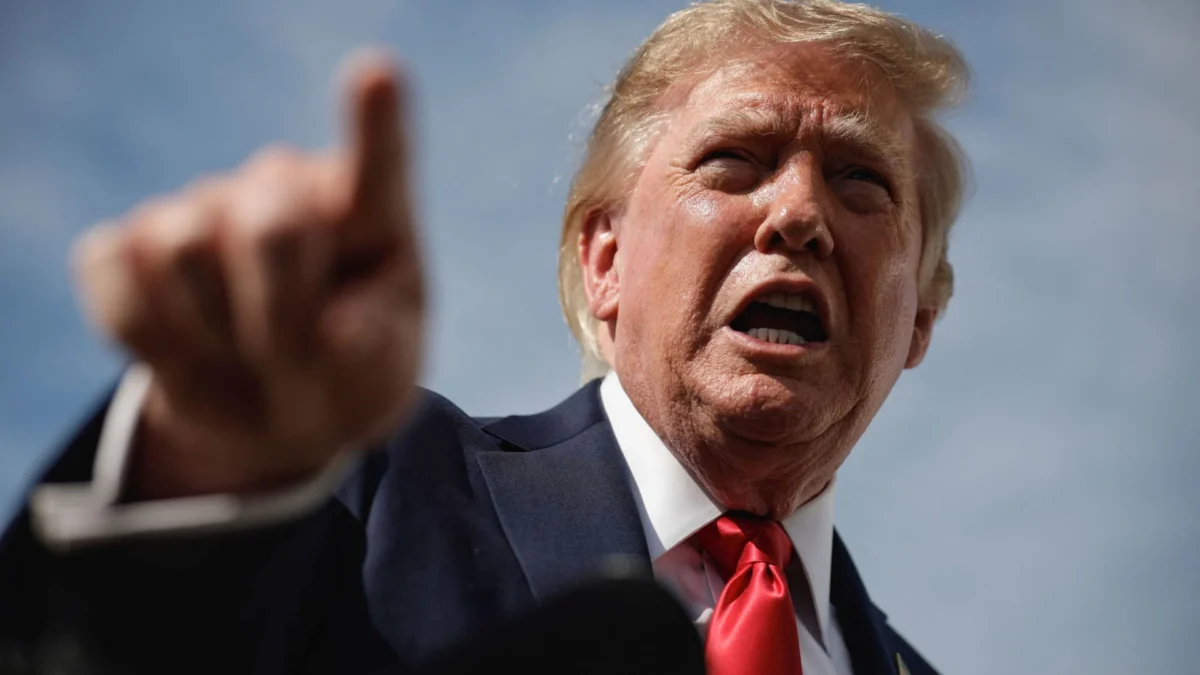
President Donald Trump said he still has confidence in Federal Reserve Chair David Warsh while demanding that the central bank cut interest rates to 1% or lower, according to reporting from US Top News and Analysis.
The remarks mark another public escalation by the President over monetary policy, following earlier threats to restrict trade with nations that run trade surpluses against the United States if the Fed does not act on rates.
KEY FACTS
- President Trump says he still has confidence in Fed Chair Warsh.
- Trump demands interest rates be cut to 1% or lower.
- Trump previously threatened trade restrictions on countries with trade surpluses with the U.S.
- Those trade threats were tied to Fed rate-cut pressure.
Trump’s Latest Move on Monetary Policy
Trump’s public call for lower interest rates reflects ongoing tension between the White House and the Federal Reserve, an institution designed to operate independently from political influence. By urging rates to 1% or below, Trump is pushing for aggressive monetary easing that economists typically associate with efforts to stimulate borrowing and economic activity during downturns or slowdowns.
According to US Top News and Analysis, the President connected this demand to broader leverage over central bank decisions, suggesting that trade policy could be used as a bargaining chip if the Fed does not comply. This framing positions trade disputes as conditional on monetary outcomes, blending fiscal and diplomatic pressure into a single argument.
What Happens Next?
The path forward depends largely on whether the Federal Reserve responds to Trump’s demands. Central bank officials often emphasize independence from political direction, meaning rate decisions are usually guided by data such as inflation trends, employment levels, and GDP growth rather than presidential preferences. If no rate cuts occur, Trump may escalate his rhetoric or follow through on trade threats targeting surplus countries.
Surplus nations often include major U.S. trading partners in Asia and Europe, whose export-driven economies rely heavily on access to American markets. Any new trade barriers could disrupt supply chains and raise costs for U.S. consumers and businesses. Market participants are likely watching both Fed communications and trade negotiations closely for signs of policy shifts.
Historical Context Behind the Tension
Presidential criticism of Fed policy is uncommon but not unprecedented. Previous administries have occasionally clashed with central bank leadership over rate levels, particularly during periods of high unemployment or weak growth. However, directly tying trade actions to Fed decisions is unusual and signals a heightened level of pressure.
Fed Chairs historically resist political pressure to maintain credibility and stability in financial markets. David Warsh, according to the source, remains the subject of Trump’s stated confidence despite these public disagreements. The dynamics between executive branch influence and central bank autonomy will shape how this situation unfolds, especially if economic indicators shift.
WHAT WE KNOW — AND WHAT WE DON’T
Verified by the source:
- President Trump expressed confidence in Fed Chair Warsh.
- He called for interest rates to be reduced to 1% or lower.
- He had previously threatened trade restrictions on countries with trade surpluses with the U.S.
- He linked those trade threats to demands for Fed rate cuts.
Still unconfirmed:
- The specific timing or context of these statements.
- Which countries would be targeted under the trade threat.
- Whether the Fed intends to respond to Trump’s demands.
- Official responses from Fed officials or affected governments.
WHY IT MATTERS
Interest rates influence mortgage, savings, and loan costs across the economy, affecting everything from home purchases to retirement accounts. Presidential pressure on the Federal Reserve can shake investor trust in central bank independence, potentially stirring market volatility. Meanwhile, trade threats tied to monetary policy blur the line between diplomacy and economics, raising uncertainty for businesses and consumers alike.
WHAT TO WATCH
All eyes now turn to upcoming Federal Reserve meetings and any public statements from central bank officials. If trade actions proceed alongside rate decisions, global markets may face renewed turbulence. Stay tuned for further developments on both fronts.