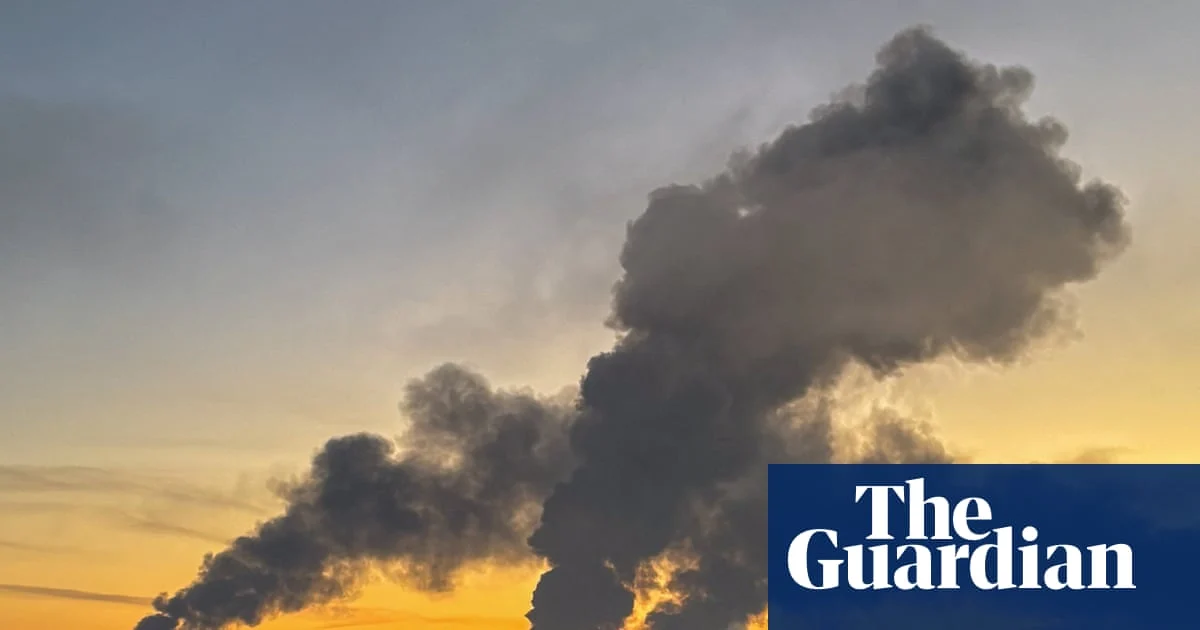
US President Donald Trump condemned Ukraine strikes on Russian oil refineries as a disgrace, days after Kyiv announced it was abandoning an energy ceasefire that Trump had declared last week, an agreement neither Russia nor Ukraine officially confirmed.
The renewed Ukraine strikes followed Ukrainian President Volodymyr Zelenskyy’s statement that his country was ending the so-called energy ceasefire. Trump also criticized Zelenskyy, calling him more difficult to deal with than Vladimir Putin, The Guardian reported.
Key Facts
- Trump called Ukraine strikes on Russian oil refineries a disgrace.
- Ukraine resumed attacks after abandoning an energy ceasefire.
- Trump previously declared the ceasefire unilaterally.
- Neither Russia nor Ukraine confirmed agreeing to the truce.
- Trump criticized Zelenskyy as harder to deal with than Putin.
What triggered the resumption of Ukraine strikes?
Ukraine strikes on Russian oil refineries resumed after Kyiv formally rejected the so-called energy ceasefire that Trump had declared the prior week. The Guardian notes the truce was never confirmed by either Russia or Ukraine, raising questions about its actual implementation. Zelenskyy framed the move as Kyiv reclaiming operational autonomy after what he described as an externally imposed pause.
The episode underscores how volatile cross-border energy infrastructure targeting remains, even amid diplomatic overtures. Energy facilities have been frequent targets in the conflict, affecting regional fuel supplies and pricing. The lack of mutual acknowledgment of a truce suggests gaps in coordination between Washington’s public statements and field-level realities on the ground.
Who is affected by the renewed fighting?
Russia, Ukraine, and broader energy markets face renewed uncertainty following the breakdown of the informal energy truce. Russian oil infrastructure comes under renewed assault, potentially disrupting output and export logistics, while Ukrainian officials argue they must preserve leverage in negotiations. Trump’s renewed criticism of Zelenskyy adds another diplomatic layer, signaling possible strain in US-Ukraine relations.
Regional partners watching the situation face unclear signaling about future US mediation roles. Markets that had priced in temporary de-escalation may need to reprice risk. The Guardian’s account does not specify civilian impacts or independent verification of damage, highlighting information gaps around the actual conduct and consequences of these Ukraine strikes.
What we know and don’t
Verified by the source:
- Trump described Ukraine strikes as a disgrace.
- Ukraine abandoned a so-called energy ceasefire.
- Trump declared that ceasefire unilaterally last week.
- Neither Russia nor Ukraine acknowledged agreeing to it.
- Trump criticized Zelenskyy as more difficult than Putin.
Still unconfirmed:
- Exact timing or scale of the Ukraine strikes.
- Independent confirmation of refiner(y) damage.
- Russia’s official response beyond what is reported.
- Whether civilians were harmed or displaced.
Why it matters
The collapse of the informal energy truce risks reigniting volatility in global energy markets already sensitive to supply disruptions. For SourceRated readers, this highlights how unilateral diplomatic declarations can create confusion rather than stability, and why distinguishing confirmed facts from public posturing matters when assessing risk to portfolios or household budgets.
What to watch
Watch whether the White House clarifies its stance on future Ukraine strikes or offers new mediation steps. Also watch for independent reporting confirming the scope of damage to Russian oil facilities and whether Moscow or Kyiv formally respond to the reported claims.