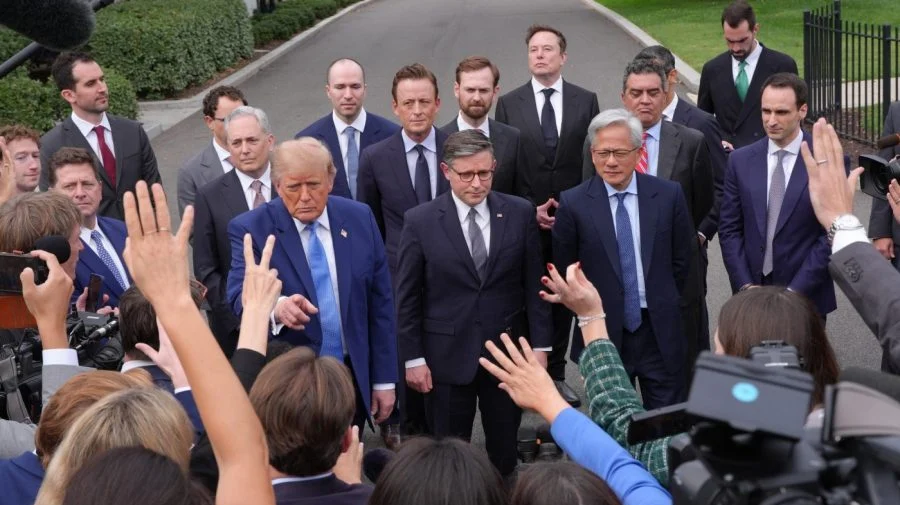
President Trump announced the creation of a Super Intelligence Force on Sunday morning, tasking it with keeping the United States at the forefront of artificial intelligence development. The initiative comes amid growing concerns from researchers about the global pace of AI advancement and potential national security implications.
The Super Intelligence Force will be led by Director of National Intelligence Jay Clayton, whose background in both national security and technology policy positions him to oversee the task force’s operations. The Wall Street Journal reported that Clayton is expected to be formally named to lead the effort, though no additional organizational details were provided in the initial announcement.
Key Facts
- President Trump announced the creation of the “Super Intelligence Force” on Sunday morning.
- The task force aims to keep the U.S. in the lead on artificial intelligence development.
- It follows warnings from technology researchers about AI development trends.
- The task force will be led by Director of National Intelligence Jay Clayton.
- The Wall Street Journal reported that Jay Clayton is expected to be named as its leader.
What Is the Super Intelligence Force?
The Super Intelligence Force appears to be a new executive-level initiative designed to coordinate U.S. efforts in artificial intelligence research and policy. While few structural details have been released, the task force is intended to focus on maintaining American competitiveness in AI technology, which has increasingly become a point of strategic interest across government and private sectors.
Artificial intelligence is widely viewed as a critical area for future economic and military advantage. By establishing this task force, the administration signals its intent to centralize oversight and accelerate innovation in high-tech domains, particularly those related to machine learning and data analytics.
Who Is Jay Clayton?
Jay Clayton serves as the Director of National Intelligence, a role that oversees the U.S. intelligence community. Before joining the Trump administration, Clayton was a partner at the law firm Sullivan & Cromwell, where he specialized in financial regulation and corporate compliance.
His appointment to lead the Super Intelligence Force suggests the administration may be linking national security priorities with emerging technologies. Clayton’s legal and regulatory expertise could play a role in shaping policies around AI ethics, data privacy, and international standards.
What Happens Next?
Further details about the Super Intelligence Force, including its budget, staffing, and operational procedures, have not yet been disclosed. Officials have yet to provide timelines for rollout or specify how the task force will interact with existing agencies such as the Department of Defense or the National Science Foundation.
Stakeholders in the technology sector are likely watching closely for signs of regulatory direction or funding announcements. Analysts note that similar initiatives in past administrations have taken months to fully implement.
What We Know — and What We Don’t
Verified by the source:
- The announcement was made by President Trump on Sunday morning.
- The task force is called the “Super Intelligence Force”.
- Jay Clayton will lead the task force.
- Its stated goal is to keep the U.S. ahead in artificial intelligence development.
Still unconfirmed:
- No official start date or timeline for implementation has been provided.
- Budget, staffing, and interagency coordination details remain unknown.
- The Wall Street Journal’s report on Clayton’s expected naming lacks confirmation from an official source.
Why It Matters
This move reflects broader national and international competition over control of artificial intelligence infrastructure and standards. As other countries invest heavily in AI research, the U.S. government seeks to maintain technological superiority through coordinated policy action.
What To Watch
Members of Congress and industry groups may seek hearings or briefings once more concrete plans emerge. An official directive or executive order outlining the task force’s functions would clarify its scope and authority.