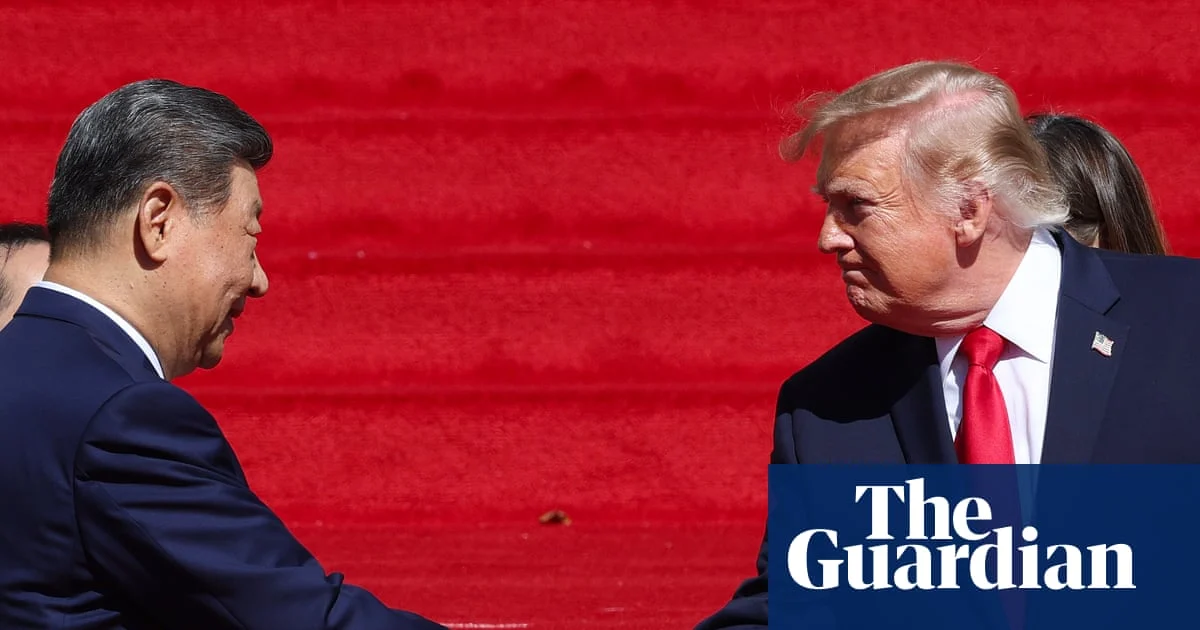
Trump and Chinese president Xi Jinping ended their Washington summit on Friday without reaching a major agreement to pause their countries’ escalating AI arms race. The three-day state visit focused more on pageantry and personal rapport than substantive policy deals. Their sole policy announcement was a modest two-month extension of a trade truce.
While the leaders discussed several critical global issues, including conflicts in Iran and Ukraine and the status of Taiwan, no concrete measures were taken to slow the rapid advancement of artificial intelligence technologies by both nations. Critics argue this missed a key opportunity to introduce stability and transparency into a domain considered vital to national security and economic dominance.
Key Facts
- Trump and Xi concluded their Washington summit without a major AI agreement AI arms race
- The visit emphasized personal rapport over substantive deals Xi Jinping
- A two-month trade truce extension was the only formal announcement Donald Trump
- Talks included Iran, Ukraine, and Taiwan Washington
The Story
What Happens Next?
With no interim agreement in place, both countries are expected to continue advancing their AI research and development independently. The absence of cooperative frameworks raises concerns among analysts that competitive pressures may accelerate without checks. Monitoring bodies and think tanks are now watching for signs of further regulatory divergence or unilateral moves that could escalate tensions.
Trade restrictions and export controls on AI-related technologies remain active, reinforcing the standalone trajectory of each nation’s innovation cycle. Without coordinated pauses or dialogue mechanisms, the risk of accidental escalation—whether in cyberspace or through misinterpretive actions—looms larger. Diplomatic observers note that future summits, if any, will likely carry higher stakes unless interim agreements emerge.
Who Is Affected?
Beyond government policy circles, tech companies in both countries stand to gain—or lose—significantly depending on regulatory directions. Semiconductor firms, cloud computing providers, and AI research labs are particularly sensitive to shifting export rules and national security directives. Delays in cooperative norms also affect international partners looking to navigate alignment with either power bloc.
Multinational enterprises operating across sectors like automotive, finance, and defense must adapt to evolving standards for AI deployment. Meanwhile, academic collaborations face increased scrutiny, potentially hampering joint research initiatives that once bridged borders. Regional allies and trading partners closely watch these developments for implications on supply chains and strategic positioning.
How Did We Get Here?
Historical tensions over technology transfers, intellectual property, and geopolitical influence have long shaped US-China relations. Recent years saw growing emphasis on securing dominance in next-generation computing tools, with both sides viewing AI supremacy as foundational to economic strength and geopolitical leverage. As domestic priorities intensified under respective administrations, diplomatic windows narrowed.
The current summit built upon earlier meetings marked by cautious engagement but limited breakthrough outcomes. Despite public displays of diplomacy, structural disagreements over governance models and market access persisted beneath the surface. These underlying frictions limited room for compromise on sensitive topics like AI safety protocols or mutual restraint strategies.
What We Know — and What We Don’
Verified by the source:
- The summit concluded without a major agreement on AI cooperation
- Leaders discussed Iran, Ukraine, and Taiwan during bilateral talks
- A two-month extension of an existing trade truce was announced
- Three-day visit prioritized personal rapport over formal accords
Still unconfirmed:
- Specific details of any confidential discussions on AI regulation
- Whether follow-up dialogues are planned post-summit
- Exact scope or duration of previous trade truce being extended
- Internal deliberations within governments regarding AI policy timelines
Why It Matters
The failure to address the AI arms race signals a deepening strategic divide at a time when artificial intelligence underpins everything from military readiness to consumer applications. As competition intensifies, so too does uncertainty for businesses, researchers, and policymakers worldwide. Establishing even temporary guardrails could reduce risks of unintended conflict and foster global trust—an opportunity left unrealized for now.
What To Watch
All eyes turn to whether either government signals intent to pursue unilateral AI restrictions or seeks renewed dialogue channels. Analysts expect statements from ministries of commerce and science agencies within weeks. See our economy and markets coverage and tech and AI updates for ongoing developments.