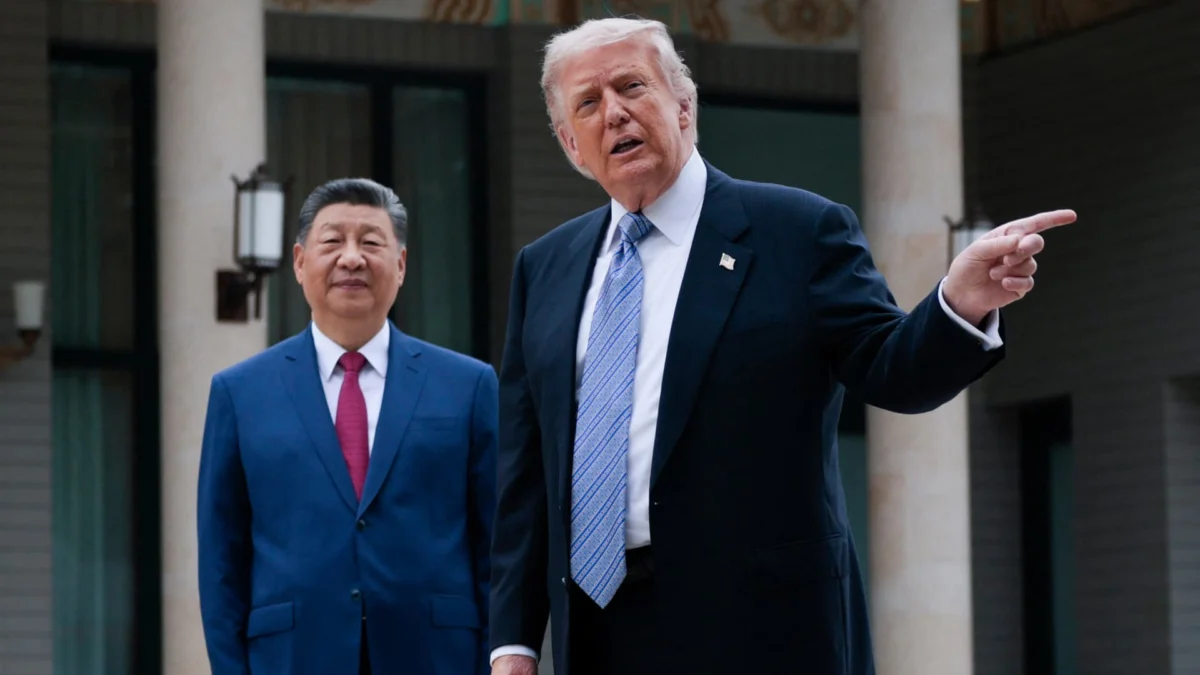
At the close of their two-day state visit in Washington, President Trump and Chinese leader Xi Jinping leaned into pomp and spectacle rather than concrete policy gains. The summit, marked by elaborate ceremonies, notably avoided firm commitments on key global issues such as Taiwan and Iran, leaving many observers questioning the tangible value of the high-profile diplomatic engagement.
While the image of two global powers meeting at the highest level carried symbolic weight, the absence of major joint declarations or trade breakthroughs suggested a cautious approach to thorny subjects. The emphasis on ceremony over substance underscored the delicate nature of U.S.-China relations and the difficulty of achieving consensus on contentious geopolitical matters.
Key Facts
- President Trump and Chinese leader Xi concluded a two-day state visit in Washington.
- The summit prioritized ceremonial events over concrete policy outcomes.
- Taiwan and Iran were sensitive topics that received no formal resolution.
- Deliverables were minimal, with little announced in the way of major agreements.
- The visit was characterized by spectacle rather than substantive negotiations.
What Did the Summit Actually Deliver?
The state visit between President Trump and Chinese leader Xi Jinping featured traditional diplomatic pomp — flag-lined avenues, formal banquets, and joint appearances. However, these outward signs of cooperation masked a lack of binding outcomes. Despite the extensive pageantry, no sweeping trade deal, joint statement, or strategic alignment was announced, suggesting both leaders were hesitant to lock in commitments on economically or politically volatile issues.
This dynamic reflects the current trajectory of U.S.-China relations, where symbolic diplomacy often fills the gap left by stalled progress on deeper structural disagreements. The two nations remain deeply intertwined economically, yet ideologically and strategically at odds, making breakthroughs difficult even during high-level summits.
Why Were Sensitive Topics Avoided?
During the state visit, both Trump and Xi notably danced around two of the most geopolitically sensitive issues of the day: Taiwan and Iran. Taiwan’s status remains a long-standing point of tension between the U.S. and China, with the U.S. maintaining a policy of strategic ambiguity. Meanwhile, Iran’s regional influence and nuclear ambitions have placed it at odds with U.S. foreign policy objectives. Sidestepping these topics allowed the two sides to maintain a veneer of unity without risking escalation.
Avoiding direct confrontation on these issues may have been a deliberate strategy to preserve broader diplomatic channels. By focusing on ceremonial aspects and general goodwill, both nations signaled restraint, even as underlying tensions persist beneath the surface.
What We Know — and What We Don’t
Verified by the source:
- The state visit took place in Washington over two days.
- Ceremonial elements dominated over substantive policy discussions.
- No formal agreements or major deliverables were announced.
- Taiwan and Iran were topics approached indirectly, if at all.
- President Trump and Chinese leader Xi attended the visit together.
Still unconfirmed:
- No specific timeline or schedule was provided for future bilateral talks.
- It is unclear whether behind-the-scenes communications addressed sensitive topics.
- Details about private meetings between advisors remain undisclosed.
- The precise role of economic advisors in shaping the agenda is not specified.
- No information was confirmed regarding follow-up actions or next steps.
Why It Matters
High-level diplomacy between the U.S. and China carries outsized influence on global trade, security, and technological development. When a state visit yields more symbolism than substance, it can signal stalled momentum on critical issues affecting markets and international alliances. For businesses and investors, the lack of clarity from such meetings can translate into market volatility and delayed strategic planning.
What To Watch
Moving forward, attention will turn to whether any side-letter agreements or informal understandings emerge from the visit. Stakeholders are also watching for signals on future trade negotiations or potential military-to-military dialogues that could reduce friction between the two powers.