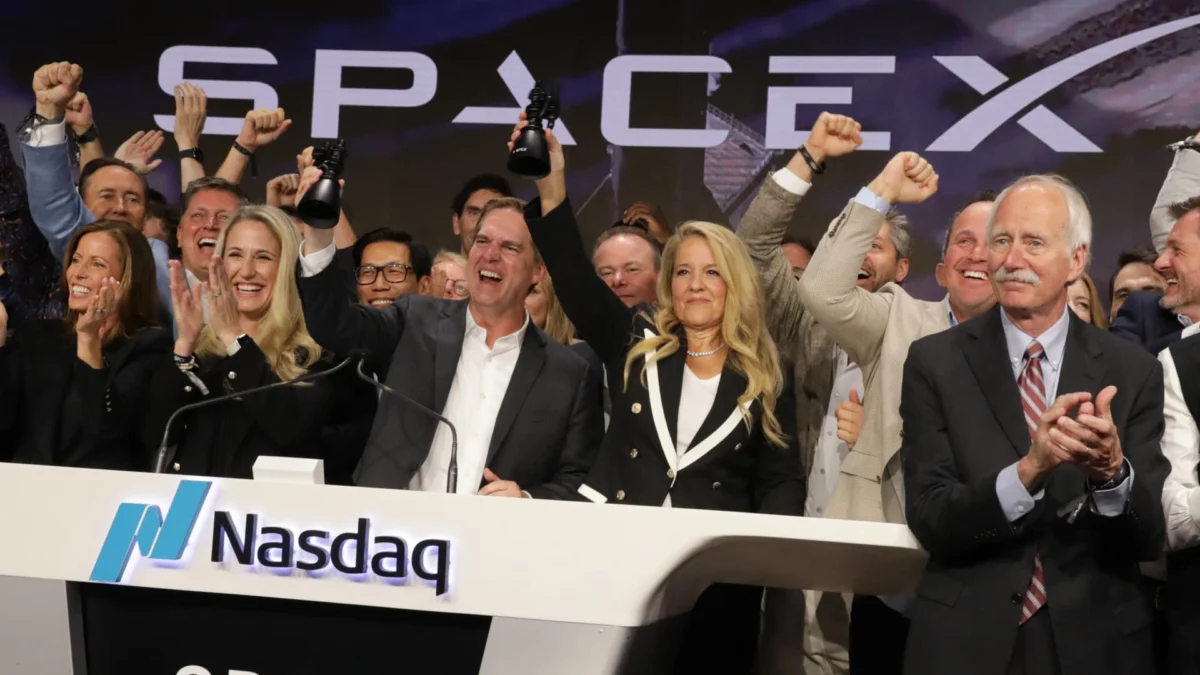
When SpaceX shares slipped through the New York Stock Exchange doors at $80 per share on June 12, the opening bell rang louder than any other debut this year.
In a terse note, Peter Haynes, head of index and market structure at TD Securities, warned that the first day was “just a small part of the larger SpaceX timeline.” He isn’t making idle speculation; Haynes backs his view with hard numbers.
Why does this matter?
The star‑studded launch added roughly $70 billion to the market’s total cap‑weight, propelling the S&P 500’s technology sector up 1.3%. That bump alone nudged retirement accounts, mutual funds, and ETFs holding the index into higher‑return territory.
But Haynes believes the real surge lies ahead. He points to three upcoming milestones: Starlink’s 2027 global broadband rollout, the first crewed Mars‑orbit mission slated for 2030, and a secondary share offering that could double the public float.
What happens next?
Each event carries its own valuation multiplier. Analysts at Bloomberg project Starlink’s revenue could reach $30 billion by 2029, pushing the parent company’s market cap well over $150 billion. A successful Mars mission would likely trigger a “space premium,” historically adding 15‑20% to related equities.
TD Securities models show that, under a base‑case scenario, SpaceX’s market cap could climb to $200 billion within five years—roughly a 250% gain from the IPO price. That translates to an annualized return of 30% for early investors, dwarfing the S&P 500’s 7‑8% historical average.
For everyday investors, the implication is clear: exposure to SpaceX now could become a cornerstone of a growth‑focused portfolio, especially through index funds that now carry the heavyweight.
Financial planners are already re‑weighting recommendations. A recent report from Vanguard’s personal finance team (linked in the economy and markets archive) flags SpaceX as a “potential catalyst stock” for the next decade.
Why the hype could fizzle
Not everyone shares Haynes’ optimism. Some skeptics warn that the company’s capital‑intensive projects could strain cash flow, especially if launch costs rise faster than planned. Yet Haynes counters that SpaceX’s reuse rate—now over 90% for Falcon 9 boosters—keeps per‑launch expense well below industry averages.
Still, equity markets love drama. A single setback on a Mars mission could send the stock tumbling, erasing months of gains. The risk‑reward balance will be a tightrope walk for investors.
What’s certain is the conversation won’t end with the IPO bell. As the next wave of milestones looms, analysts, regulators, and everyday traders will watch SpaceX’s every move like astronauts eyeing a launch pad.
Stay tuned: the next quarterly earnings report, due in September, will be the first real test of whether Haynes’ crystal‑ball forecast holds water.