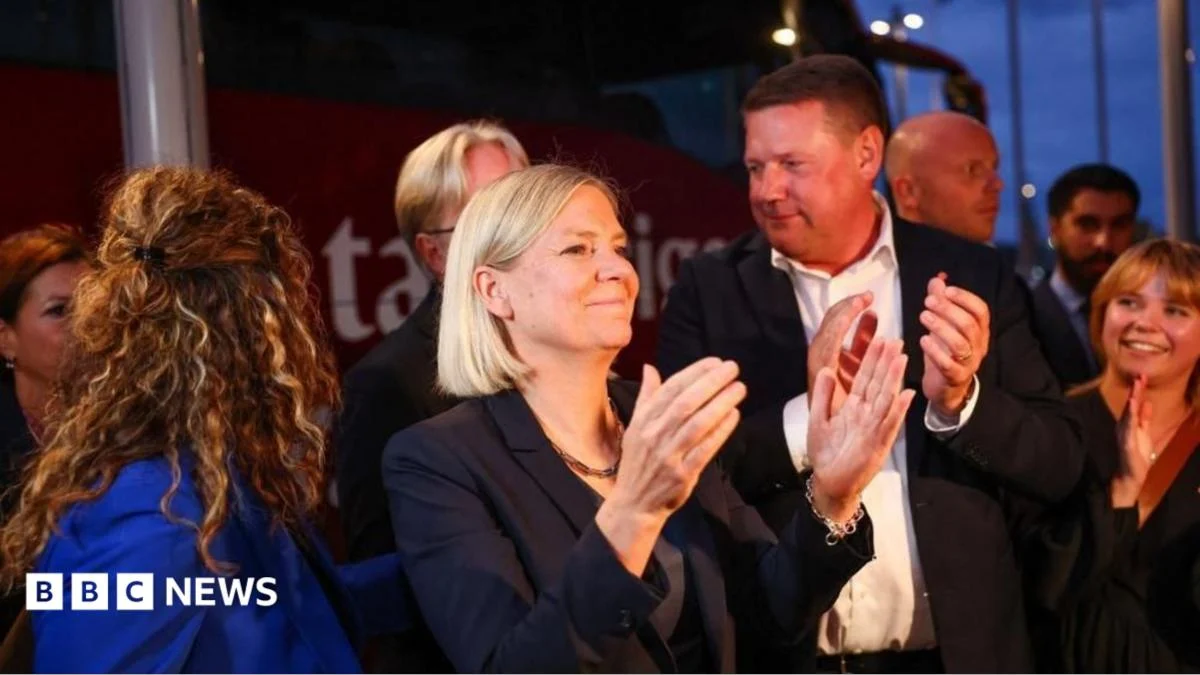
A preliminary count by Sweden’s election authority projected that the left-wing opposition bloc would hold a narrow three-seat majority, keeping the outcome of the Swedish election too close to call.
The projection, released shortly after polls closed, reflects an extremely tight race between the left-wing opposition bloc and the right-wing government coalition that includes the Sweden Democrats. With such small margins, even minor shifts in uncounted ballots could flip control of the next government.
Key Facts
- A preliminary count projected the left-wing opposition bloc ahead by three seats.
- The Swedish election result remains too close to call.
- The projection came from Sweden’s election authority.
- Polling indicated a tight race between the left-wing opposition and the right-wing coalition.
What the Projection Means
The preliminary three-seat margin projected for the left-wing opposition bloc underscores how divided Swedish voters remain following the Swedish election. In proportional representation systems like Sweden’s, small swings in voter preference can translate into dramatic changes in parliamentary composition, which explains why the final outcome remains uncertain despite early projections.
Sweden’s electoral system allocates 349 seats in the Riksdag through multi-member constituencies using open-list proportional representation. Parties must clear a four percent threshold nationally — or twelve percent in a single constituency — to gain representation, adding another layer of complexity to interpreting preliminary counts.
Political analysts noted that the Swedish election has reflected broader European trends, with populist and nationalist parties gaining ground alongside traditional establishment forces. This dynamic contributes to the volatility seen in the early projections.
What Happens Next?
All remaining uncounted ballots will continue to be processed in the days following the Swedish election, with official results expected to be confirmed in the coming weeks. The final seat distribution will determine whether the left-wing opposition bloc can form a government or whether the right-wing coalition retains power.
If no clear majority emerges, Sweden could see extended negotiations between party leaders to form a coalition government, a process that has historically taken weeks or even months. Observers emphasized that the Swedish election outcome remains highly sensitive to late-counting trends.
The role of smaller parties, particularly those outside the traditional blocs, may prove decisive. Sweden’s fragmented parliament has elevated the influence of minor parties whose support can determine which bloc ultimately controls the government.
Verified by the source:
- The left-wing opposition bloc was projected to lead by three seats.
- The Swedish election was described as too close to call.
- The projection was made by Sweden’s election authority.
Still unconfirmed:
- Final seat totals for either political bloc.
- The official timing of full result certification.
- Which party or coalition will ultimately form the next government.
- Exact voter turnout figures.
- Names of individual party leaders involved in potential coalition talks.
Why It Matters
The Swedish election holds significance for both domestic policy direction and broader European politics, as the balance between left-wing and right-wing coalitions influences immigration, climate, and economic priorities.
What To Watch
Further updates will follow as additional ballots are counted and Sweden’s election authority releases official results in the coming weeks.