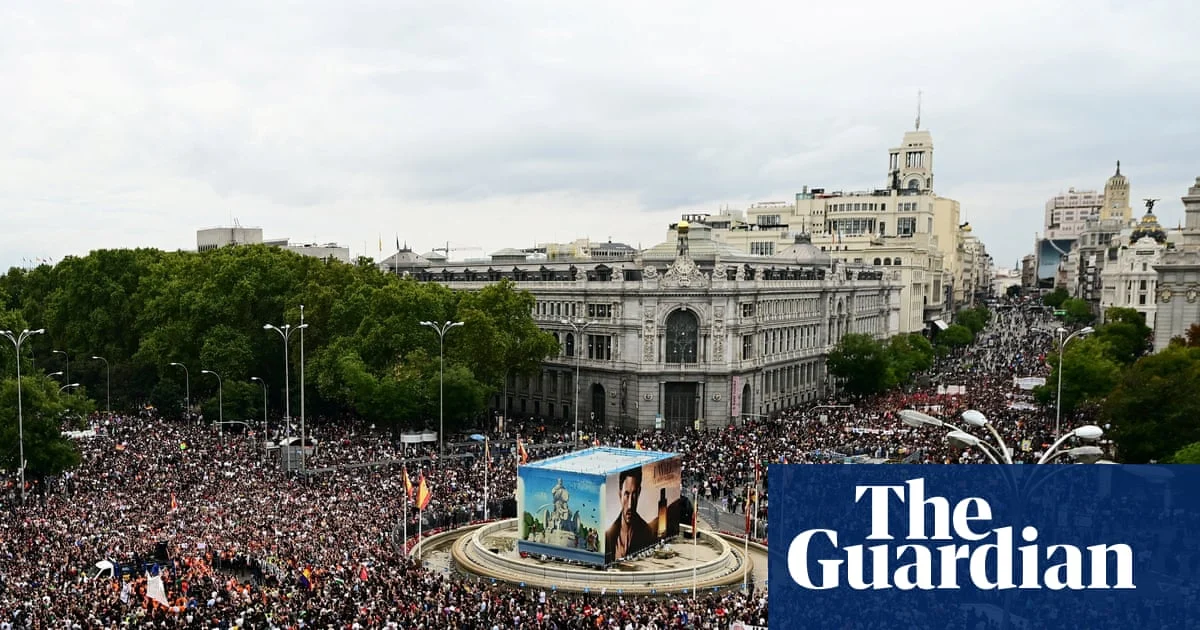
Tens of thousands of people protested in Madrid and other Spanish cities over soaring housing costs and perceived government inaction on the housing crisis. Demonstrators carried signs and called for a general strike after newly proposed measures were rejected by parliament, underscoring deep public frustration with the lack of legislative progress. The protests reflect a broader pattern of civil unrest in response to rising housing unaffordability across the country.
KEY FACTS
- Tens of thousands protested in Madrid and other Spanish cities over the housing crisis.
- Protesters demanded action after new housing legislation was rejected by the opposition in parliament.
- Demonstrators called for a general strike during the demonstrations.
- The rejected measures were prompted by public outrage over the eviction of an 87-year-old woman in Madrid.
- Protests occurred after the legislative vote took place on Friday.
The Story
Why did protests erupt across multiple cities?
Demonstrations unfolded not just in Madrid but in other unnamed Spanish cities, suggesting that the housing crisis is a national concern rather than isolated to one metropolitan area. The scale of the turnout indicates widespread dissatisfaction with how the government has handled escalating housing costs and displacement pressures affecting ordinary citizens. Protesters expressed frustration over what they see as inadequate policy responses to these growing challenges.
How did public pressure influence recent legislative efforts?
The attempted legislation emerged following public outcry over the eviction of an elderly woman, whose case became symbolic of the broader housing crisis. However, despite this momentum, the opposing political forces blocked the measures from passing, leaving advocates disappointed and further energizing street-level demonstrations. This dynamic highlights how individual cases can galvanize collective action even when formal political channels fail to produce results.
What happens next for housing policy and public dissent?
While no official next steps were announced, the call for a general strike signals potential escalation if the housing crisis remains unresolved. Continued public demonstrations may increase pressure on lawmakers to revisit housing-related proposals. The situation remains fluid, with many observers watching whether renewed political dialogue will occur in response to ongoing civic unrest.
WHAT WE KNOW — AND WHAT WE DON’T
Verified by the source:
- Protests took place in Madrid and several other unnamed Spanish cities.
- New housing legislation failed to pass after being rejected by the opposition.
- Demonstrators called for a general strike during the protests.
- The legislation was influenced by public reaction to an eviction involving an 87-year-old woman.
- The parliamentary rejection occurred on a Friday preceding the weekend demonstrations.
Still unconfirmed:
- Exact number of protesters participating nationwide or in any single location.
- Names or roles of specific political figures involved in blocking the legislation.
- Precise timeline regarding future legislative attempts or negotiation schedules.
- Specific identity and full circumstances surrounding the evicted individual referenced.
WHY IT MATTERS
The housing crisis has become a defining issue shaping voter sentiment and civic engagement across Europe. When governments appear unable or unwilling to respond effectively, citizens often turn to streets as a last resort. These developments serve as a reminder of how economic instability can fuel broader conversations about governance, equity, and accountability within democratic institutions like those found in the war-geopolitics and economy-markets category archives.
WHAT TO WATCH
Political leaders have yet to comment publicly on the outcome of the vote or outline any immediate plans moving forward. Observers should monitor whether renewed negotiations emerge or if further unrest unfolds in coming weeks.