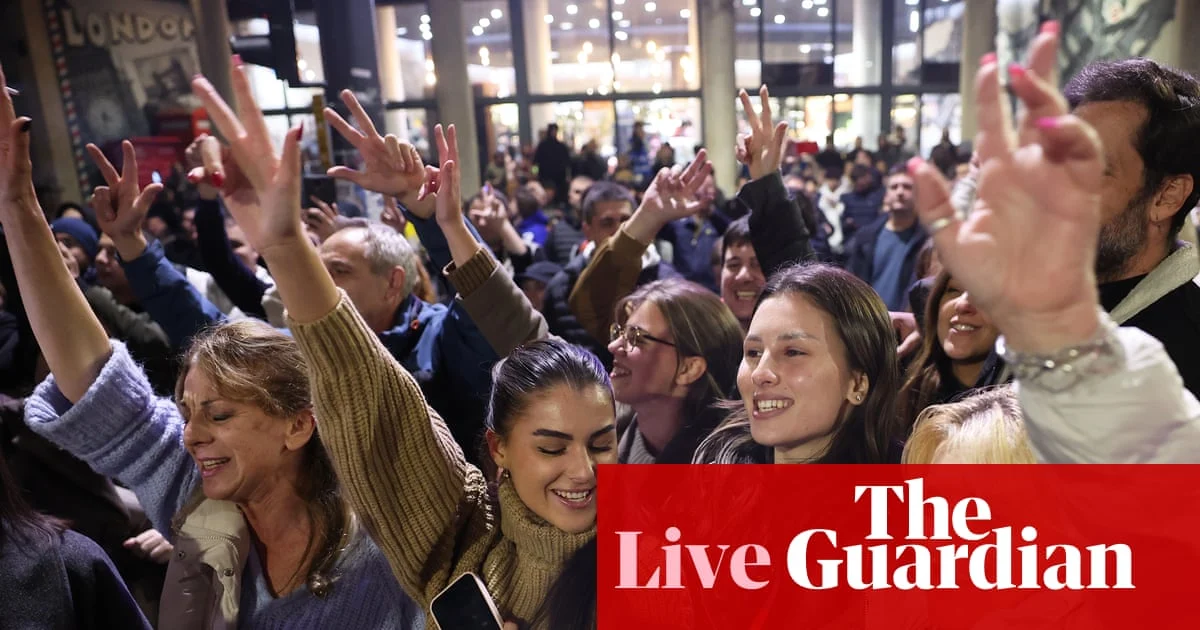
Serbian leader Aleksandar Vučić has conceded defeat in a fiercely contested parliamentary election after the Student List movement projected 138 seats in the new parliament, well clear of the 126 required for a majority. The concession marks a dramatic shift in the country’s political landscape, ending Vučić’s long-standing hold on power and opening the door to a new governing coalition led by the student-led bloc.
The result reflects widespread public discontent and a surge in civic engagement, with voters turnout reaching 60.8% by 5pm local time — more than 13 percentage points higher than in 2023 and the highest since the mid-2000s. Vučić’s concession underscores the scale of the opposition’s victory and the depth of voter mobilization behind the Student List movement.
Key Facts
- Vučić conceded defeat in the Serbian parliamentary election.
- Student List projected 138 seats, clear of the 126-seat majority threshold.
- Vučić’s party secured 104 seats in the new parliament.
- Turnout reached 60.8% by 5pm local time, up 13 points from 2023.
- Highest turnout since mid-2000s, signaling heightened civic participation.
The Serbian Election Result: What Just Happened?
The Serbian parliamentary election delivered a stunning rebuke to the ruling establishment, with the Student List movement emerging as the largest single party. The projection of 138 seats puts the bloc firmly in control of forming a new government, assuming no major shifts in the final results. With Vučić’s concession already announced, the focus now turns to coalition-building and the practical steps toward transferring power.
The vote followed months of mass protests led by students over alleged corruption and authoritarian drift. The Student List, which rose to prominence during those demonstrations, capitalized on public frustration to build a broad base of support. Their campaign emphasized transparency, accountability, and an end to nepotism in public office.
Voters turned out in unprecedented numbers, with turnout data showing a particularly strong showing among younger demographics. The final hours of polling saw long lines at stations across Belgrade and other urban centers, reflecting a palpable sense of momentum behind change.
Who Is Affected by This Shift?
The incoming Student List government is expected to reshape Serbia’s domestic and foreign policy, particularly its relationship with the European Union and neighboring Balkan states. Analysts suggest the new leadership may pursue a more transparent approach to governance and seek closer ties with Western institutions.
Domestically, public services, education, and media reform are likely to top the agenda. Citizens who participated in the protests have expressed hope that the new parliament will deliver on long-standing demands for judicial independence and anti-corruption measures.
For the EU, Serbia’s political realignment could influence accession negotiations and regional stability efforts. The outcome also reverberates beyond Serbia’s borders, offering a potential model for civic-driven political change in other Balkan nations.
What Happens Next After the Concession?
Official vote counting is continuing, and final seat allocations may differ slightly from current projections. The Student List will need to negotiate coalition partnerships to reach a working majority if their seat count falls short. Vučić’s concession streamlines the transition process, though legal and procedural steps remain before a new government can be sworn in.
International observers have been monitoring the vote closely. The European Union and other regional actors are expected to issue statements acknowledging the outcome and outlining engagement strategies with the incoming administration.
What We Know — and What We Don’t
- Verified by the source:
-
- Vučić conceded defeat in the parliamentary election.
- Student List projected to win 138 seats in the new parliament.
- Vučić’s party secured 104 seats.
- Turnout reached 60.8% by 5pm local time.
- Turnout was the highest since the mid-2000s.
- Still unconfirmed:
-
- Final seat distribution and coalition arrangements.
- Timeline for official results certification.
- Specific policy priorities of the incoming government.
- Extent of international recognition of the new leadership.
- Vučić’s response regarding future political role.
The Serbian election result signals a turning point in the nation’s democracy, with civic engagement and public accountability taking center stage. For readers elsewhere, the outcome highlights how grassroots movements can reshape entrenched political systems when backed by strong voter turnout.
In the immediate term, attention will focus on whether the projected results hold and how quickly a new government can take office. Stay tuned for updates as final counts come in and coalition negotiations begin, which will determine whether the Student List’s momentum translates into lasting institutional change. Explore more coverage in our war-geopolitics section.