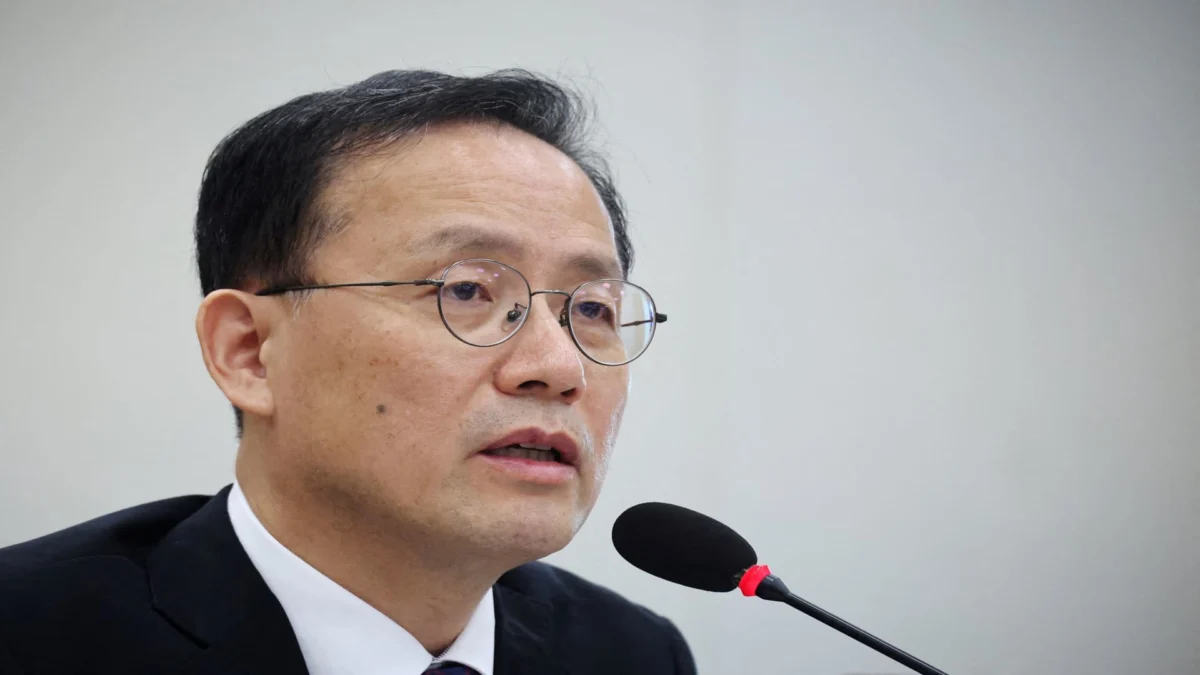
South Korea’s finance minister said the semiconductor market outlook will remain solid through at least 2027, even as a global chip sell-off continues, citing persistent supply-side constraints across the industry. The remarks highlight continued strength in one of the country’s most influential export sectors.
The minister emphasized that tight supply conditions underpin the sustained demand trajectory, signaling resilience in the face of broader market corrections affecting memory and logic chips worldwide. This projection aligns with South Korea’s strategic role as a global hub for advanced semiconductor manufacturing and materials.
Key Facts
- South Korea finance minister said semiconductor growth can last ‘at least through 2027’.
- Supply remains tight despite a global chip sell-off, according to the source.
- The semiconductor market outlook remains solid, per the minister’s statement.
Semiconductor Market Outlook: What Drives the Forecast?
The semiconductor market outlook relies heavily on supply chain dynamics and industrial policy support within key producing nations. South Korea plays a central role in global chip production, particularly in memory semiconductors used in consumer electronics and data centers. Tight supply conditions, as noted by the finance minister, suggest that producer pricing power may persist longer than previously expected, even as inventory corrections unfold in major markets such as the United States and Europe.
Analysts often track capital expenditure trends among top-tier foundries to gauge future output capacity. When supply chains face bottlenecks—whether from logistics disruptions, geopolitical tension, or raw material shortages—the equilibrium between supply and demand shifts, supporting pricing stability. In this context, the minister’s forecast reflects expectations that current constraints will not ease significantly in the near term, reinforcing positive momentum for domestic producers.
Who Is Affected by the Semiconductor Market Outlook?
Export-dependent economies like South Korea stand to benefit most directly from a resilient semiconductor market outlook. Government officials monitor these trends closely because semiconductor revenues contribute substantially to national GDP and foreign exchange earnings. Investors also watch for signals about future earnings potential among leading technology firms headquartered in Asia, including major contract manufacturers and component suppliers.
Beyond national borders, multinational corporations relying on semiconductor inputs—from automotive brands to cloud computing providers—are sensitive to shifts in global supply forecasts. A stable outlook helps these companies plan production schedules and procurement strategies more confidently. Meanwhile, consumers indirectly feel the impact through pricing of smartphones, computers, and other devices that depend on consistent access to advanced chips.
What Happens Next for the Semiconductor Market Outlook?
Moving forward, the semiconductor market outlook will hinge on whether supply constraints ease as projected or if new disruptions emerge. Global demand volatility, especially from sectors like artificial intelligence accelerators and electric vehicles, introduces uncertainty into medium-term projections. Policymakers may adjust industrial support programs based on evolving export performance and investment flows related to semiconductor infrastructure.
Investors should remain attentive to quarterly reports from leading chipmakers and government data regarding trade balances in high-tech goods. Any deviation from current supply assumptions—such as unexpected factory shutdowns or sudden drops in consumer demand—could revise the optimistic outlook outlined by South Korean officials. For now, the market appears positioned for continuation of existing trends through the forecast horizon extending into 2027.
What We Know — and What We Don’t
Verified by the source:
- South Korea finance minister stated semiconductor growth can last at least through 2027.
- Supply remains tight despite a global chip sell-off.
- The semiconductor market outlook remains solid, according to the minister.
Still unconfirmed:
- No specific timeline or exact duration beyond 2027 provided.
- Exact definition of ‘tight supply’ or quantitative thresholds unspecified.
- No named minister or direct quote attributed in summary documentation.
Why It Matters
Semiconductors power nearly every modern economy, from smartphones to smart grids. A sustained upswing supports tech hubs and signals confidence in long-term digital transformation. Markets watch South Korea closely because its outlook often reflects wider industry momentum.
What To Watch
Future trade data and quarterly earnings reports may confirm or revise this outlook. Officials have yet to provide granular figures beyond the general projection through 2027. Semiconductor market outlook developments will likely surface in upcoming policy briefings and export statistics.