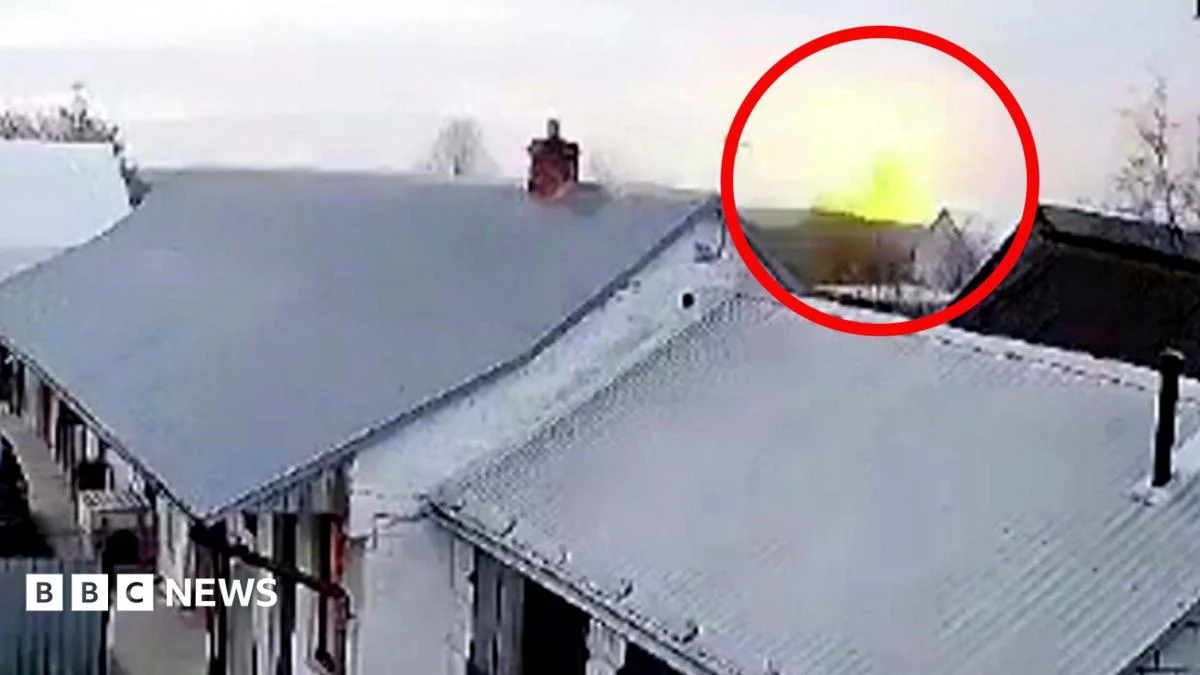
Polish Prime Minister Donald Tusk confirmed that a Russian missile struck Poland while Kyiv’s allies were holding a military exercise, according to BBC News. The incident caused no injuries and no damage has been reported, but Warsaw labeled the strike a “provocation” from Moscow.
The Russian missile impact occurred during allied training activity near Poland’s eastern border, raising immediate questions about air defense readiness and the risk of escalation in a region already tense from the war in Ukraine.
Key Facts
- A Russian missile hit Polish territory
- The strike happened as Kyiv’s allies held a military exercise
- Polish Prime Minister Tusk confirmed the incident
- No injuries or damage were reported
- Warsaw described the event as a “provocation” from Moscow
The Story
What happened during the exercise?
According to the BBC report, the Russian missile struck Poland at a time when military forces from Ukraine’s allied nations were conducting scheduled training exercises. The Polish government, led by Prime Minister Donald Tusk, publicly acknowledged the strike shortly after it occurred. The fact that the missile landed during a multinational exercise adds a layer of complexity, as it places allied personnel and assets in closer proximity to any potential spillover from the conflict in Ukraine.
Polish authorities have not released details about the missile type, its flight path, or whether it was intercepted before impact. The absence of casualties or property damage suggests the missile may have landed in an unpopulated area or been neutralized by air defense systems, though the source does not specify. Warsaw’s decision to characterize the event as a deliberate “provocation” signals a firm diplomatic stance, implying intent rather than accident.
How does this fit the broader security picture?
Poland is a frontline NATO member bordering Ukraine, Belarus, and the Russian exclave of Kaliningrad. Since Russia’s full-scale invasion of Ukraine began in 2022, Polish airspace has seen repeated violations by Russian missiles and drones targeting Ukrainian infrastructure. NATO has reinforced its eastern flank with additional air defense batteries, fighter patrols, and ground forces. The presence of a Russian missile on Polish soil during an allied exercise tests the alliance’s collective defense commitments under Article 4 and Article 5 of the NATO treaty, which require consultation and potential collective response to threats against a member state.
Previous incidents, such as the November 2022 missile strike in Przewodów that killed two Polish farmers, were attributed to a Ukrainian air defense missile rather than a direct Russian launch. That event triggered emergency NATO consultations but did not result in an Article 5 invocation. The current incident, explicitly described by Warsaw as a Russian missile and a provocation, may prompt a different calculus given the context of an ongoing multinational exercise.
What We Know — and What We Don’t
Verified by the source:
- A Russian missile struck Poland
- The strike coincided with a military exercise by Kyiv’s allies
- Prime Minister Tusk confirmed the incident
- No injuries or damage reported
- Warsaw called it a “provocation” from Moscow
Still unconfirmed:
- Exact location and time of impact
- Missile type, origin, and trajectory
- Whether air defense systems engaged
- Which allied nations were participating in the exercise
- Poland’s formal request for NATO consultations
- Russian government response or denial
Why It Matters
A Russian missile striking a NATO member during a multinational exercise raises the stakes for alliance cohesion and deterrence credibility. It forces member states to calibrate a response that deters further incidents without triggering uncontrolled escalation, while reinforcing the security guarantees that underpin European stability.
What To Watch
Poland may invoke NATO Article 4 consultations in the coming days. The alliance’s collective statement, any changes to air defense posture, and Russia’s official reaction will indicate whether this episode remains contained or alters the security dynamic on the eastern flank.