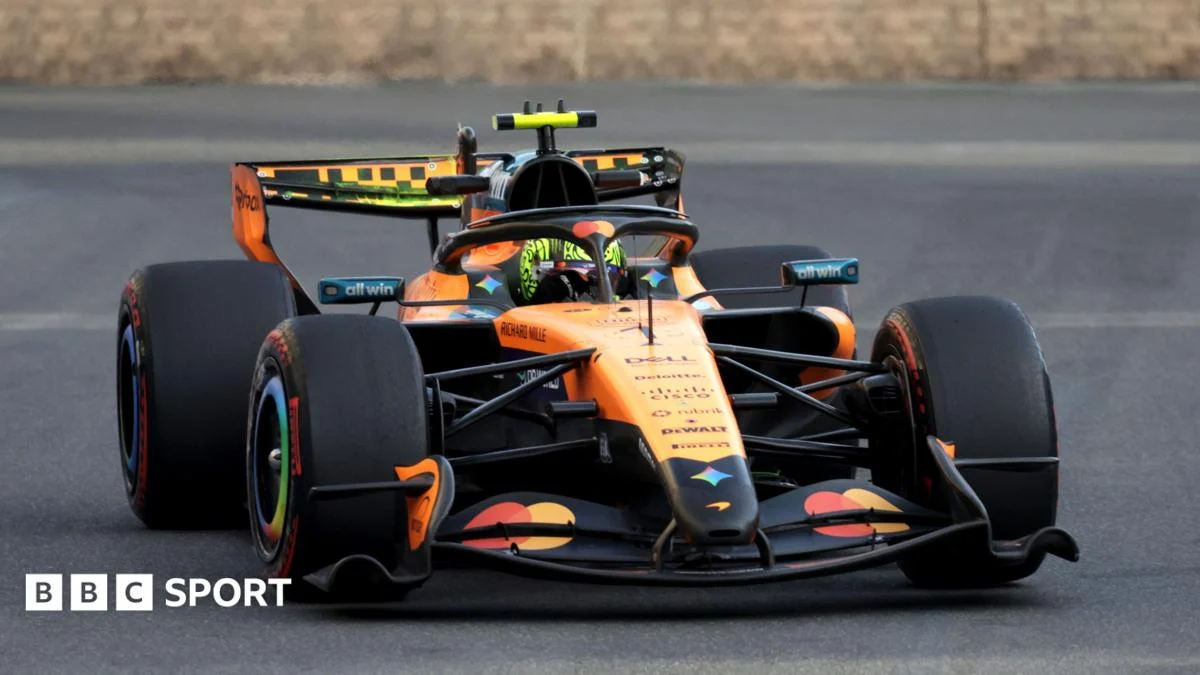
George Russell led both Friday practice sessions at the Azerbaijan Grand Prix, maintaining the fastest times in Baku practice for the opening rounds of the weekend. His performance set the early pace ahead of competitors, including a tight battle with fellow Mercedes-linked driver Andrea Kimi Antonelli, who finished second in at least one session. The results provide an initial benchmark for teams heading into qualifying and the race.
The Baku practice sessions mark the start of on-track activity for the Azerbaijan Grand Prix weekend. Russell’s speed in both sessions suggests a strong setup from Mercedes, while other drivers will aim to close the gap ahead of qualifying. These sessions often feature high speeds and close barriers, making consistent lap times key for momentum.
Key Facts
- George Russell was fastest in both Friday practice sessions for the Azerbaijan Grand Prix.
- The sessions took place in Baku as part of the Azerbaijan Grand Prix weekend.
- Russell led ahead of Andrea Kimi Antonelli, who was second in at least one session.
- The results were reported by BBC Sport.
The Story
What happens next?
Following Baku practice, teams will shift focus to qualifying, where grid positions for Sunday’s race will be decided. Russell’s early pace gives Mercedes a psychological edge, but conditions can change quickly in street circuits like Baku. Other drivers, including championship contenders, will look to fine-tune their setups to challenge for pole position. The data gathered in practice helps teams optimize strategy, tire choices, and aerodynamic settings before the critical qualifying session. Historical trends show that strong practice performance doesn’t always translate to race day results, especially on demanding circuits.
Mercedes’ apparent strength in Baku practice may influence betting markets and team strategies heading into qualifying. For drivers outside the front-runners, capitalizing on any slip-ups during qualifying could be decisive. Track position and tire management remain crucial factors in determining final standings. Teams with mid-field ambitions will also use these sessions to benchmark against rivals and adjust their race approaches accordingly. Weather conditions, if they shift, could further complicate planning for all participants.
Who is affected?
All drivers and teams participating in the Azerbaijan Grand Prix are affected by the outcomes of Baku practice sessions. The times set serve as reference points for performance comparisons and strategic decisions. Russell’s leadership impacts team dynamics and expectations, particularly within Mercedes and among competitors aiming to dethrone him. Drivers like Antonelli, competing in his rookie season, gain valuable experience by matching or exceeding established performers in practice. Teams rely heavily on this early data to allocate resources and refine their approaches for the remainder of the weekend.
Baku’s street circuit layout demands precision and confidence, making practice sessions vital for building driver comfort levels. Teams analyze every lap to identify improvements in cornering, braking points, and straight-line speed. The insights gathered directly inform adjustments made ahead of qualifying. For emerging talents, strong showings in practice can boost reputation and attract attention from broader motorsport communities. Established drivers use the sessions to maintain form and validate their championship aspirations.
Verified by the source:
- George Russell was fastest in both Friday practice sessions at the Azerbaijan Grand Prix.
- Andrea Kimi Antonelli placed second in at least one session.
- The information was published by BBC Sport covering the Baku weekend.
Still unconfirmed:
- Exact timing and lap data for the sessions.
- Full standings and gaps between all drivers.
- Weather conditions during practice.
- Team strategies and car setups used.
Motorsport outcomes often hinge on small margins, making early session performances a meaningful indicator of competitive balance. Russell’s dominance in Baku practice highlights Mercedes’ current form and adds anticipation to the upcoming qualifying round. Fans and analysts alike watch these moments to gauge momentum ahead of high-stakes weekends. Even preliminary results shape narratives around favorites and underdogs throughout the season. Street circuits like Baku reward both speed and consistency, qualities on full display during Friday’s action.
Looking ahead, qualifying will determine the starting grid for Sunday’s race, where strategic decisions and real-time adjustments come into play. Teams have limited time to implement learnings from Baku practice before the decisive moments unfold. The interplay between driver skill and machine performance remains central to the sport’s appeal. As the season progresses, early signs like these help frame predictions and expectations. Observers can expect tighter competition once the checkered flag waves on Sunday.