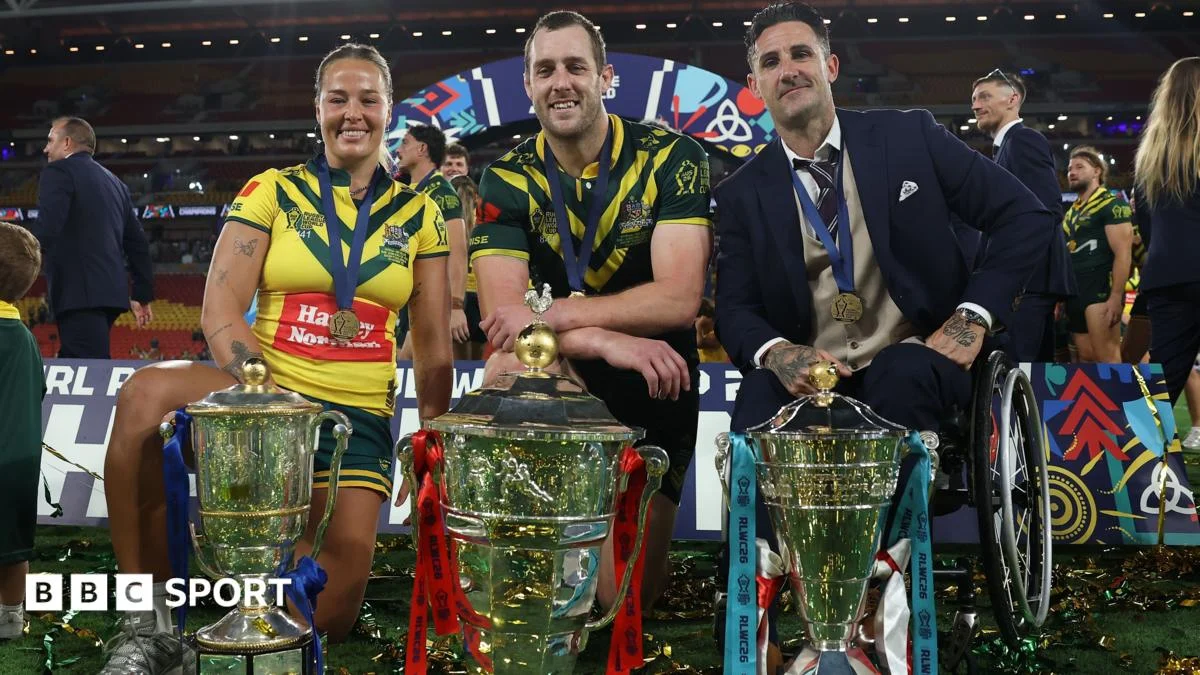
The Rugby League World Cup has divided opinion across the sport’s traditional hemispheres. BBC Sport reports that assessments of whether the tournament established a new benchmark for international rugby league differ sharply between northern and southern rugby league communities.
This split reflects longstanding structural and cultural differences in how the game is administered, funded, and experienced on either side of the equator. The tournament’s legacy remains contested territory.
Key Facts
- The Rugby League World Cup generated conflicting verdicts on its success
- Opinion divides along northern and southern hemisphere lines
- BBC Sport examined whether the tournament set a new international benchmark
- No consensus exists on the event’s overall impact
How the Hemispheres View the Game Differently
Rugby league’s heartlands have historically been concentrated in northern England and eastern Australia, creating two distinct centers of gravity. The northern hemisphere game, centered on the Super League competition, operates on a different calendar, financial model, and development pathway than the southern hemisphere’s National Rugby League (NRL).
These structural differences shape how stakeholders evaluate international tournaments. A competition that delivers commercial growth and exposure for Super League clubs may be viewed differently by NRL-aligned interests who prioritize player welfare, scheduling harmony, and the primacy of the domestic competition.
What Does a Benchmark Tournament Look Like?
Setting a “new benchmark” for an international sporting event implies measurable advances in attendance, broadcast reach, competitive balance, and long-term legacy. For rugby league, previous World Cups have struggled to achieve parity between the sport’s dominant nations — Australia, New Zealand, and England — and the emerging tier.
BBC Sport’s analysis suggests the criteria for success are themselves contested. Northern hemisphere observers may weight growth metrics and commercial returns more heavily, while southern hemisphere voices may emphasize competitive integrity and alignment with the NRL season. Without agreed metrics, verdicts will remain split.
What We Know — and What We Don’t
Verified by the source:
- The Rugby League World Cup prompted divergent assessments of its success
- The divide falls along northern and southern hemisphere lines
- BBC Sport investigated whether the tournament set a new international benchmark
- No unified verdict exists across the sport
Still unconfirmed:
- Which specific tournament edition is under discussion
- What metrics each hemisphere uses to judge success
- Whether administrators plan a unified evaluation framework
- How players and coaches view the tournament’s legacy
- Any concrete commercial or attendance figures cited by either side
Why It Matters
The Rugby League World Cup sits at the center of the sport’s international development strategy. If the game’s two power bases cannot agree on what constitutes a successful global tournament, future planning — from scheduling to revenue sharing to competitive format — will remain fractured. For fans and broadcasters, the split verdict signals continued uncertainty about the international calendar’s stability and the sport’s ability to grow beyond its traditional strongholds.
What To Watch
Future International Rugby League governance meetings may reveal whether a shared evaluation framework emerges. The next World Cup cycle will test if organizers can align northern and southern hemisphere expectations.