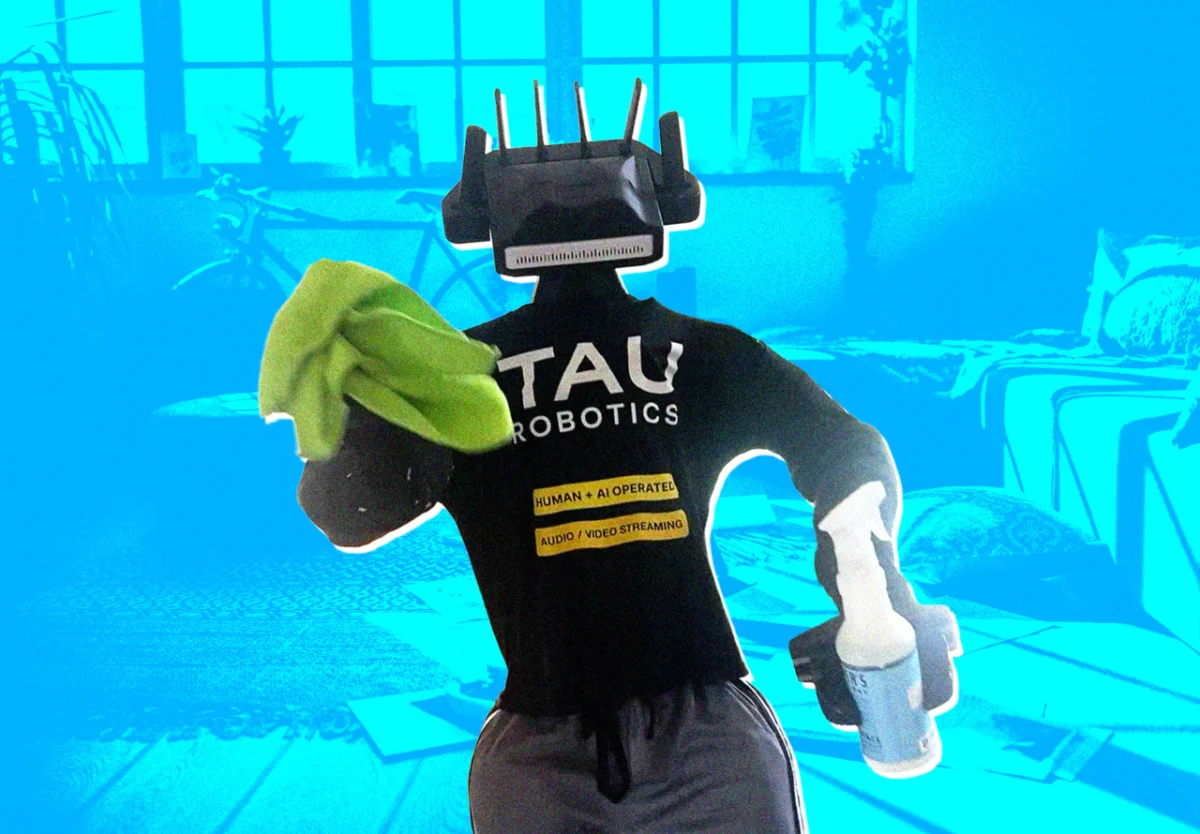
Humanoid housekeepers from Tau Robotics were put to the test in a real home setting, where two units vacuumed floors and wiped counters during an afternoon demonstration. The robots performed basic household tasks as part of a reported trial, though their operation required behind-the-scenes support from human operators.
The test, covered by MarketWatch, explored whether a $55,000 robot could eventually handle routine chores like loading a dishwasher. While the humanoid housekeepers showed movement and basic functionality, their performance relied on remote or on-site human assistance to complete certain actions.
Key Facts
- Two humanoid housekeepers from Tau Robotics were tested in a home setting.
- The robots vacuumed floors and wiped counters during the demonstration.
- The cost of each unit is reported at $55,000.
- Human operators provided assistance behind the scenes during the trial.
- The test raised questions about whether such robots could load a dishwasher autonomously.
What happened during the test?
The humanoid housekeepers were placed in a residential environment to observe how they interact with everyday objects and surfaces. According to the report, they successfully navigated the space and completed basic cleaning actions, including floor vacuuming and counter wiping.
However, the involvement of human support crews indicates that full autonomy has not yet been achieved. The robots demonstrated motion and task execution but relied on external coordination for certain steps, suggesting that current capabilities fall short of fully independent household operation.
Who is affected by this technology?
Consumers curious about home automation and robotics are the primary audience for developments like Tau Robotics’ humanoid housekeepers. The $55,000 price point places these machines in an early adopter range, likely limiting access to tech enthusiasts or researchers for now.
Companies developing similar platforms may view the trial as a benchmark for progress in adaptive manipulation and domestic navigation. The presence of human operators during the demonstration also highlights ongoing challenges in error handling, perception, and decision-making under unstructured conditions.
What We Know — and What We Don’t
Verified by the source:
- Tau Robotics deployed two humanoid units for in-home testing.
- The robots performed vacuuming and wiping tasks.
- Each robot reportedly costs around $55,000.
- Human assistance was involved during the demonstration.
Still unconfirmed:
- Exact duration and date of the test.
- Specific models or technical specifications of the robots.
- Extent and nature of human intervention required.
- Whether the robots will be commercially available soon.
- Details about loading a dishwasher or other complex tasks.
Why It Matters
As automation becomes more integrated into daily life, demonstrations of humanoid housekeepers offer a glimpse into a future where robotic assistance is commonplace. These trials reflect growing interest in adapting advanced robotics for consumer use beyond industrial or medical settings.
Still, the reliance on human oversight underscores technical hurdles that must be addressed before widespread adoption. The balance between cost, capability, and ease of use remains a central concern for developers aiming to bring practical home robots to market.
What To Watch
Future demonstrations or product updates from Tau Robotics may clarify how close humanoid housekeepers are to true autonomy. For now, continued reporting on real-world trials will help define timelines and expectations for consumer-ready models.