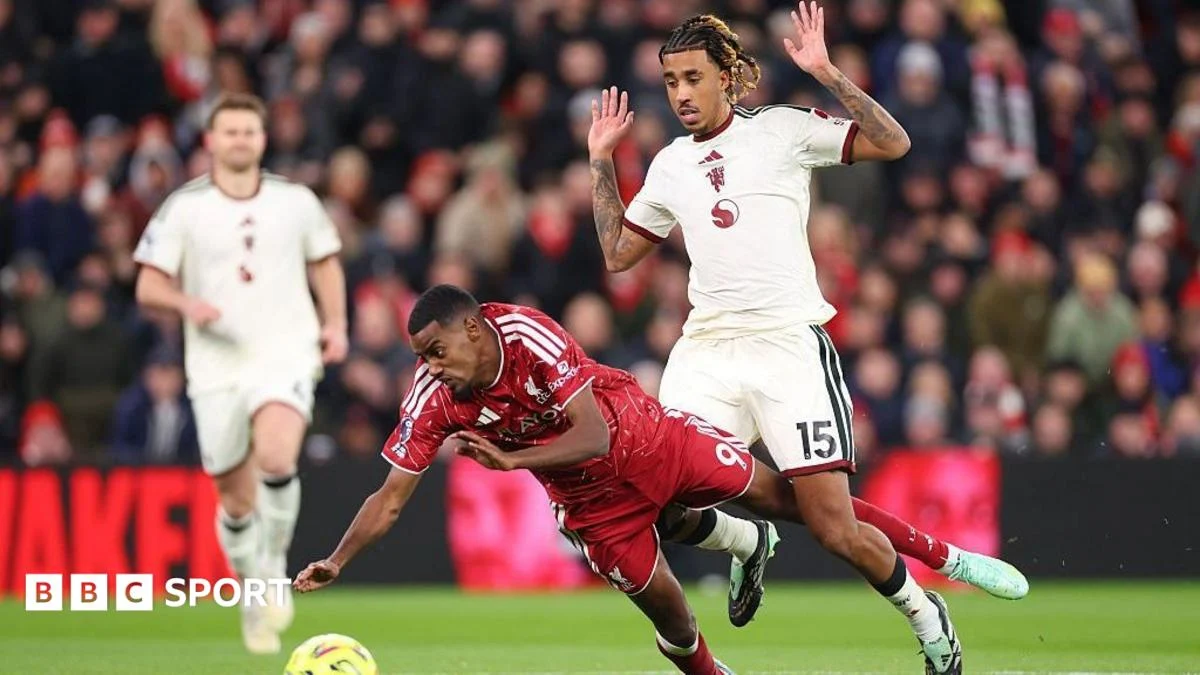
A red card shown to Leny Yoro just eight minutes into the Liverpool versus Manchester United fixture altered the course of the game and has prompted widespread discussion over whether officials made the correct call. The incident immediately became the defining moment of the high-profile Premier League encounter.
The dismissal forced a tactical reshuffle and placed one side at a numerical disadvantage for the vast majority of the contest, raising questions about the threshold for such a sanction in a fixture of this magnitude.
KEY FACTS
- Leny Yoro received a red card after eight minutes
- The match was Liverpool versus Manchester United
- The red card changed the dynamics of the game
- Debate centers on whether officials made the correct call
THE STORY
Early dismissal reshapes the contest
The sending off occurred in the opening phase of a fixture historically defined by fine margins. A red card at the eight-minute mark compels the affected team to abandon its pre-match structure, often surrendering possession and territory while the opponent gains license to dictate tempo. In a rivalry where psychological edges matter, the numerical imbalance also amplifies crowd influence and managerial pressure.
Officials must judge not only the letter of the law — serious foul play, violent conduct, or denial of a clear goalscoring opportunity — but also the match context. The speed of the decision, with minimal VAR intervention visible in initial broadcasts, suggests the referee deemed the offence unambiguous.
What happens next for the players and officials?
Yoro faces an automatic suspension, the length of which depends on the specific offence category cited in the referee’s report. The club may appeal if it believes the sanction is excessive or the decision erroneous. For the officiating team, the appointment assessors will review the call as part of routine performance evaluation; a controversial early red card in a marquee fixture draws heightened scrutiny.
Broadcasters and pundits have dissected replays frame by frame, yet the absence of a unified consensus underscores the subjectivity inherent in real-time decision-making. The Premier League’s Key Match Incidents panel may also issue a retrospective verdict on whether the threshold was met.
Why the rivalry magnifies every call
Liverpool versus Manchester United is English football’s most storied rivalry, carrying decades of title races, cup finals, and cultural weight. Decisions in this fixture are replayed, debated, and remembered longer than in almost any other. A red card here does not merely affect three points; it enters the narrative archive of both clubs.
Managers prepare for the possibility of playing with ten men, but few game plans account for such an early disruption. The tactical asymmetry created — one side chasing, the other controlling — often produces a match pattern that feels predetermined, fueling the post-match discourse over whether the contest was effectively decided by a single whistle.
WHAT WE KNOW — AND WHAT WE DON’T
Verified by the source:
- Leny Yoro was shown a red card after eight minutes
- The match was Liverpool versus Manchester United
- The dismissal changed the game
- Questions exist about the correctness of the call
Still unconfirmed:
- The specific offence category (violent conduct, serious foul play, DOGSO)
- Whether VAR reviewed the incident and its conclusion
- The referee’s identity and match report details
- The final result or scoreline of the fixture
- Any appeal intention from the player’s club
WHY IT MATTERS
The controversy illustrates how a single officiating decision in a globally watched fixture can dominate the sporting conversation, overshadowing tactical nuance and individual performance. For fans, the perceived fairness of the red card becomes a reference point in the broader debate over consistency and technology’s role in the modern game.
WHAT TO WATCH
The referee’s written report and any subsequent disciplinary panel ruling will clarify the official rationale. An appeal outcome, if lodged, would set a precedent for similar early-match dismissals in high-stakes fixtures.