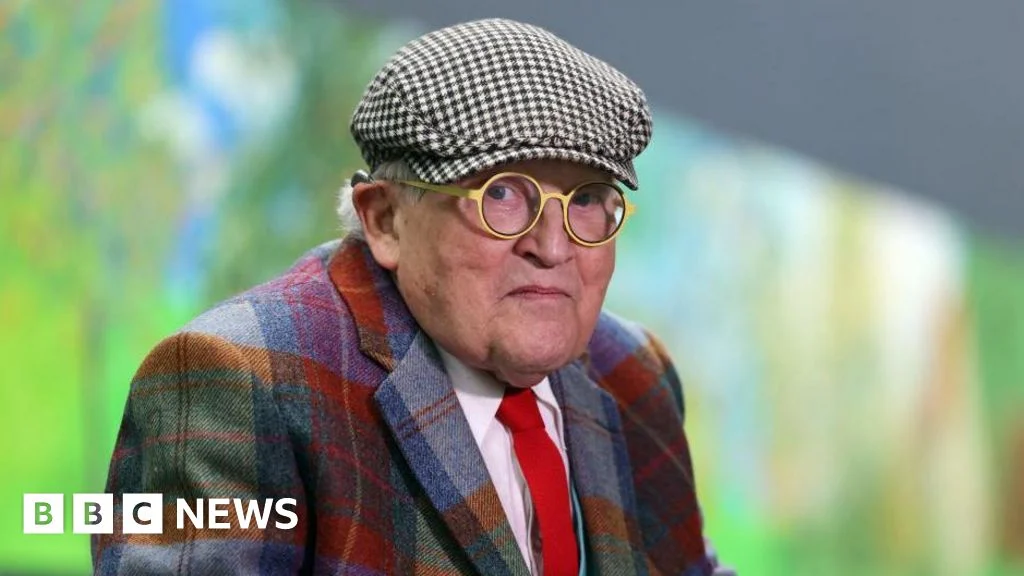
On a rain‑slick Thursday morning, a single black car pulled up to a modest London townhouse, its driver the only witness to the final goodbye of David Hockney.
Inside, the doors opened to reveal just two people: Hockney’s longtime partner, longtime collaborator and companion, and his great‑nephew, who had been named in the artist’s will. No floral tributes, no media vans, no public mourning.
Hockney, 88, died peacefully at his home on 12 June after a short illness. The BBC confirmed that his will explicitly requested a private ceremony limited to those two individuals.
Why does this matter?
The stark contrast between the hush of his funeral and the worldwide frenzy his work once generated underscores a growing trend among cultural icons: separating public legacy from personal closure. While his paintings continue to fetch millions at auction, the artist chose anonymity in death, a decision that forces fans to confront the human behind the myth.
His most iconic pieces—”A Bigger Splash” (1967), the vivid Californian pool series, and the sprawling photo collages—have defined modern art curricula across the globe. Yet his exit was orchestrated like a private dinner party, not a blockbuster broadcast.
What happens next?
Estate lawyers are now tasked with cataloguing thousands of works spread across studios in Bridlington, Los Angeles, and Paris. The next auction, slated for early 2027, is expected to raise over £150 million, according to recent economy and markets forecasts.
Meanwhile, museums that have long relied on Hockney’s loans face a logistical scramble. The Tate Britain, which holds a permanent collection of his work, issued a brief statement that it will honor his wishes by keeping the ceremony details confidential.
For a generation that grew up watching his bold colors splash across television screens, the intimacy of his final moments is a reminder that fame does not erase the desire for personal peace.