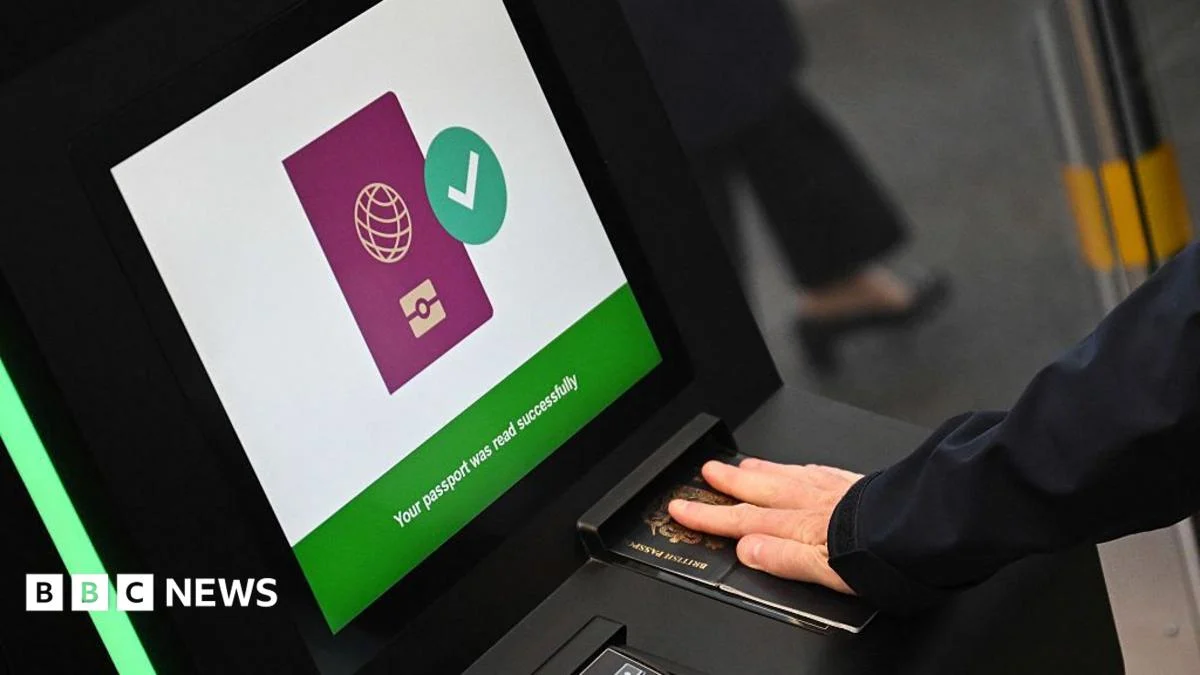
Roll-out has begun for passport-free airport e-gates that use facial recognition technology to verify travelers against immigration and passport information. The automated systems aim to streamline border control processes by eliminating the need for physical passport checks at participating airports.
The new e-gate technology represents an expansion of existing automated border control systems already deployed at various international airports. By matching travelers’ faces against official immigration databases, the passport-free e-gates could reduce processing times and improve the efficiency of airport immigration procedures.
Key Facts
- Roll-out has begun for passport-free airport e-gates
- The system uses facial technology to check travellers
- Travellers are checked against immigration and passport information
How Do Passport-Free E-Gates Work?
Passport-free e-gates rely on biometric facial recognition software to identify travelers. When a person approaches the gate, cameras capture their facial features and compare them against stored data in immigration and passport databases. If the system confirms a positive match, the gate opens automatically, allowing the traveler to pass through without presenting a physical passport.
This type of automated border control technology has been gradually adopted at airports worldwide over the past decade. The latest roll-out expands these capabilities further, potentially reducing queues at immigration checkpoints while maintaining security standards through continuous database verification.
Who Is Affected by the New System?
Airport travelers using participating e-gates will experience the passport-free process directly. The system is designed to work with existing immigration and passport database infrastructure that governments already maintain for border security purposes.
The technology could eventually impact millions of international air travelers who pass through major airports where these e-gates are being deployed. Passengers who previously needed to present physical passports at manual or automated booths may now be able to clear immigration using only facial recognition verification.
What Happens Next?
The ongoing rollout of passport-free e-gates will likely continue expanding to additional airports and terminals over time. As the facial recognition technology proves reliable against immigration databases, more locations may adopt the automated system.
Governments overseeing border control operations will monitor how effectively these passport-free e-gates handle traveler volumes while maintaining security. Future expansions depend on performance metrics and whether the facial matching technology continues meeting accuracy standards when checked against official passport and immigration records.
What We Know — and What We Don’t
Verified by the source:
- Roll-out has begun for passport-free airport e-gates
- The system uses facial technology to check travellers
- Travellers are checked against immigration and passport information
Still unconfirmed:
- Specific airports or countries where rollout is happening
- Timeline for complete deployment
- Technical specifications of facial recognition accuracy
- Privacy safeguards or data protection measures in place
- Whether all travelers or only certain passport holders qualify
Why It Matters
Automated passport-free e-gates using facial recognition represent a significant shift in how international travel and border security intersect. For travelers, faster immigration processing could mean less time waiting in airport lines. For governments, biometric verification systems offer potential efficiency gains in managing large volumes of international arrivals while maintaining database-driven security checks.
What To Watch
Expansion plans and technical performance reports from border agencies will clarify how quickly passport-free e-gates reach additional airports. Public responses regarding privacy and data handling may also emerge as the rollout continues.