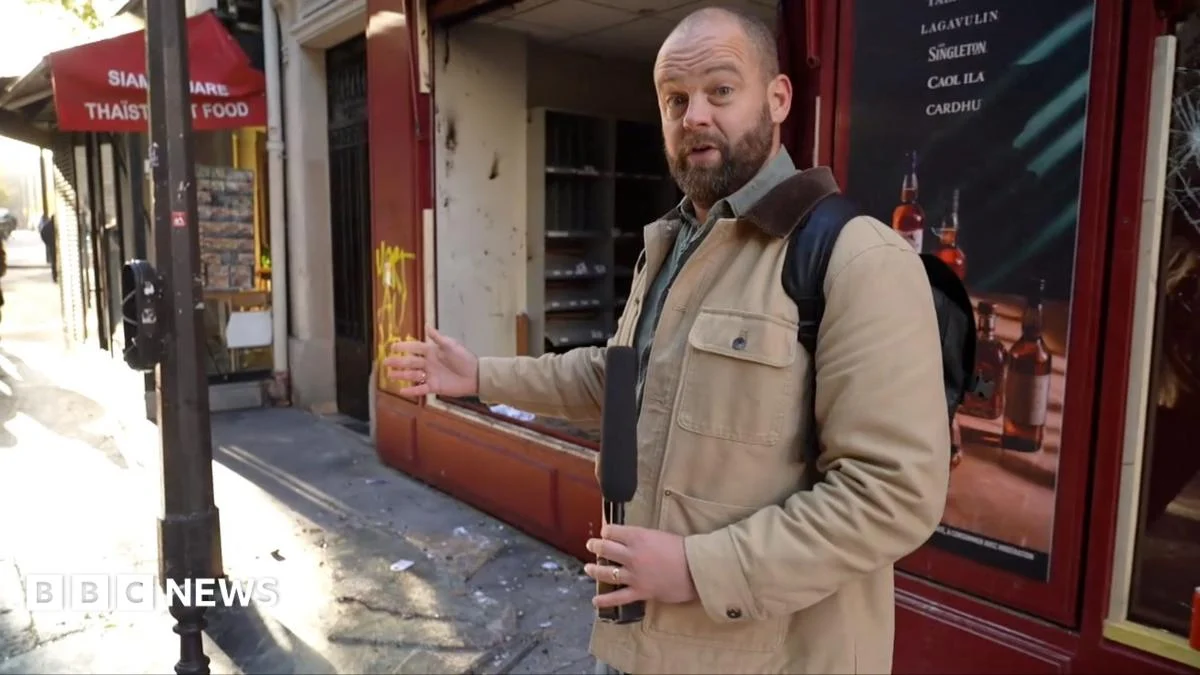
Violence erupted across France on Saturday during nationwide protests over school conditions and the rising cost of living, leaving Parisians waking to scenes of damaged property and looted shops. The unrest followed a day of demonstrations in which authorities reported clashes between protesters and police. Parisians assessed the aftermath on Sunday morning, discovering broken windows, burned vehicles, and storefronts ransacked by looters. The protests were sparked by long-simmering grievances over education funding shortfalls and soaring consumer prices, especially for fuel and basic goods. While most demonstrations remained peaceful, pockets of violence disrupted parts of major cities including Paris, Marseille, and Lyon. Authorities confirmed injuries among both civilians and law enforcement personnel but have not released detailed casualty figures. Protest organizers have not publicly claimed responsibility for property destruction or looting, and no group has yet been named in connection with the unrhetoric. Still, officials are investigating the extent of criminal activity and whether external actors contributed to the escalation. The damage left behind underscores the volatility of economic discontent when channeled through mass demonstration.
KEY FACTS
- Violence broke out across France on Saturday during protests — (BBC News)
- Protests targeted school conditions and the cost of living — (BBC News)
- Parisians woke up to damaged property and looted shops — (BBC News)
WHAT HAPPENED DURING THE PROTESTS?
The demonstrations on Saturday were part of broader public unrest driven by dissatisfaction with national policies affecting education and household finances. Schools have faced ongoing underfunding for years, leading to teacher strikes and parental complaints about overcrowding and aging infrastructure. Meanwhile, inflation has eroded purchasing power across working-class communities, particularly affecting food, energy, and transportation costs. Police deployed in multiple cities to monitor crowds but encountered aggressive factions within some marches. In certain areas, projectiles were thrown, fires lit, and storefronts forced open. Emergency services responded quickly to reports of looting and vandalism, though the full scale of arrests remains unclear.
WHO IS AFFECTED BY THE DAMAGE?
Local business owners in urban centers bear the immediate brunt of the destruction, many expressing frustration at being caught in the crossfire between demonstrators and state forces. Employees who lost hours or wages due to closed shops also feel the ripple effects. Residents near protest routes reported disrupted commutes and noise disturbances throughout the evening. On a wider level, the incidents may strain public trust in civic order, especially if similar events recur during future rallies. Government agencies say they plan to support affected businesses through compensation schemes, though specifics have not yet been announced.
WHAT WE KNOW & WHAT WE DON’T
Verified by the source:
- Violence occurred during Saturday’s nationwide protests.
- The main themes of protest were school conditions and cost of living.
- Paris residents found damaged property and looted shops upon waking Sunday.
Still unconfirmed:
- Exact locations or number of damaged shops or looted premises.
- Injury counts or identities of those involved.
- Names of individuals or groups responsible for looting or violence.
- Official responses beyond general investigation statements.
WHY IT MATTERS
This outbreak reflects how economic hardship and institutional strain can manifest in public disruption. When combined with symbolic targets like schools and commercial districts, such unrest signals deeper social tensions that governments must address before they deepen further.
WHAT TO WATCH
Further updates are expected as local authorities release findings from ongoing investigations into the clashes. Monitoring upcoming planned marches will reveal whether organizers take steps to prevent recurrence.