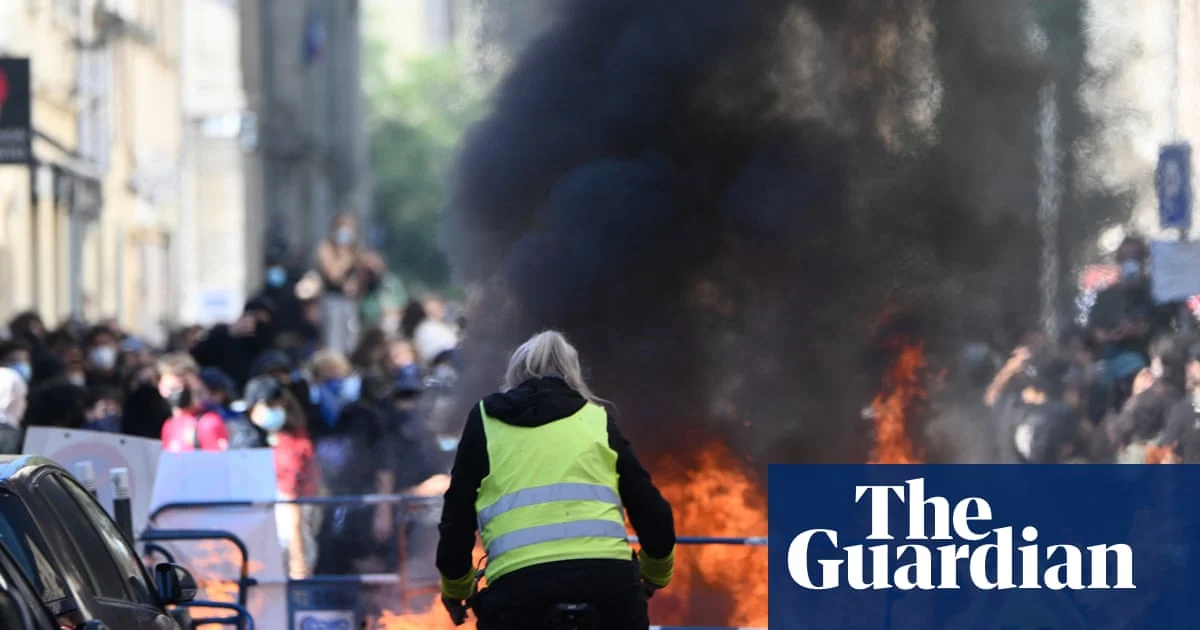
Student protests in Paris turned confrontational before dawn on Tuesday when teenagers erected barricades outside the Lycée Sophie-Germain, a secondary school in central Paris, using wheelie bins, metal barriers and shopping trolleys. The demonstrators, carrying banners demanding greater school funding and equality, also voiced opposition to French riot police accused by human rights groups of disproportionate force against children.
These actions form part of what is rapidly becoming the largest youth protest movement in decades, originating in low-income banlieues and spreading across France. Investigations into alleged police brutality accompany growing unrest among students frustrated with educational inequity and policing practices.
KEY FACTS
- Students built barricades using bins and barriers outside Lycée Sophie-Germain in central Paris.
- Protests began in low-income banlieues before spreading to the capital.
- Human rights groups accuse French riot police of using disproportionate force against children.
- Investigations into suspected police brutality are currently underway.
- Student protesters demand more funding and greater equality in French schools.
How Did We Get Here?
The student protests in France trace their roots to longstanding disparities in educational resources between affluent urban centers and low-income banlieues. These marginalized neighborhoods, often underserved by public institutions, have seen repeated cycles of civil unrest over perceived neglect by national authorities. What distinguishes the current wave is its rapid expansion from local grievances to a nationwide movement, with youth leveraging social media and grassroots organizing to coordinate actions across cities.
The decision to erect barricades mirrors historical patterns of student resistance, evoking memories of the 1968 uprisings that once paralyzed France. However, contemporary protesters are additionally vocal about police conduct, reflecting broader societal debates surrounding law enforcement accountability and the treatment of minors during demonstrations.
Who Is Affected?
The impact of these student protests extends beyond the immediate participants, influencing families, educators, and policymakers throughout France. Parents express concern over safety amid confrontational tactics, while teachers grapple with disrupted classes and the challenge of addressing politically charged sentiments within classrooms. Government officials face mounting pressure to respond decisively, balancing demands for educational reform against calls for law and order.
Additionally, human rights organizations monitoring the situation warn that excessive use of force by police could escalate tensions further, potentially drawing even younger participants into increasingly volatile confrontations. The stakes remain high for all parties involved, as unresolved issues risk deepening divisions within communities already strained by economic and social inequality.
What Happens Next?
As investigations proceed into allegations of police misconduct, authorities must navigate carefully between upholding security and addressing legitimate concerns raised by student demonstrators. Dialogue options include proposing targeted reforms to improve educational equity alongside reviewing policing protocols to ensure appropriate standards when interacting with minors during public assemblies.
Meanwhile, ongoing demonstrations may intensify if either side perceives insufficient progress toward meaningful change. Stakeholders will likely watch closely whether emerging negotiations yield concrete outcomes capable of defusing tensions before they spiral into broader chaos affecting daily life across major French cities including Paris itself.
WHAT WE KNOW — AND WHAT WE DON’T
Verified by the source:
- Students constructed barricades outside Lycée Sophie-Germain.
- Protests originated in low-income banlieues.
- French riot police were present and accused of excessive force.
- Investigations into police conduct are active.
Still unconfirmed:
- Exact number of arrested individuals.
- Specific identities of injured parties.
- Timeline of official responses or negotiations.
- Extent of injuries or property damage reported.
WHY IT MATTERS
This episode underscores persistent challenges facing modern democracies worldwide where youth activism intersects with institutional authority. Public trust erodes when perceived injustices go unaddressed, making transparent dialogue essential for maintaining stability without suppressing legitimate dissent expressed through peaceful assembly even when emotions run high.
WHAT TO WATCH
Authorities have yet to announce formal responses to demonstrator demands as investigations continue unfolding over coming weeks. Monitoring developments reveals whether dialogue succeeds replacing confrontation preventing future escalations jeopardizing community wellbeing nationwide.
Further updates depend heavily upon cooperation between civic leaders and protesting students seeking resolution grounded mutual respect understanding addressing underlying systemic problems fueling recurring unrest month after month year after year across generations raising voices together hoping finally being heard clearly enough prompting action.
Student protests highlight ongoing tension between educational equity and police conduct in contemporary France.
Explore related coverage in war-geopolitics and politics.