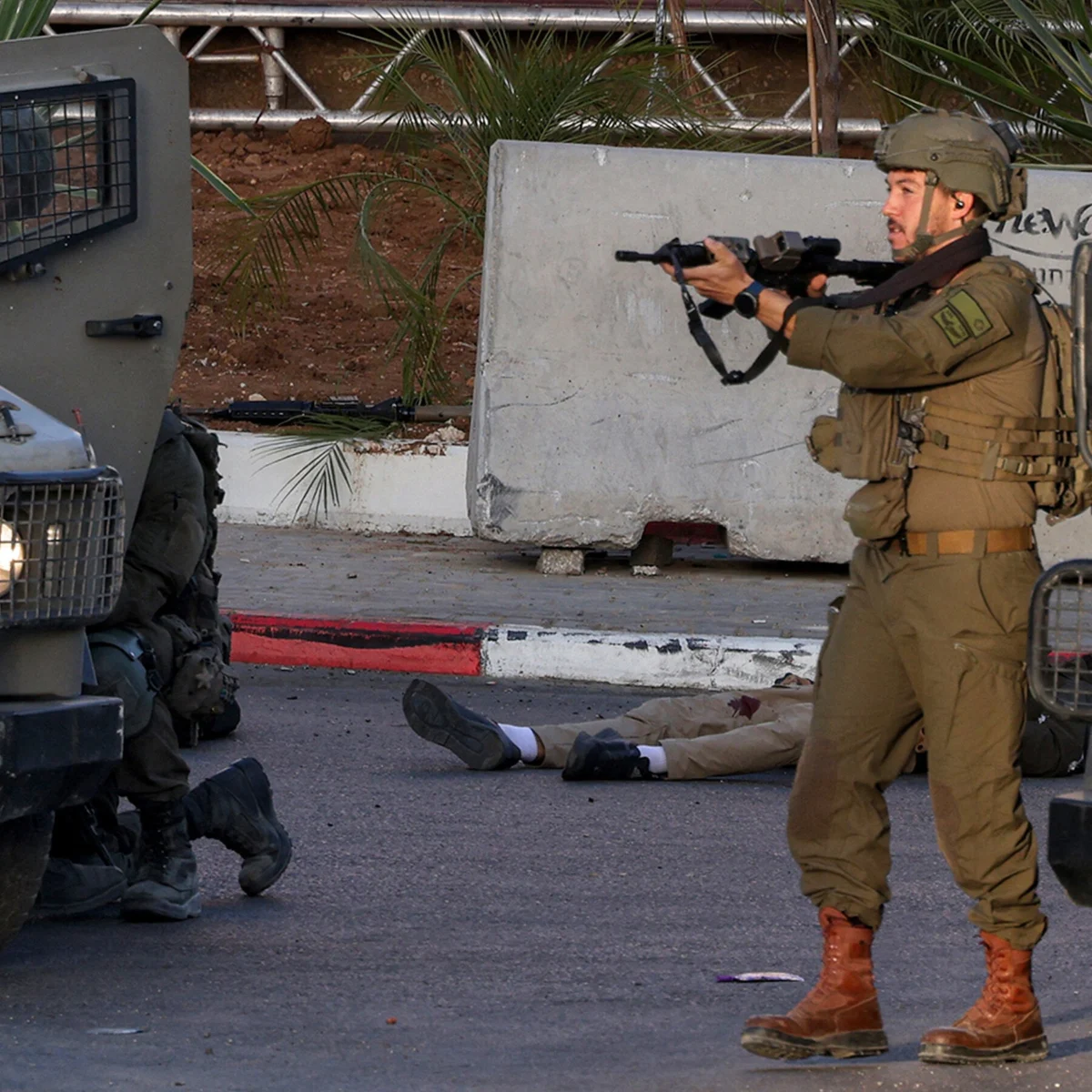
An attack in the Israeli-occupied West Bank killed two soldiers and two attackers, while three soldiers were left wounded, according to officials speaking to the Israeli military.
The Israeli military confirmed the casualties, and the incident has drawn a vow from Prime Minister Benjamin Netanyahu to launch a major offensive in the territory. The violence occurred in a context of ongoing friction in the West Bank, where tensions between Israeli forces and Palestinian fighters have simmered for years.
The West Bank shooting is the latest in a pattern of sporadic violence that escalates and recedes alongside broader regional dynamics, including Israeli-Palestinian negotiations and periodic flare-ups in Gaza.
Key Facts
- Palestinian gunmen opened fire on Israelis in the West Bank, officials said.
- Two Israeli soldiers and two attackers were killed, the Israeli military reported.
- Three Israeli soldiers were wounded in the attack, officials said.
- Prime Minister Benjamin Netanyahu vowed a major offensive in the occupied territory following the shooting.
The Story
What happens next?
After the West Bank shooting, attention turned to whether the promised major offensive would begin immediately. Military analysts noted that offensives in the West Bank typically involve coordinated raids, checkpoints, and targeted arrests rather than large-scale ground maneuvers.
The timing of any operation depends on intelligence readiness and broader regional considerations. Past Israeli incursions into the West Bank have often followed high-profile attacks, suggesting the current pledge may translate into short-term tactical actions rather than a prolonged campaign.
International reactions are expected within hours. Diplomatic sources frequently call for restraint and de-escalation after such incidents, though concrete pressure varies depending on the governing bodies involved.
Who is affected?
The immediate toll of the West Bank shooting falls on Israeli military personnel and their families, as well as the relatives of the attackers. Beyond the direct victims, civilian residents on both sides of the Green Line are likely to feel indirect consequences through movement restrictions and heightened security presence.
Palestinian communities in the West Bank may face increased scrutiny during military operations, affecting daily life, commerce, and access to services. Schools and hospitals have historically reported disruptions during periods of intensified raids.
International aid organizations monitoring the territory are also watching closely. Their assessments often influence funding decisions and diplomatic positions taken by member states at forums such as the United Nations.
How did we get here?
The West Bank remains one of the longest-standing disputed territories in the Middle East. Since 1967, it has been occupied by Israel, a status recognized by the United Nations but contested in various peace processes that span decades.
Periodic outbreaks of violence have punctuated longer stretches of relative calm. Each major incident tends to reset political momentum, making long-term agreements harder to sustain. The current environment reflects unresolved questions over borders, settlements, and sovereignty.
This backdrop helps explain why even a single shooting can trigger sweeping rhetorical responses like pledges of offensive action. The symbolic weight attached to maintaining security often outweighs granular policy discussions in public discourse.
What We Know — and What We Don’t
Verified by the source:
- Two Israeli soldiers and two attackers died in the West Bank shooting.
- Three Israeli soldiers were wounded during the attack.
- Prime Minister Benjamin Netanyahu declared intentions to launch a major offensive.
- The Israeli military provided the casualty figures cited by officials.
Still unconfirmed:
- The exact location and time of the West Bank shooting.
- Identity or affiliations of the attackers beyond “gunmen”.
- Specific timeline or scope of the planned major offensive.
- Potential injuries or casualties among Palestinian civilians nearby.
Why It Matters
Violence in the West Bank carries global significance because the territory sits at the heart of a protracted conflict with deep historical, religious, and geopolitical roots. Escalations can reverberate far beyond the region, influencing diplomatic relations, refugee policies, and international peace initiatives. For ordinary people living nearby, each incident reshapes routines, fears, and hopes in ways that echo across generations.
The West Bank shooting also underscores how fragile stability remains despite repeated mediation attempts. Whether future talks or confrontations dominate depends largely on how leaders respond in the critical hours after such events.
A meta description: “A West Bank shooting kills four and wounds three Israeli soldiers, prompting Prime Minister Netanyahu to pledge a major offensive in the occupied territory.”
What To Watch
Observers should monitor whether the announced major offensive moves beyond rhetoric into actual military deployment. Statements from international envoys and updates from the Israeli military will signal whether escalation or de-escalation prevails in the coming days.
For ongoing coverage of conflict and diplomacy in the region, explore our war-geopolitics archive.