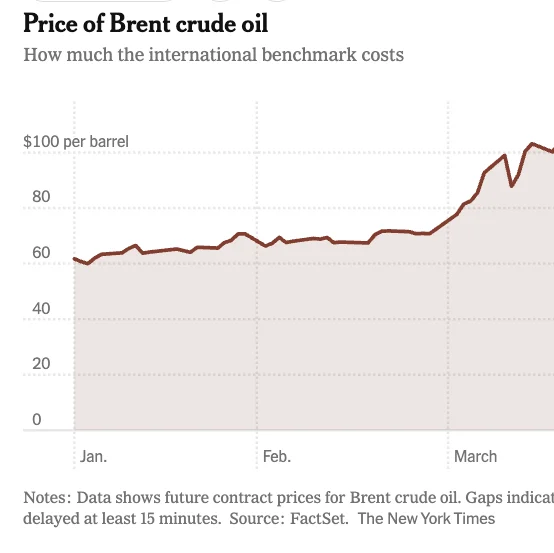
Global oil price climbed to $116 a barrel, its highest level since April, as investors grew increasingly concerned that the war in Iran could escalate again and put energy supplies at greater risk.
The rise reflects mounting unease in financial markets over the potential for renewed disruption to crude production and exports, though no new data on physical supply outages was released alongside the price movement.
Investors are weighing the possibility that renewed fighting or expanded hostilities could interrupt shipments through key transit routes, adding a risk premium to contracts for future delivery.
Key Facts
- Oil price reached $116 a barrel, highest since April.
- Investors fear the war in Iran could escalate again.
- The concern centers on energy supplies at greater risk.
- Renewed risk premium reflects potential supply disruption.
What Happens Next?
Market watchers are focusing on whether rhetoric from policymakers will cool or inflame concerns about energy security. Traders will also be watching inventory reports and production forecasts as the weeks progress, since those numbers tend to reinforce or temper risk appetite.
Economy and markets participants often react quickly to headlines about geopolitical tension, and this story is no exception: prices moved sharply on investor sentiment rather than announced supply cuts or output delays.
In the absence of fresh official commentary, price action remains sensitive to speculation and repositioning by hedge funds and other large players who help set the benchmark rates that consumers ultimately feel at the pump.
Who Is Affected?
Consumers in importing nations face higher costs as crude prices rise, which can push up gasoline and diesel prices at roadside stations. Commodity traders and energy firms see profit margins shift with each tick of the benchmark, rewarding some positions while penalizing others.
Governments in oil-importing countries may find fuel subsidies harder to maintain, while producers enjoy temporary gains in revenue. Airlines, trucking companies, and shipping lines all track these moves closely because fuel is among their largest operating expenses.
Financial institutions with loans tied to energy projects also monitor these developments since payment flows and project viability often track the underlying commodity. For now, the mood is cautious, and most analysts say stability depends largely on whether hostilities expand beyond current boundaries.
How Did We Get Here?
Concern began building earlier this year when reports surfaced suggesting that long-running regional tensions had begun spilling into energy infrastructure discussions. Though specific incidents were not detailed in public statements, financial desks started pricing in extra risk premiums across forward contracts.
Analysts point to historical precedent: past conflicts in adjacent regions caused temporary spikes before settling once diplomatic channels reopened or production resumed. This time, however, the interplay between real-time news cycles and algorithmic trading appears to amplify swings.
Still, fundamental factors such as spare capacity, refining activity, and storage levels remain unchanged at present. Until verifiable data confirms actual cuts to supply chains, much of today’s movement continues to hinge on perception rather than physical disruption.
What We Know — and What We Don’t
Verified by the source:
- The global oil price reached $116 a barrel.
- This marks the highest level since April.
- Investors are worried the Iran war may escalate again.
- That concern relates specifically to risks facing energy supplies.
Still unconfirmed:
- No confirmed physical supply outages were reported.
- Specific triggers driving renewed investor concern remain unclear.
- Official responses from producing or consuming nations have not been disclosed.
r>
Why It Matters
Rising oil prices ripple through virtually every economy, influencing everything from transportation costs to inflation data. When fears drive prices higher without corresponding changes in actual supply, central banks and finance ministries must weigh whether the effect is temporary noise or a signal of deeper instability requiring policy action.
What To Watch
Upcoming production reports and official statements from energy ministries could provide clarity on whether fears translate into measurable supply changes. Analysts expect price volatility to persist until clearer signals emerge about the trajectory of the conflict and its impact on output.