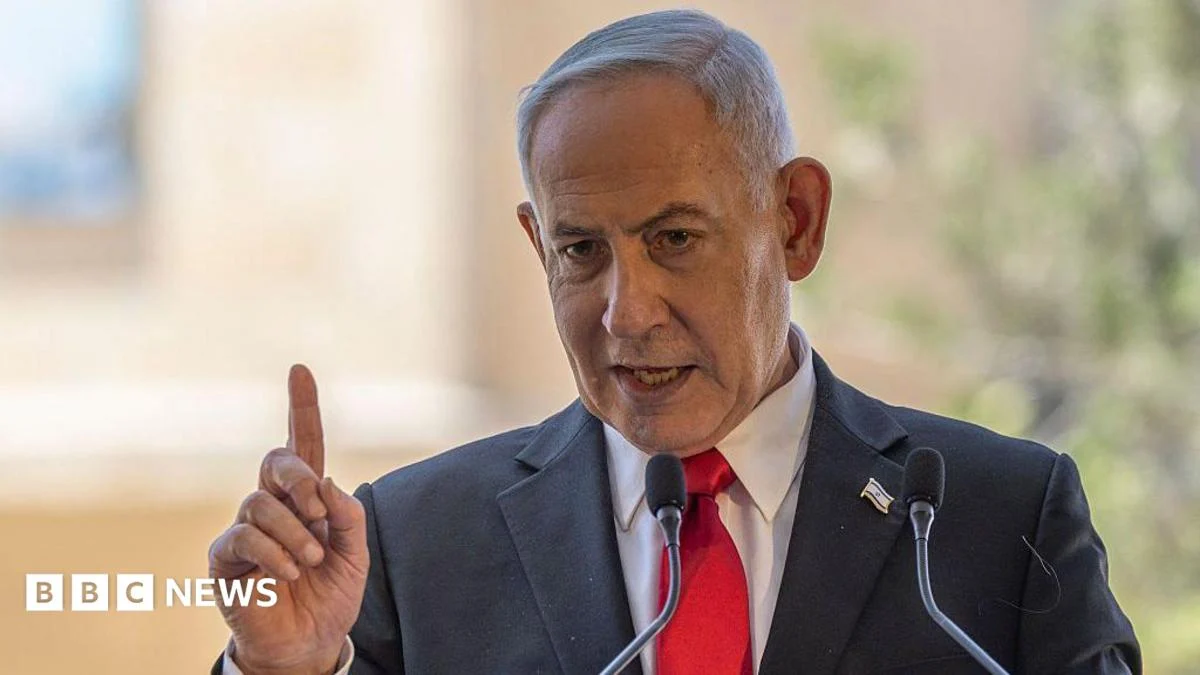
Israeli Prime Minister Benjamin Netanyahu attributed the attempted hijacking of a Flydubai passenger flight to ideological radicalization, saying the suspect had undergone ‘Islamist radical indoctrination’ and sought to ‘down the plane.’ Authorities have not released full details of the incident, but Netanyahu’s remarks represent one of the most direct public attributions of motive from a national leader.
Netanyahu’s comments came amid ongoing investigations into the disruption caused by the pilot who attempted to take over the cockpit mid-flight. While the plane ultimately landed safely, the event has prompted renewed scrutiny over security protocols on international flights and potential extremist influences within aviation crews.
KEY FACTS
- Israeli Prime Minister Benjamin Netanyahu commented on the Flydubai attacker.
- Netanyahu said the attacker had ‘Islamist radical indoctrination.’
- He stated the attacker intended to ‘down the plane.’
- The incident involved a Flydubai pilot attempting to seize control of the aircraft.
- The plane landed safely.
The Incident Unfolds
The incident occurred on a Flydubai passenger jet when a pilot reportedly attempted to forcibly enter the cockpit and assume control of the aircraft. The identities and roles of those involved remain largely undisclosed, though authorities confirmed that the situation was resolved without injury to passengers or crew. The flight continued normally after the threat was neutralized, but the event has raised urgent questions about aviation security measures and mental health screening for flight personnel.
Flydubai, the flag carrier of the United Arab Emirates, operates numerous regional and international routes. This incident marks one of the most serious internal disruptions to its operations, underscoring vulnerabilities that extend beyond external threats to include insider risks.
What Happens Next?
In the immediate aftermath, UAE officials have not provided detailed updates on whether charges have been filed or what specific actions led to the suspect being subdued. Investigators are expected to examine whether the individual acted alone or had ties to larger networks. However, no official statements beyond preliminary acknowledgments have clarified the extent of any ideological affiliations or premeditation.
International aviation regulators may revisit training protocols and psychological evaluations as part of broader safety enhancements. Meanwhile, families of passengers have been advised to monitor official channels for further information, though many have expressed frustration with the lack of transparency surrounding such a high-profile event.
WHAT WE KNOW — AND WHAT WE DON’T
Verified by the source:
- Prime Minister Netanyahu said the Flydubai attacker had ‘Islamist radical indoctrination.’
- He said the attacker intended to ‘down the plane.’
- A pilot attempted to take over the Flydubai plane.
- The plane landed safely.
Still unconfirmed:
- The exact time and date of the incident.
- The identity or background of the attacker.
- Whether any passengers or crew sustained injuries.
- Details about how the situation was contained.
- Any charges filed or investigation outcomes.
WHY IT MATTERS
This incident reflects growing concerns about insider threats in commercial aviation, particularly involving individuals influenced by extremist ideologies. As global travel rebounds, ensuring the integrity of crew vetting systems becomes critical for maintaining public confidence in air travel safety.
WHAT TO WATCH
Further details from UAE authorities regarding investigative findings and potential policy changes are unlikely without additional reporting. The geopolitical implications of linking this act to radical ideology will depend heavily on future disclosures from official sources.