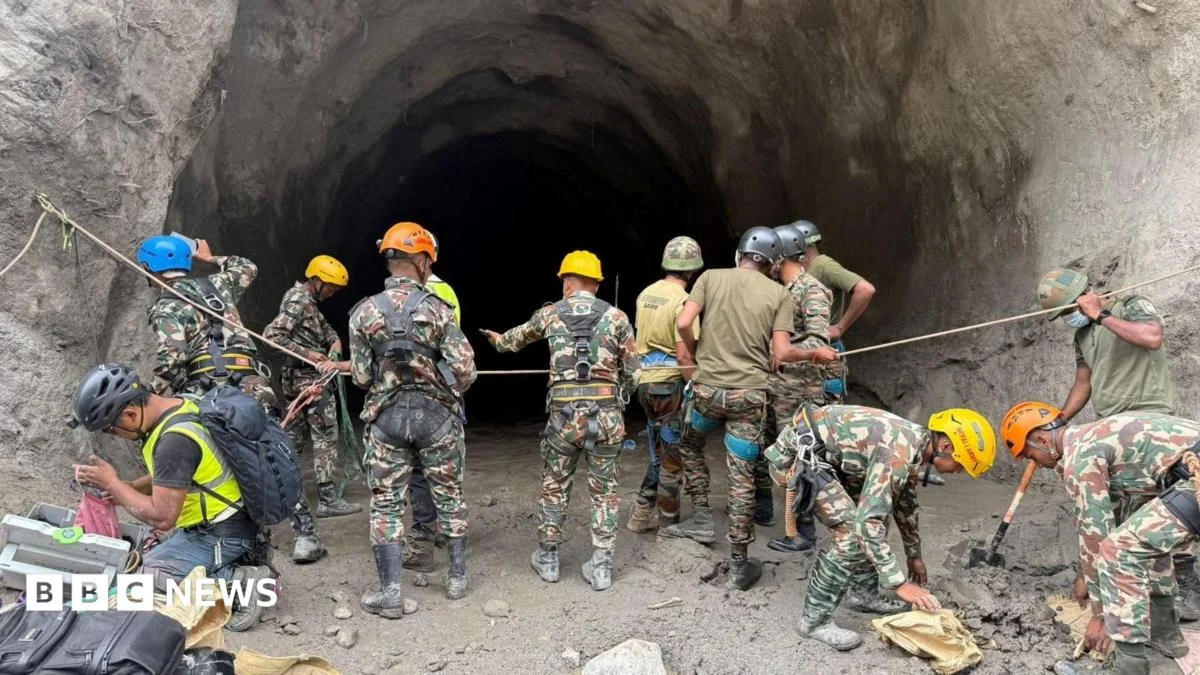
Rescuers in Nepal have resorted to using explosives to blast through hillsides as they struggle to reach hydropower workers trapped by severe flooding. The death toll from the flooding has risen to 939, according to BBC News, as desperate families wait anxiously for news of their loved ones.
The situation remains critical, with rescuers facing challenging terrain and limited access to the affected areas. The use of explosives highlights the extreme measures being taken to save lives in what has become one of Nepal’s deadliest flooding disasters.
KEY FACTS
- Rescuers are using explosives to blast through hillsides in search of trapped hydropower workers.
- The flooding death toll has reached 939, according to BBC News.
- Families of the trapped workers are waiting anxiously for updates.
THE STORY
What are rescuers doing?
Rescuers in Nepal are employing explosives to break through difficult terrain in their efforts to reach hydropower workers trapped by flooding. This drastic measure underscores the severity of the situation and the challenges faced by emergency teams. The flooding has caused widespread devastation, making traditional rescue methods ineffective in some areas.
Who is affected?
The families of the trapped hydropower workers are enduring an agonizing wait as rescue operations continue. The broader impact of the flooding has been catastrophic, with 939 lives lost so far. The disaster has left communities reeling and raised urgent questions about infrastructure resilience in flood-prone regions. More stories about climate-related disasters can be found in our climate and environment archive.
WHAT WE KNOW — AND WHAT WE DON’T
Verified by the source:
- Rescuers are using explosives to reach trapped hydropower workers.
- The flooding death toll stands at 939.
Still unconfirmed:
- The exact number of hydropower workers still trapped.
- The specific locations where explosives are being used.
- The timeline for completing rescue operations.
WHY IT MATTERS
This disaster highlights the increasing vulnerability of communities to extreme weather events, which are becoming more frequent due to climate change. The tragic loss of life and the desperate measures being taken by rescuers underscore the urgent need for improved disaster preparedness and infrastructure in regions prone to natural disasters.
WHAT TO WATCH
Updates on the rescue efforts and the condition of the trapped workers are expected in the coming days. The death toll may continue to rise as rescuers gain access to more affected areas.