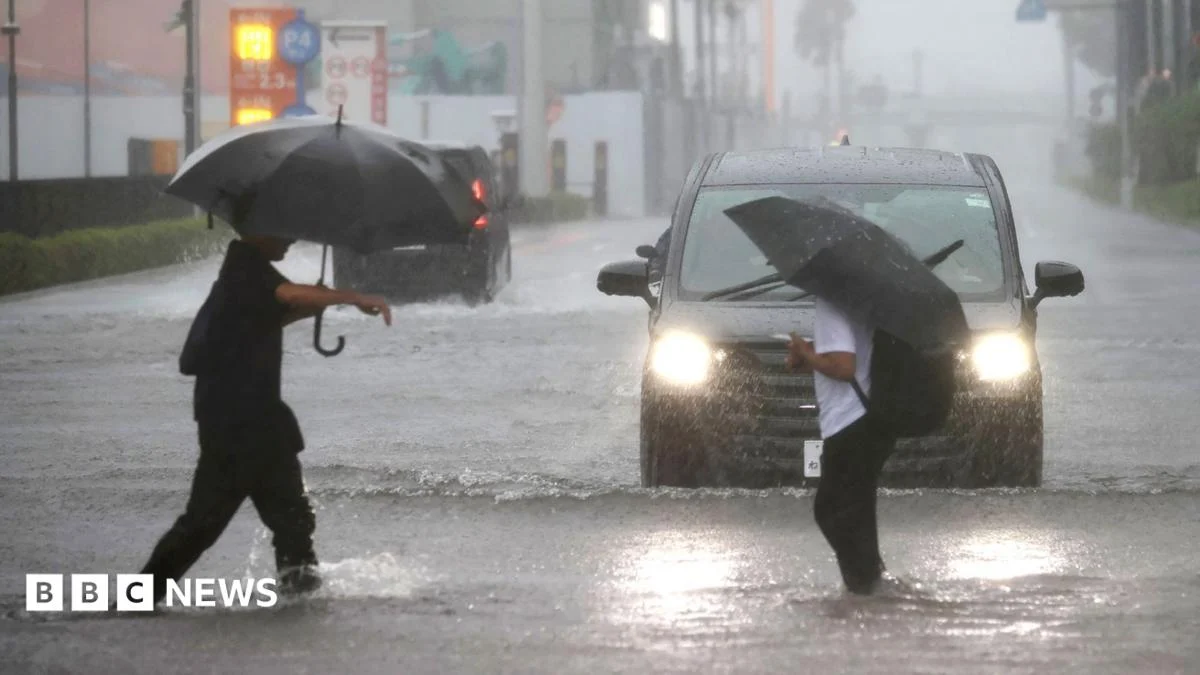
Millions of people in Japan were urged to evacuate as Typhoon Dujuan hit the country, after the nation’s meteorological agency issued warnings of an imminent threat to life. However, those warnings have since been downgraded in most areas.
The approach of Typhoon Dujuan prompted mass evacuation advisories across large parts of Japan, reflecting the severity of the storm as assessed by local forecasters. While the strongest alerts have now been reduced in many regions, the system continued to pose risks as it moved through the area.
KEY FACTS
- Millions were urged to evacuate as Typhoon Dujuan hit Japan.
- The meteorological agency had warned of an imminent threat to life.
- Warnings were downgraded in most areas following the storm’s progression.
- The typhoon was tracked as a powerful tropical cyclone affecting the region.
Who Is Affected?
The evacuation advisories impacted millions of residents across multiple regions of Japan. Authorities activated emergency response protocols to guide displaced populations toward shelters and safer zones. Communities in coastal and low-lying areas were particularly targeted due to risks from storm surge and flooding. Emergency services worked to relay timely updates as conditions evolved. Local governments coordinated transportation and supply distribution for those unable to evacuate independently.
What Happens Next?
Following the downgrade of warnings in most areas, attention turned to recovery efforts and infrastructure assessment. Officials began evaluating damage caused by high winds and heavy rainfall associated with Typhoon Dujuan. Power outages and transport disruptions were reported, though exact figures were not specified. Cleanup crews readied to clear debris and restore services. The broader public remained advised to stay alert as residual effects lingered in some regions. Meteorological tracking would continue to monitor any residual activity from the system.
WHAT WE KNOW — AND WHAT WE DON’T
Verified by the source:
- Millions were urged to evacuate due to Typhoon Dujuan.
- The Japan meteorological agency warned of an imminent threat to life.
- Warnings were downgraded in most areas after the storm passed.
Still unconfirmed:
- Total number of people evacuated.
- Specific regions most affected by the typhoon.
- Any injuries or casualties reported.
WHY IT MATTERS
Typhoons like Dujuan highlight the ongoing vulnerability of Pacific island nations and coastal regions to extreme weather events. Evacuation orders and timely warnings play a critical role in reducing loss of life, underscoring the importance of accurate forecasting and public communication during natural disasters.
WHAT TO WATCH
Further updates may emerge as cleanup and recovery efforts proceed in affected areas throughout Japan.