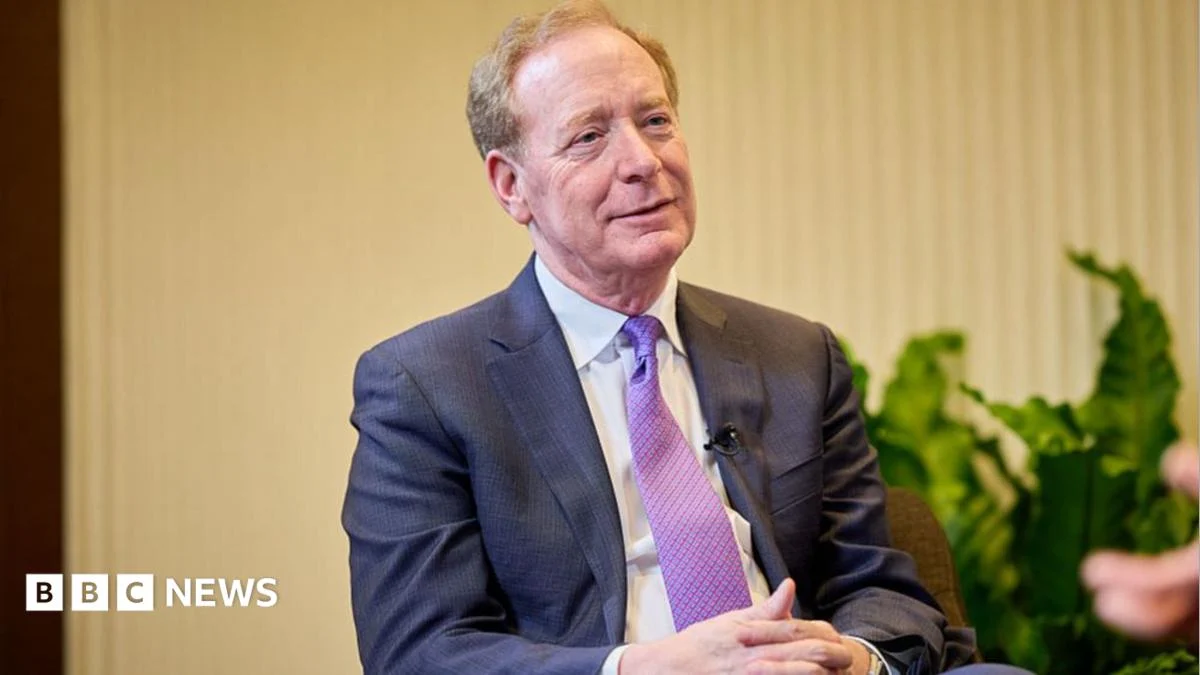
Microsoft President Brad Smith has argued that artificial intelligence remains less regulated than milk, calling for global rules on AI development and deployment. His comments highlight ongoing concerns about oversight gaps in a rapidly advancing field.
Smith emphasized the need for coordinated international frameworks to govern AI technologies. He suggested the UK is in the “best position” to lead the charge, though he did not specify which policies or bodies should be involved. The call for regulation comes amid growing public and political scrutiny of AI systems worldwide.
The comparison to milk regulation underscores a perception that essential technologies today lack equivalent safeguards to basic consumer products. While food safety regulations are well-established in most countries, legal frameworks for AI remain fragmented or nascent. Smith’s remarks contribute to a broader industry conversation about balancing innovation with accountability.
Key Facts
- Microsoft president Brad Smith stated AI is less regulated than milk.
- He called for global rules on AI, according to BBC News.
- Smith said the UK is in the best position to lead AI regulation efforts.
The Story
What does this mean for AI regulation?
The central issue raised by Smith is the perceived lack of oversight in AI compared to everyday regulated goods. Milk, as a food product, undergoes strict quality control and safety checks before reaching consumers. By contrast, AI systems often operate with minimal external review, especially in private-sector settings.
This gap has drawn attention from policymakers, advocacy groups, and technology companies alike. Some argue for proactive regulation to prevent misuse or harm, while others caution against overregulation stifling innovation. Smith’s analogy reflects mounting pressure on governments to codify standards for AI ethics, transparency, and accountability.
Internationally, various countries have proposed or enacted AI-related legislation. The European Union introduced an AI Act, and other regions are considering similar measures. However, a unified global approach has yet to take shape.
How did we get here?
The push for AI governance has gained momentum over the past decade as machine learning models became more influential in finance, healthcare, employment, and law enforcement. High-profile incidents involving biased algorithms and data privacy breaches have fueled public concern.
Corporate leaders like Smith increasingly find themselves advocating for regulatory clarity—not only to protect users but also to create predictable operating environments for their businesses. Tech firms have historically resisted heavy-handed oversight, but recent statements suggest a shift toward accepting or even promoting structured rules.
The involvement of the UK as a potential leader in AI regulation aligns with its status as a major tech hub and host to several multinational corporations. London has previously positioned itself as a bridge between traditional finance and emerging digital economies.
What We Know — and What We Don’
Verified by the source:
- Brad Smith compared AI regulation to milk regulation.
- He called for global rules on AI.
- He said the UK is in the best position to lead AI regulation.
Still unconfirmed:
- The exact context or setting of Smith’s remarks.
- Specific policy proposals he supports.
- Any formal response from UK officials or institutions.
Why It Matters
AI regulation affects how businesses develop technology, how governments protect citizens, and how individuals interact with automated systems daily. As AI integrates deeper into society, establishing clear boundaries and expectations becomes critical for both safety and innovation.
What To Watch
Future statements from global leaders and regulators may clarify whether concrete steps toward standardized AI governance emerge. For now, the debate continues to evolve alongside technological progress.