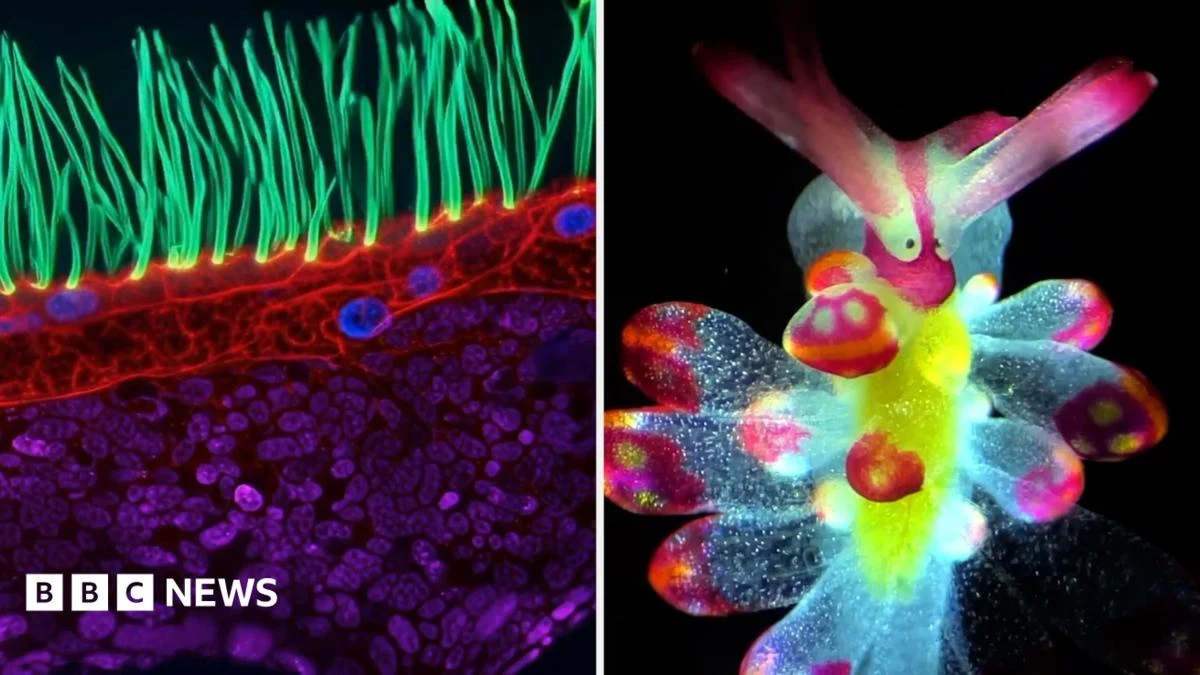
A microscopic video competition has showcased some of the tiniest life forms on Earth, with one standout entry capturing the delicate movement of cilia inside the airways of a child. The winning video highlights these hair-like structures, which play a crucial role in the body’s natural defense system, particularly in individuals affected by a rare genetic condition.
The competition aimed to bring attention to the microscopic world that often goes unnoticed, encouraging both amateur and professional videographers to share their discoveries. By focusing on the intricate details of cellular structures and microorganisms, these microscopic videos offer a unique perspective on biology and medicine.
The event underscores the importance of scientific visualization in advancing research and education, providing insights into how microscopic processes affect human health. Viewers are invited to explore the unseen universe that exists around and within us, fostering curiosity about the natural world.
Key Facts
- The winning video features cilia in the airways of a child with a rare genetic disease.
- The cilia are hair-like structures found in the respiratory system.
- The competition highlights microscopic organisms and biological processes.
- The videos aim to reveal the unseen microscopic world.
- The winning entry was recognized in a microscopic video competition.
What Are Cilia and Why Are They Important?
Cilia are microscopic, hair-like structures that line the respiratory tract and other organs. They move in coordinated waves to sweep away mucus, dust, and pathogens, helping to keep the lungs clear and protect against infection. In individuals with primary ciliary dyskinesia or similar genetic conditions, the cilia may not function properly, leading to chronic respiratory issues and other complications. Visualizing cilia in action through microscopic video provides researchers and doctors with valuable insights into how these structures operate in healthy and diseased states, potentially guiding future treatments for rare genetic disorders.
Microscopic Video Competitions: Bridging Science and Public Engagement
Competitions centered on microscopic imagery serve dual purposes: celebrating scientific artistry and advancing public understanding of biology. Participants include researchers, students, and science communicators who use advanced microscopy techniques to capture dynamic biological processes. These visuals can inspire interest in STEM fields and help illustrate complex medical concepts to broader audiences. Additionally, such competitions encourage collaboration between institutions and promote the development of new imaging technologies. The winning microscopic video of cilia not only demonstrates technical skill but also highlights real-world applications in diagnosing and studying rare diseases affecting human health.
What We Know — and What We Don’t
Verified by the source:
- The winning video shows cilia in a child’s airways.
- The child has a rare genetic disease.
- A microscopic video competition featured the footage.
- Cilia are described as hair-like structures in the airways.
Still unconfirmed:
- The specific name of the rare genetic disease.
- The identity of the child or their age.
- The organization or institution behind the competition.
- Details about other finalists or submitted videos.
- When or where the competition took place.
Why It Matters
This microscopic video offers a rare glimpse into the biological mechanisms underlying respiratory health, particularly for those affected by rare genetic conditions. By visualizing cilia function in real time, it enhances both scientific understanding and public engagement with microscopic life, supporting efforts in medical research and education.
What To Watch
Further analysis of the winning footage may be published in scientific journals. Updates about future iterations of the microscopic video competition could emerge, highlighting new discoveries in biology and medicine.
Meta description:
Explore more in our health science and technology coverage.