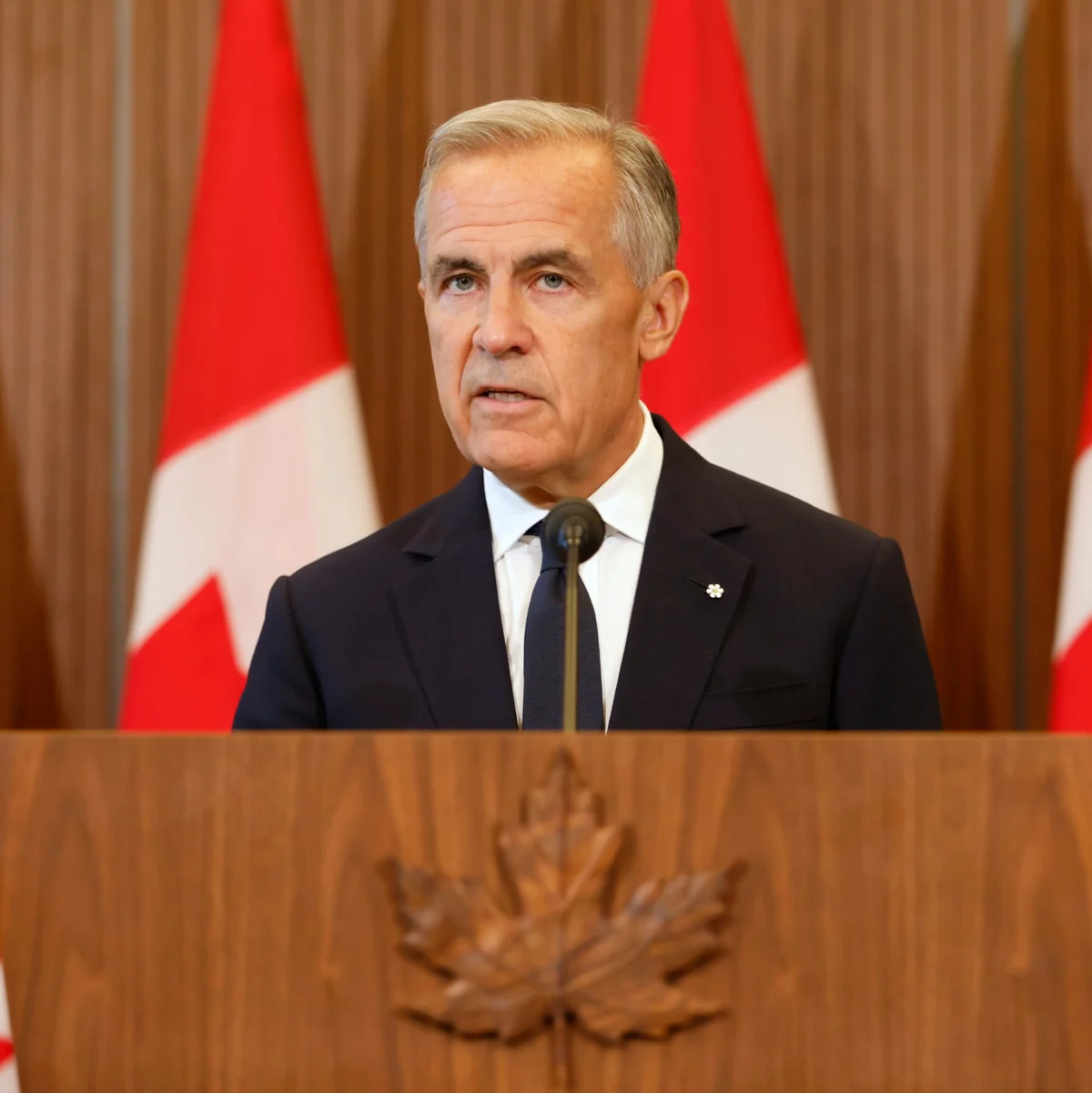
Prime Minister Mark Carney addressed Canadians on Saturday morning following the collapse of trade talks with the United States. The talks were suspended after President Trump imposed punishing tariffs, prompting Carney to order negotiators to step back from discussions.
The abrupt halt to negotiations marks a significant setback in U.S.-Canada trade relations, which have been under strain due to ongoing disputes over tariffs and economic policy. Carney’s address aimed to reassure Canadians about the government’s next steps amid the uncertainty.
KEY FACTS
- Prime Minister Mark Carney spoke to Canadians on Saturday morning.
- He ordered negotiators to suspend trade talks with the U.S.
- The talks collapsed due to President Trump‘s punishing tariffs.
What Happens Next?
The suspension of trade talks raises questions about the future of U.S.-Canada economic relations. Without a resolution, tariffs could remain in place, potentially affecting industries reliant on cross-border trade. Carney’s address did not outline a specific plan but signaled a pause in negotiations.
Why Did the Talks Collapse?
The immediate cause of the breakdown appears to be President Trump’s tariffs, which Carney described as a major obstacle. Trade experts suggest that such punitive measures often lead to retaliatory actions, though no Canadian response has been confirmed yet. The situation reflects broader tensions in North American trade policy.
WHAT WE KNOW — AND WHAT WE DON’T
Verified by the source:
- Mark Carney addressed Canadians on Saturday morning.
- Trade talks with the U.S. were suspended due to Trump’s tariffs.
Still unconfirmed:
- Whether Canada will impose retaliatory tariffs.
- When or if negotiations will resume.
WHY IT MATTERS
The collapse of trade talks could have wide-reaching effects on both economies, particularly for industries dependent on cross-border commerce. Without a resolution, businesses and consumers may face higher costs due to prolonged tariffs.
WHAT TO WATCH
Observers will monitor whether Canada responds with its own tariffs or seeks alternative trade agreements. The next steps from both governments will determine the direction of U.S.-Canada economic relations.