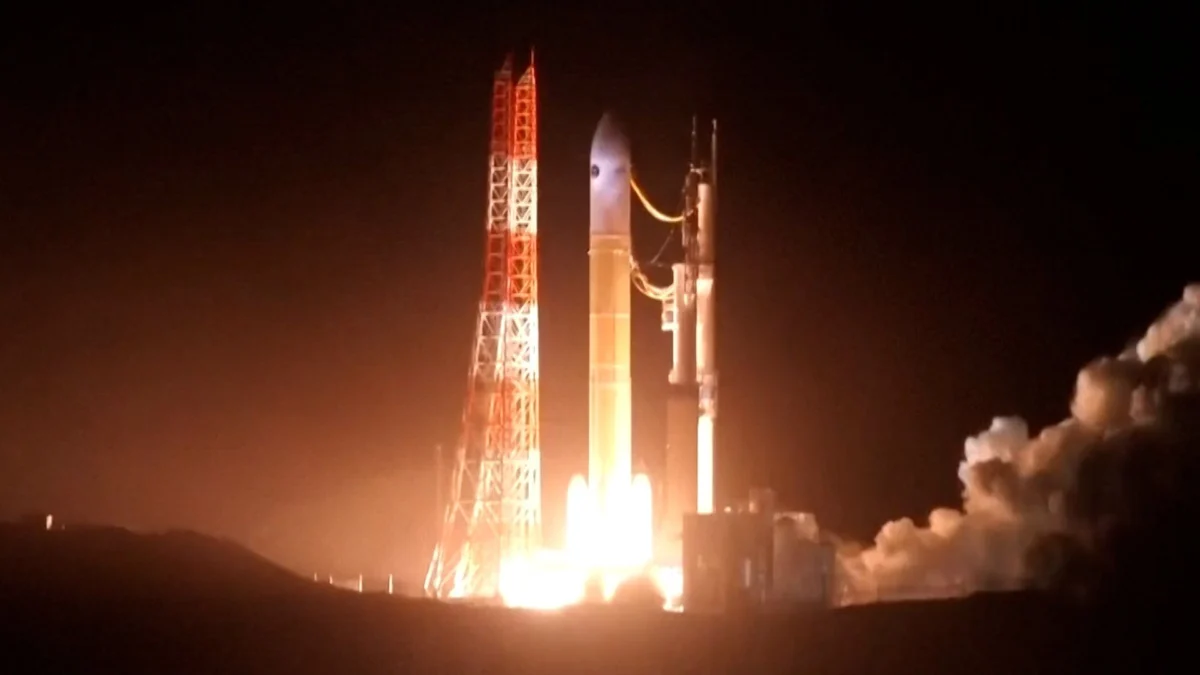
Japan has launched a five-year uncrewed mission aimed at collecting Mars moon samples from Phobos, one of the red planet’s two natural satellites. The mission represents Japan’s first attempt to retrieve material from another world and return it to Earth for scientific study. The spacecraft is expected to spend several years traveling to Mars before attempting to land on or near Phobos and gather surface material for the journey home.
The mission builds on Japan’s growing reputation in space exploration and robotic sample-return efforts. Previous missions such as Hayabusa and Hayabusa2 demonstrated Japan’s capability to reach distant targets and return scientifically valuable material. Officials have described this latest effort as one of the most ambitious in the country’s space program.
Key Facts
- Japan launched a five-year uncrewed mission to collect Mars moon samples.
- The target of the mission is Phobos, one of Mars’ two moons.
- The mission is described as historic by the source.
The Story
Why this mission matters
The mission focuses on Phobos, which is widely believed to be either an asteroid captured by Mars’ gravity or debris left behind after a collision with the planet long ago. Determining its composition could offer clues about the early solar system and the history of Mars itself. Scientists hope the samples will help answer questions that current remote observations cannot resolve.
Unlike previous missions that targeted asteroids, this mission will attempt to operate around and potentially land on a moon. That adds layers of technical complexity, including navigating the gravitational environment between Mars and Phobos. The spacecraft must also carry instruments capable of collecting and preserving material during brief contact with the surface.
The sample-return aspect distinguishes this mission from orbiters or rovers that analyze material in place. Instead, the spacecraft is designed to seal collected material and begin the journey back to Earth. If successful, the samples would arrive years later and be studied by researchers worldwide, potentially reshaping scientific understanding of Mars and its origins.
What happens next?
After launch, the spacecraft will enter a cruise phase lasting several years as it travels toward Mars. During this time, mission operators will monitor systems and make course corrections as needed. Upon arrival, the craft will study Phobos from orbit before attempting any surface interaction.
The timeline for sample collection has not been specified in detail by the source, but the overall mission duration is described as five years. That suggests multiple phases, including transit, operations near Mars, and return travel. The final stage would involve releasing a re-entry capsule carrying the samples toward Earth.
Historic milestones like this often depend on international cooperation and shared infrastructure for tracking and data analysis. While the source does not name partner agencies, past Japanese missions have involved collaboration with other space programs, suggesting this effort may follow a similar model.
What We Know — and What We Don’
Verified by the source:
- The mission is five years long and uncrewed.
- Its goal is to collect samples from Phobos.
- Phobos is one of Mars’ two moons.
Still unconfirmed:
- The exact launch date and time.
- The specific technology used to collect samples.
It is unclear whether the spacecraft will land on or fly by Phobos.
The destination facility on Earth for sample analysis has not been confirmed.
Why It Matters
Planetary sample-return missions provide material that remote sensing cannot match. Physical samples allow detailed laboratory analysis, which can reveal composition, age, and environmental history. For Mars and its moons, those insights are central to understanding planetary formation and habitability across the solar system.
What To Watch
Future updates from mission controllers will clarify operational details and timeline milestones. Scientists and space agencies around the world will likely follow progress closely as Japan pursues its first Mars moon sample effort.