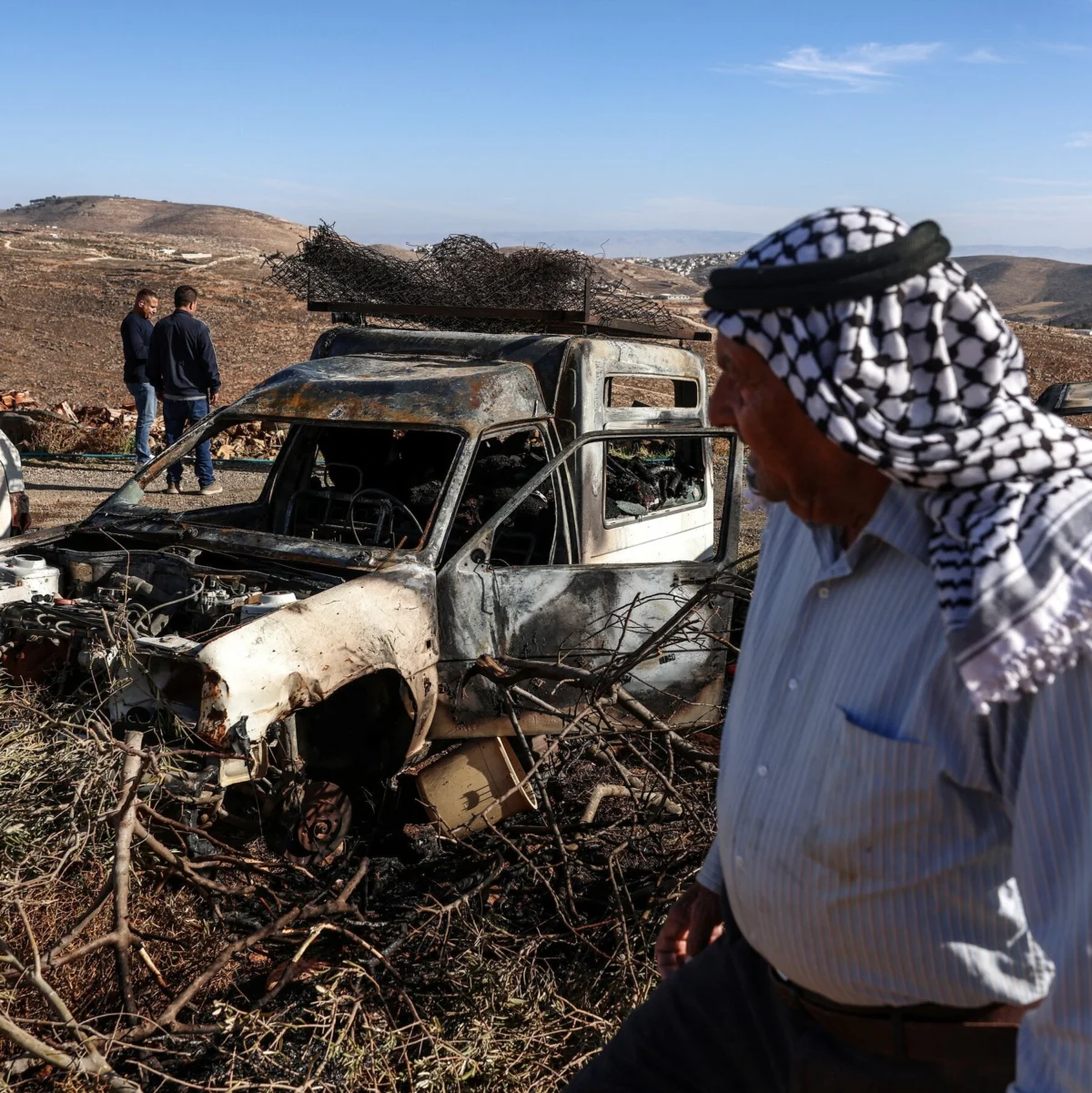
Israeli political leaders have publicly denounced what they labeled Jewish terrorism following a wave of violent raids by extremist settlers against Palestinian villages in the West Bank over the weekend. The condemnation came from opponents of Prime Minister Benjamin Netanyahu’s government, who are demanding a forceful state response to the violence.
The attacks, described as a spate of violent raids targeting Palestinian communities, have intensified political pressure on the current administration. Critics argue the government has not done enough to confront extremist elements within the settler movement, while the recent statements signal a sharpening rhetorical break from some mainstream political figures.
Key Facts
- Israeli political leaders denounced Jewish terrorism after West Bank attacks
- Extremist settlers carried out violent raids on Palestinian villages
- The raids occurred over the weekend
- Opponents of the Netanyahu government demanded a forceful response
- The violence has sparked political debate over state accountability
The Story
What triggered the political condemnation?
A series of coordinated attacks by extremist settlers targeted multiple Palestinian villages in the West Bank over the weekend. The raids involved property destruction, physical assaults, and intimidation tactics that have become increasingly frequent in recent months. These actions prompted an unusual public rebuke from across the Israeli political spectrum, with leaders explicitly using the term Jewish terrorism to characterize the violence.
The language marks a significant shift. For years, mainstream Israeli politicians have avoided applying the terrorism label to Jewish perpetrators, reserving it almost exclusively for Palestinian militants. The willingness to name the ideology and tactics as terrorism reflects growing alarm over the normalization of settler violence and its implications for both Palestinian civilians and Israeli rule of law.
Who is affected by the escalating violence?
Palestinian villagers in the West Bank bear the direct brunt of these raids, facing home invasions, crop destruction, and physical harm with limited protection from Israeli security forces. Human rights organizations have long documented a pattern of impunity for settler attackers, citing low indictment rates and minimal sentencing when cases do proceed.
Beyond the immediate victims, the violence destabilizes the already fragile security coordination between Israeli authorities and the Palestinian Authority. It also complicates Israel’s international standing, as allies increasingly criticize the failure to curb extremist settlers. The political fallout now threatens to fracture Netanyahu’s coalition, which relies on far-right parties that oppose crackdowns on settler activity.
How did we get here?
The current surge follows years of expanding settlement activity and ideological radicalization among segments of the settler movement. Successive governments have expanded legal protections and infrastructure for settlements while enforcement against violent extremists has lagged. The current coalition includes ministers who openly support settlement expansion and have questioned the legitimacy of prosecuting settlers for attacks on Palestinians.
Weekend raids represent an escalation in both scale and coordination, suggesting organized networks rather than spontaneous acts. Security analysts note that the perpetrators often operate with advanced knowledge of military patrol schedules, indicating either sophisticated intelligence or institutional gaps in prevention.
What We Know — and What We Don’t
Verified by the source:
- Israeli political leaders used the term Jewish terrorism in public statements
- Extremist settlers conducted violent raids on Palestinian villages
- The attacks took place over the weekend
- Opposition figures demanded a forceful government response
Still unconfirmed:
- Exact number of villages attacked or civilians injured
- Whether any arrests have been made
- Specific policy measures the government may adopt
- Reaction from coalition partners in the Netanyahu government
- Long-term impact on Israeli-Palestinian security coordination
Why It Matters
The explicit condemnation of Jewish terrorism by mainstream Israeli leaders signals a potential turning point in how the state addresses internal extremism. If followed by concrete enforcement, it could reduce violence against Palestinian communities and restore credibility to Israeli legal institutions. Failure to act, however, risks entrenching impunity and deepening both domestic political crises and international isolation.
What to Watch
Observers will monitor whether the Netanyahu government announces specific security operations against extremist settlers, and whether coalition tensions force policy changes or political realignments.