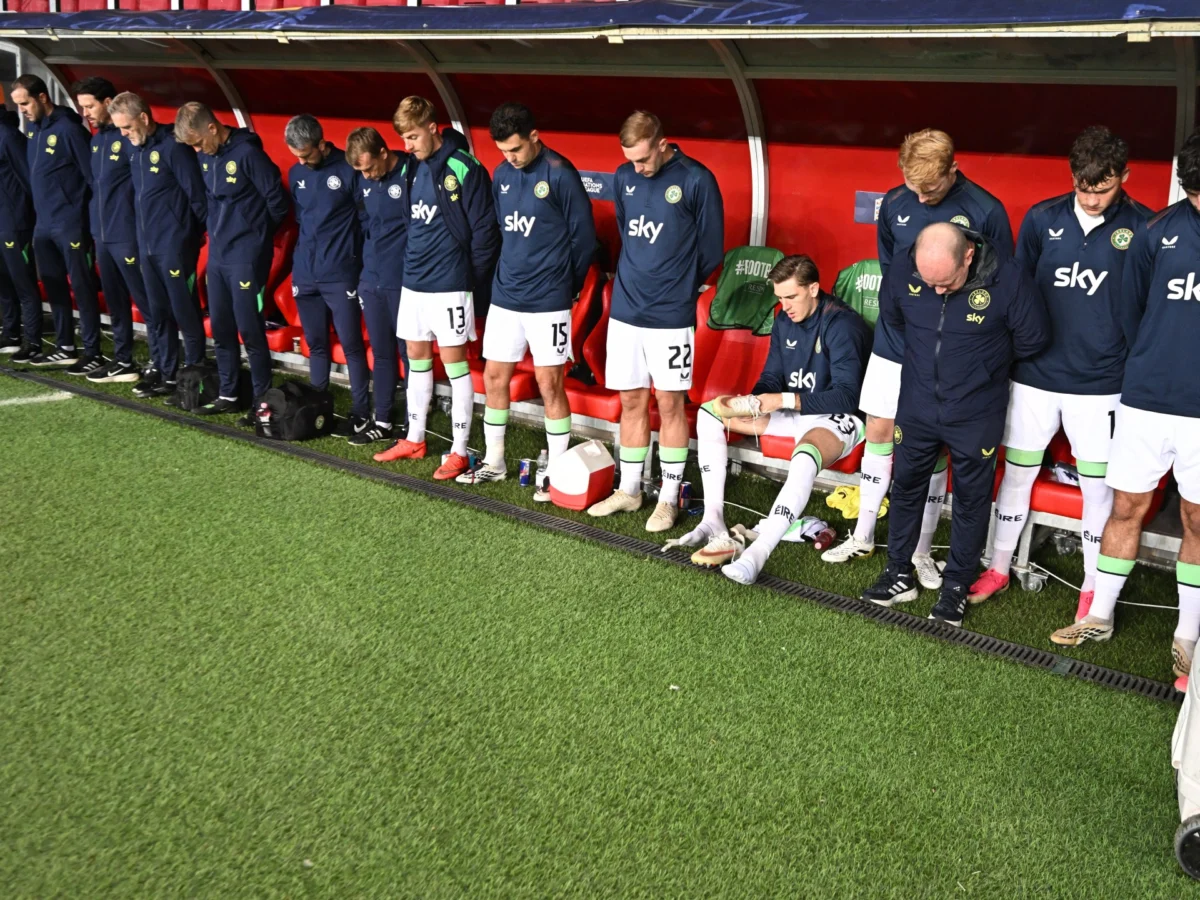
Ireland defeated Israel in a controversial UEFA Nations League match marked by a pre-game political protest.
The match drew attention after Irish players wore black armbands in support of Palestine, bowed their heads in silence, and refused to shake hands with their Israeli counterparts before kickoff. The actions heightened existing tensions around international sports fixtures involving Israel, drawing scrutiny from governing bodies and human rights advocates alike.
KEY FACTS
- Ireland defeated Israel in a controversial UEFA Nations League match.
- Irish players wore black armbands in support of Palestine.
- Players bowed their heads before the game.
- Pre-match handshakes were refused by Irish players.
What unfolded during the protest?
The Irish team staged a coordinated pre-game demonstration by wearing black armbands symbolizing support for Palestine. They bowed their heads in what appeared to be a moment of silence or mourning before refusing to participate in the customary handshake ritual with the Israeli side. These actions were widely documented on social media and broadcast globally.
UEFA has previously addressed similar on-field political statements, often fining teams or issuing warnings. The organization maintains strict rules against political messaging in competition, though enforcement varies depending on context and tone.
Why did the protest happen?
Irish players cited solidarity with the Palestinian people amid ongoing regional conflict. Their decision reflects broader sentiment among some European athletes and citizens regarding the Israeli-Palestinian issue.
The gesture has sparked debate across global football circles. Supporters praised the stand, while critics accused the team of politicizing sport. Several federations have issued statements calling for calm discourse.
Who is affected by this controversy?
Beyond the two nations involved, many stakeholders feel the ripple effects. Fans, sponsors, broadcasters, and fellow competitors now face renewed pressure over where they position themselves politically.
UEFA may open disciplinary proceedings against the Football Association of Ireland. Meanwhile, Israeli officials expressed disappointment but indicated willingness to continue competing if future matches proceed without incident.
WHAT WE KNOW — AND WHAT WE DON’T
Verified by the source:
- Ireland defeated Israel in a UEFA Nations League match.
- Irish players wore black armbands supporting Palestine.
- The team bowed their heads prior to kickoff.
- Handshakes were refused by Irish players.
Still unconfirmed:
- The final score of the match.
- Exact timing of protests within the stadium.
- Whether UEFA has launched formal investigations.
- Details about repercussions imposed on either side.
WHY IT MATTERS
This incident underscores how modern sports increasingly intersect with geopolitics. As athletes become platforms for advocacy, sports organizations struggle to balance neutrality with freedom of expression—especially when real-world conflicts spill onto pitches worldwide.
WHAT TO WATCH
Fans should monitor whether UEFA issues sanctions or policy updates following the protest. Additional international fixtures between these teams might also attract further scrutiny.