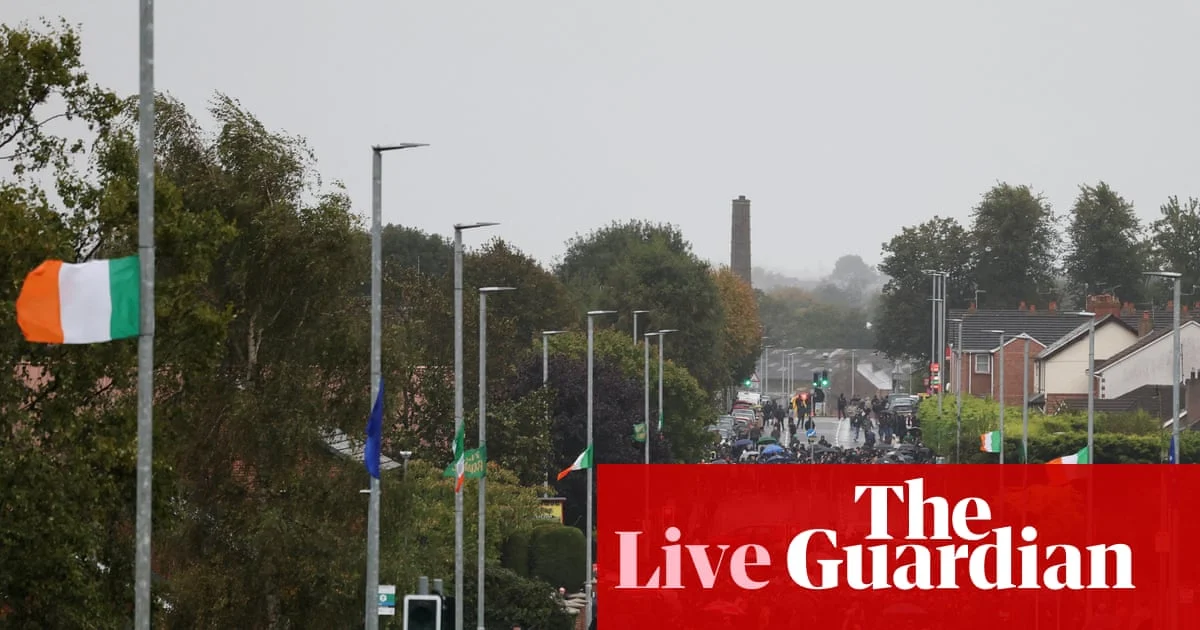
Loyalists organizing a controversial Orange Order march in the Catholic enclave of Portadown have been told they can wait weeks, according to Democratic Unionist Party (DUP) leader Gavin Robinson, as the event was delayed amid large-scale protests and heightened political tension. The delay follows mounting pressure from nationalist communities and political leaders, raising new questions about how parades near sensitive interfaces are managed in Northern Ireland.
First Minister Michelle O’Neill joined the counter-protest and called on Northern Ireland Secretary Chris Bryant to intervene, questioning why the Parades Commission approved the march after decades of resistance. The situation underscores ongoing divisions over commemorative events and the role of oversight bodies in de-escalating community tensions.
Key Facts
- Gavin Robinson, DUP leader, said loyalists can wait weeks for the Portadown march.
- Michelle O’Neill, Northern Ireland First Minister, protested and asked Chris Bryant to intervene.
- The Orange Order march was delayed after Parades Commission approval sparked protests.
- Carla Lockhart, DUP MP, defended marchers as dignified and peaceful.
- Protest took place in Portadown, a historically divided area in Northern Ireland.
The Story
Who Is Affected by the Delay?
The ongoing tension centers on residents of the Catholic-majority Garvaghy Road area in Portadown, who have historically opposed Orange Order marches through their neighborhood. These communities often face heightened anxiety and disruption during such events, particularly when the Parades Commission—responsible for regulating parades in Northern Ireland—rules against them.
Nationalist politicians, including Sinn Féin’s Michelle O’Neill, represent these communities and have long opposed marches seen as triumphalist or divisive. The delay reflects broader concerns about balancing civil rights with community sensitivities in post-conflict Northern Ireland.
Meanwhile, Protestant unionists view the marches as part of their cultural heritage, defended by MPs like Carla Lockhart, who framed the participants as lawful and non-threatening. This divide highlights how parades remain symbolic flashpoints for deeper identity and sovereignty debates in the region.
How Did We Get Here?
The Parades Commission, an independent body established under the Good Friday Agreement, regulates marches to prevent disorder and protect community relations. In this case, it approved a march along Garvaghy Road—a route opposed by residents for nearly three decades, according to O’Neill.
Her comment questioned the logic behind allowing the parade now, given the long-standing resistance and potential for unrest. The commission’s role is to weigh competing interests, but decisions like this one frequently inflame tensions rather than resolve them.
The march was ultimately delayed, with DUP leader Gavin Robinson signaling that loyalists are prepared to wait for a resolution. This pause may offer space for diplomacy, though it also risks prolonging uncertainty for residents and organizers alike.
What Happens Next?
With the Portadown march postponed, attention turns to whether further dialogue between communities and officials can prevent escalation. Northern Ireland Secretary Chris Bryant has been urged to step in, though no formal intervention has been announced yet.
Political leaders on both sides continue to stake out positions. Nationalists demand assurances that no future permit will spark another confrontation, while unionists insist on their right to peaceful procession. The situation remains fluid, with potential implications for cross-community relations across Northern Ireland.
<n
What We Know — and What We Don’
Verified by the source:
- The Orange Order march in Portadown was delayed amid protests.
- Gavin Robinson, DUP leader, said loyalists can wait weeks.
- Michelle O’Neill protested and requested intervention from Chris Bryant.
- Carla Lockhart defended marchers as non-threatening in a social media post.
- The Parades Commission had previously approved the march.
Still unconfirmed:
- No official statement from the Parades Commission explaining its decision.
- The exact number of protesters present at the counter-protest is unknown.
- Whether formal negotiations are underway between parties.
- Any timeline or conditions for rescheduling the march.
Why It Matters
Parades in Northern Ireland often serve as flashpoints reflecting broader societal divisions rooted in decades of conflict known as “the Troubles.” How such disputes are managed continues to influence public trust in institutions and the stability of power-sharing government. Tensions over marches can quickly spill into wider unrest, making peaceful resolution essential for maintaining peace and democratic governance in the region.
What To Watch
Watch for any formal response from the Parades Commission or the Northern Ireland Office regarding the delay and future scheduling of the march. Monitoring ongoing community dialogue and political statements will also signal whether de-escalation efforts are gaining traction or if tensions may reignite.