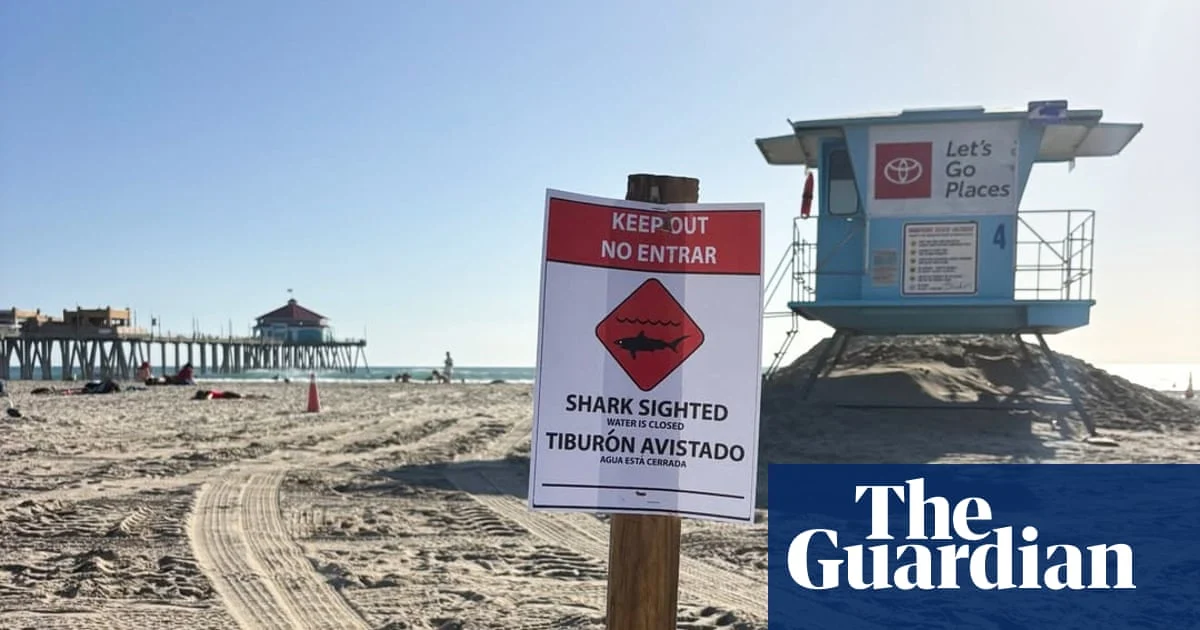
A popular Southern California beach has closed after a credible report of a great white shark exhibiting what officials described as aggressive behavior. Huntington Beach authorities shut down a two-mile stretch of coastline after the animal was observed circling near a lifeguard tower, an action interpreted as threatening under the city’s shark response protocols. The sighting, reported on Tuesday afternoon, prompted immediate precautionary measures from the Huntington Beach Fire Department.
The marine safety division of Huntington Beach confirmed that a 10- to 12-foot great white shark was seen moving in a circular pattern near a lifeguard station, which is classified as aggressive behavior under local shark response protocols. This classification led to the immediate closure of the beach area to protect swimmers and surfers. The fire department stated the report was deemed credible and triggered emergency protocols designed to manage potential shark encounters along the coast.
Key Facts
- A 10-12ft great white shark was reportedly spotted.
- A two-mile stretch of Huntington Beach was closed.
- The shark was seen circling near a lifeguard tower.
- Circling is considered aggressive behavior by marine safety protocols.
- The report was described as credible by the fire department.
Why The Beach Was Closed
The decision to shut down a large section of Huntington Beach came after local authorities received what they called a credible report of a great white shark in the area. The sighting occurred near a lifeguard tower, prompting the fire department to classify the situation as urgent. The shark’s behavior, which involved circling in place, matched criteria outlined in the city’s shark response protocols that indicate elevated risk to human safety. Officials followed established guidelines that require beach closures when sharks display behaviors suggesting potential aggression or territorial presence. Such protocols are typically activated based on visual confirmation by trained observers or lifeguard personnel familiar with marine activity patterns along the coast.
What Happens Next?
While the beach remains closed for public safety, it is unclear how long the shutdown will last or whether additional sightings have occurred since the initial report. Authorities may reassess conditions once sufficient time has passed without further shark activity, though no official timeline was provided in the statement. Beach closures related to shark activity often depend on ongoing monitoring efforts, including aerial surveillance and reports from lifeguards stationed along the shoreline. The fire department indicated that updates would be shared through official channels if new information becomes available or if the threat level changes. In past incidents involving similar sightings, beaches have reopened after several hours or days once the area was cleared of sharks and reassessed by marine safety teams.
Who Is Affected By This Closure
Those directly impacted include surfers, swimmers, and other visitors who regularly use Huntington Beach for recreational purposes. The closure spans a wide two-mile radius, significantly limiting access to parts of the coastline known for consistent surf and high foot traffic during peak times. Local businesses such as surf shops, restaurants, and rental services may also see reduced activity due to fewer visitors arriving at the beach. Lifeguards stationed in the area are likely adjusting their routines to accommodate the increased safety monitoring required during such events. Tourists planning trips to Huntington Beach should expect limited access until officials determine the area is safe again based on updated assessments from marine safety personnel.
What We Know — and What We Don’t
Verified by the source:
- A two-mile stretch of Huntington Beach was closed.
- A 10- to 12-foot great white shark was reportedly spotted.
- The shark was seen circling near a lifeguard tower.
- The fire department called the report credible.
- Circling is considered aggressive behavior by official protocols.
Still unconfirmed:
- The exact time the shark was sighted.
- Whether additional sharks were observed.
- How long the beach closure will remain in effect.
- Confirmation of the shark’s presence via video or photo evidence.
- Details about any follow-up monitoring or patrol schedules.
Why It Matters
Beach closures following shark sightings reflect broader challenges facing coastal communities as wildlife encounters become more frequent. These incidents highlight reliance on established emergency protocols to balance public safety with continued ocean access. Greater awareness helps inform future responses and underscores the importance of accurate reporting backed by verified sources.
What To Watch
Officials have not announced a reopening date, but updates are expected as conditions evolve. [Relates to war-geopolitics and climate-environment.]