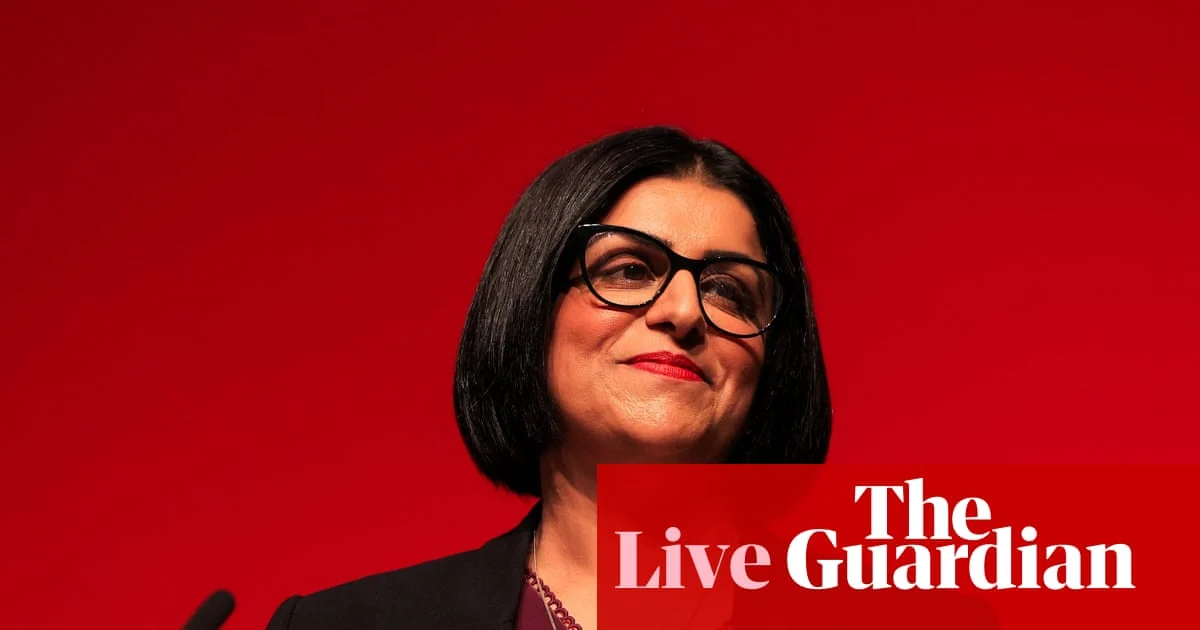
In a speech to the Labour Party conference, the Chancellor said the money New Labour had available in the 1990s is no longer present now, and that austerity, Brexit and the economic fallout from Liz Truss’s mini-budget have contributed to weaker growth compared with the period under Gordon Brown, his predecessor. He added that the government intends to stick to fiscal rules when building the budget around hope rather than spending beyond its means.
The Chancellor did not offer specific figures for the budget, but said adherence to fiscal rules would guide decisions on public spending and taxation. His remarks came as delegates gathered for the annual conference, where economic policy and public finances were expected to dominate discussions. The speech also touched on the need for responsible stewardship of public money amid ongoing pressures on public services and public debt.
KEY FACTS
- Chancellor blames austerity, Brexit and Truss’s mini-budget for poor growth
- Gordon Brown named as predecessor with stronger growth period
- New Labour funding ‘simply not there now’ compared to 1990s
- Vows to stick to fiscal rules in budget built on hope
The Story
What did the Chancellor say about growth?
The Chancellor told the Labour Party conference that current levels of economic growth lag behind those experienced under Gordon Brown, who served as Chancellor and then Prime Minister in the 1990s and 2000s. He attributed the slowdown to several factors: years of austerity following the 2008 financial crisis, the impact of Brexit on trade and investment, and the sharp rise in borrowing costs triggered by the mini-budget introduced by former Prime Minister Liz Truss. Those remarks reflect a broader narrative that successive governments have faced rising debt and constrained public spending capacity.
Sticking to fiscal rules means limiting how much the government can borrow in a single year for day-to-day spending. By framing the upcoming budget around hope, the Chancellor signaled an emphasis on long-term investment and growth rather than short-term spending. He did not give a date or exact figures, but reiterated that controlling debt and stabilizing public finances would remain central goals.
Who is affected by these economic pressures?
Beyond Westminster and party delegates, the Chancellor’s speech touched on pressures facing ordinary voters. Public services have faced years of flat real-terms funding, and many households are coping with high energy costs and inflation. He acknowledged that families are feeling the strain, and said responsible fiscal management is intended to protect essential services over the medium term.
Outside economics, the article also reported that the head of the SDLP, Claire Hanna, called for an international mediator to help resolve a dispute over a unionist parade near the historic Drumcree area — a location linked to some of the worst violence during the Troubles. She said compromise and willingness to mediate were needed so that all sides could walk away with dignity. Those remarks were reported alongside the coverage of Labour conference proceedings.
What We Know — and What We Don’t
Verified by the source:
- The Chancellor spoke at the Labour Party conference about growth, austerity, Brexit and the mini-budget.
- Gordon Brown is named as the predecessor whose period showed stronger growth.
- The speech committed to sticking to fiscal rules in the budget.
- Claire Hanna, head of the SDLP, called for an international mediator on the Drumcree parade dispute.
Still unconfirmed:
- No specific figures or date for the budget were stated in the speech.
- No independent corroborating statement or transcript of the Chancellor’s remarks was cited.
- It is unclear whether the government’s fiscal rules target for the next fiscal year has been finalized.
Why It Matters
Public trust in economic management often hinges on whether voters believe their government can balance growth and responsible spending. With inflation, energy prices and public debt still elevated, fiscal discipline — or the lack of it — continues to shape both election outcomes and day-to-day life for households and businesses. [internal-link category=’economy-markets’] [internal-link category=’politics’]
What To Watch
All eyes now turn to the upcoming budget statement, which officials say will set out how the government plans to combine hope with fiscal restraint. Additional statements from the Chancellor and other delegates are expected during the remainder of the Labour Party conference.