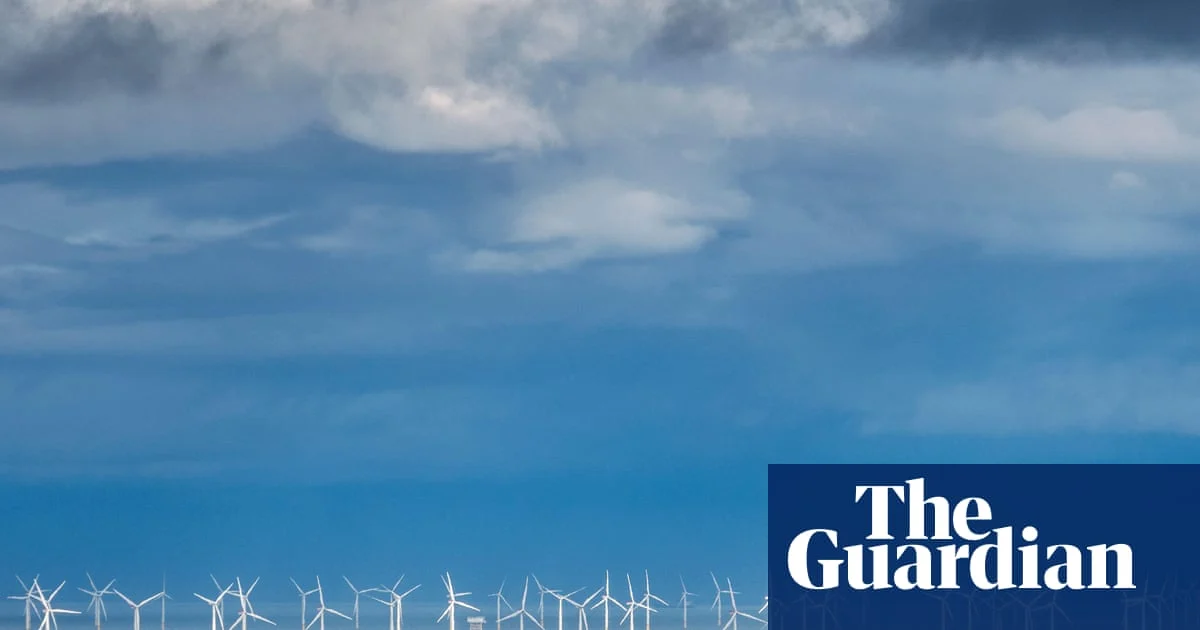
London — The cost of balancing Great Britain’s power grid reached nearly £50m in a single day this week, underscoring rising strain on the network as wind generation surges in some regions while demand clusters elsewhere.
On Wednesday, the grid operator paid £47.9m to switch off wind farms in areas experiencing electricity oversupply and to bring gas plants online in regions facing tight supply, according to Business | The Guardian.
KEY FACTS
- £47.9m spent on grid balancing in one day
- Grid operator paid to switch off wind farms in surplus zones
- Gas plants turned on in areas with tight electricity supply
- Bottlenecks in transmission links driving near-record costs
- Cost of balancing reached nearly £50m a day
THE STORY
What happens next?
The financial burden of grid balancing has climbed sharply in recent months as Britain generated record levels of wind power, much of it in Scotland and northern England where demand is relatively low. At the same time, southern and eastern England often face higher demand, requiring fast-response generation from gas plants.
Transmission bottlenecks mean excess electricity produced in one area cannot always be moved quickly to where it is needed. That mismatch forces operators to curtail renewable output and fire up more expensive fossil fuel plants, increasing daily balancing costs to near all-time highs.
Industry analysts say these spikes reflect infrastructure limits rather than short-term market quirks, suggesting that without major investment in grid upgrades, similar pressures will become routine as wind capacity expands further.
Who is affected?
The rising cost of grid balancing falls on consumers and taxpayers, as the expense is ultimately recovered through energy bills and supplier contributions. Households and businesses pay indirectly for the dual cost of paying wind farms to stop generating and paying gas stations to start producing.
Generators also feel the squeeze. Wind farm operators receive compensation for lost output, while gas plant operators gain revenue from backup contracts. These payments distort normal market signals, encouraging behaviours that may not reflect true energy demand patterns.
Consumer groups have warned that unless grid resilience improves alongside renewable expansion, households could face higher long-term energy costs tied directly to grid management inefficiencies rather than generation affordability.
How did we get here?
Britain’s push toward net-zero emissions has accelerated wind power deployment, particularly offshore in areas connected to weaker transmission networks. Rapid growth outpaced upgrades to grid infrastructure capable of absorbing and redistributing that supply efficiently across the country’s four-nation network.
The grid operator manages supply and demand in real time using economic dispatch tools, including curtailment orders and balancing mechanisms contracts. As renewable shares rise, maintaining frequency and voltage becomes increasingly dependent on flexible resources such as gas plants, battery storage and interconnectors.
Despite long-term plans to invest billions in new transmission lines and smart technologies, current constraints continue forcing costly last-minute interventions during tight supply periods.
WHAT WE KNOW — AND WHAT WE DON’T
Verified by the source:
- The daily cost of balancing Great Britain’s power grid reached nearly £50m
- The grid operator paid £47.9m on Wednesday alone
- Wind farms were switched off in areas with excess electricity
- Gas plants were activated in areas with constrained supply
- Grid balancing costs are described as reaching near-record highs
Still unconfirmed:
- Exact timeframe beyond the single day referenced
- Long-term projections for future grid balancing costs
- Identity of the specific grid operator involved
- Details about planned transmission upgrade schedules or budgets
- Breakdown of how compensation is distributed between generators
WHY IT MATTERS
This spike in grid balancing reflects broader challenges facing energy systems globally as renewables expand faster than supporting infrastructure, risking higher consumer costs unless urgent investment decisions are made.
WHAT TO WATCH
Future announcements from the grid operator and government on transmission investment priorities may clarify whether these near-record costs represent a temporary bottleneck or a persistent structural challenge. For ongoing coverage, follow updates in economy and markets and climate environment.