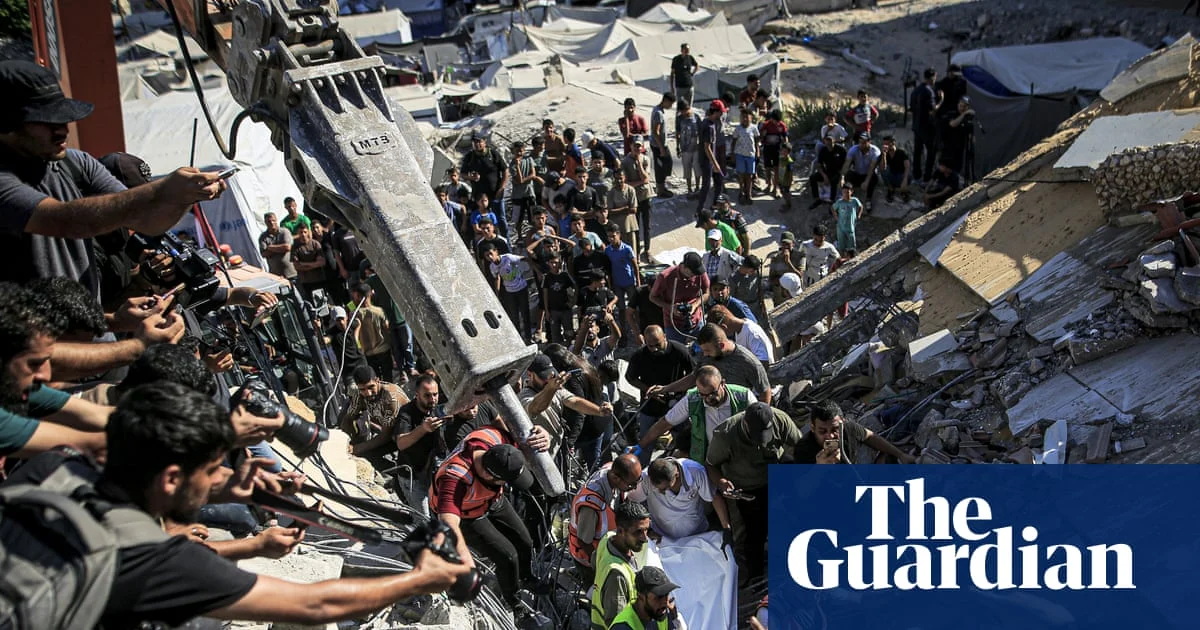
A Gaza City building housing roughly 100 displaced Palestinian families collapsed on Wednesday after being damaged by Israeli strikes, killing at least 19 people as rescue teams searched the rubble for survivors, including children. Rescue workers say the search is being hampered by a lack of heavy machinery.
The Gaza City building collapse occurred in an area where many families have sought shelter, and medical sources say rescuers could hear the voices of people trapped beneath the debris as they worked through the night. Five children were among the dead recovered so far, while 25 injured people were taken to hospital. The situation underscores the dangers civilians face in the aftermath of strikes in densely populated areas.
KEY FACTS
- At least 19 people killed after a Gaza City building damaged by Israeli strikes collapsed.
- The building housed about 100 displaced Palestinian families.
- Rescue efforts are hindered by lack of heavy machinery, according to Gaza civil defence.
- Five children were among the recovered bodies, rescuers said.
- Twenty-five injured people were taken to hospital, with trapped survivors possibly still alive.
What is known about the timeline?
The collapse happened on Wednesday in Gaza City following damage attributed to Israeli strikes. According to the report, rescue workers from Gaza’s civil defence confirmed recovering at least 19 bodies, including five children. They also reported that 25 injured individuals were transported to hospitals for treatment.
Medical sources cited in the story say rescuers could hear voices of people believed to be trapped under the rubble, suggesting the possibility of additional survivors. However, locating and extracting those individuals remains difficult. The lack of heavy machinery is a major constraint slowing the operation.
Who is affected?
The victims and those affected include approximately 100 displaced Palestinian families who were residing in the building at the time of the collapse. Displaced families often gather in structures perceived as safer, but this incident shows how vulnerable they remain even in sheltered spaces.
Beyond the immediate families, the broader community faces ongoing risks from aftershocks, further damage, and the psychological toll of repeated displacement and violence. Hospitals are treating at least 25 injured people, straining medical resources in an already overwhelmed system.
HOW DID WE GET HERE?
The Gaza City building collapse follows Israeli strikes that reportedly damaged the structure, according to the source. Such damage can weaken foundations and load-bearing elements, leading to sudden failure days or weeks later, especially in densely built areas.
This pattern reflects broader hazards faced by civilians living in buildings affected by military action. Even when structures appear standing after a strike, hidden structural damage can cause delayed collapses, making post-strike safety assessments critical for survival.
What We Know — and What We Don’t
Verified by the source:
- The building housed about 100 displaced Palestinian families.
- At least 19 people were killed, including five children.
- Gaza civil defence said the search was hampered by lack of heavy machinery.
- Twenty-five injured people were taken to hospital.
- Rescuers reported hearing voices of possibly trapped survivors.
Still unconfirmed:
- The exact number of survivors or additional casualties.
- The precise time of the initial strike or the collapse.
- Names of victims, officials, or spokespersons involved.
- The specific location within Gaza City beyond the general reference.
- The cause or attribution of the original damage beyond “Israeli strikes.”
WHY IT MATTERS
This Gaza City building collapse illustrates how civilians continue to bear severe risks during and after hostilities, particularly those living in structures damaged by strikes. When buildings fail unexpectedly, entire communities lose not only homes but also loved ones, amplifying humanitarian distress in an already strained environment.
For readers following developments in conflict zones, such incidents highlight the difficulty of ensuring civilian safety even in spaces meant to offer refuge. Understanding these dynamics helps contextualize the wider humanitarian consequences of ongoing warfare and infrastructure damage.
WHAT TO watch
Updates on whether additional survivors are found and the final death toll are expected as rescue operations continue, though heavy machinery shortages may delay progress. International monitors and humanitarian agencies may also issue statements regarding access and conditions for future operations. For related coverage, see our war and geopolitics and health and science sections.