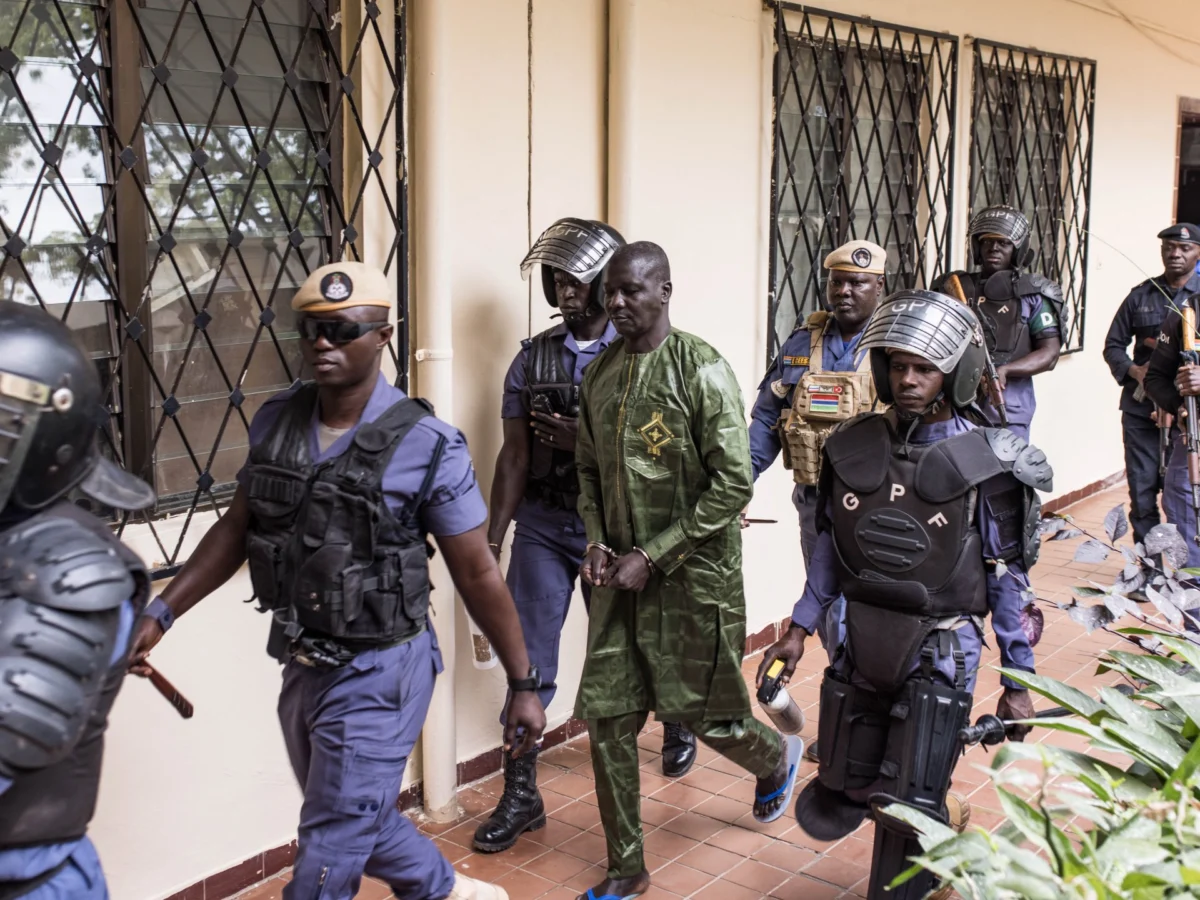
A former Gambian soldier described in reports as a ‘death squad’ leader has appeared in a military court over charges of desertion dating to 2017, shortly after the end of former President Yahya Jammeh’s two-decade rule. The Gambia military trial marks one of the first high-profile prosecutions tied to alleged abuses during Jammeh’s era.
Sanna Manjang is accused of abandoning his post in 2017, a charge that surfaced amid broader efforts by Gambia’s post-Jammeh government to address alleged human rights violations committed under the former regime. His court appearance signals renewed scrutiny of military personnel linked to Jammeh’s inner circle.
Key Facts
- Sanna Manjang faces a Gambia military trial for allegedly deserting the army in 2017.
- The charges stem from his reported role as a ‘death squad’ leader under former President Yahya Jammeh.
- Jammeh ruled The Gambia for 20 years before stepping down in 2017.
- The case highlights ongoing efforts to prosecute alleged abuses from Jammeh’s regime.
- No verdict or sentencing details have been released as of this report.
What happens next?
The Gambia military trial will proceed under the country’s military justice system, which governs offenses committed by active-duty personnel. While desertion is typically considered a straightforward disciplinary infraction, this case carries symbolic weight because it involves someone allegedly tied to serious human rights violations during Jammeh’s rule.
Legal experts note that the prosecution of former state actors for wartime or authoritarian-era crimes often faces practical hurdles, including incomplete records and witness intimidation. However, Gambia’s transitional justice mechanisms—including the defunct Truth, Reconciliation and Reparations Commission—have kept such cases in public focus.
If convicted, Manjang could face imprisonment or a dishonorable discharge, depending on how military law interprets the severity of his alleged actions. Human rights observers are watching whether this trial expands beyond desertion charges to include more serious allegations related to enforced disappearances or killings attributed to his unit.
Who is affected?
Families of victims from Jammeh’s era may see renewed attention on unresolved disappearances and killings allegedly carried out by elite units known locally as ‘death squads.’ These groups were reportedly responsible for suppressing opposition and intimidating civilians during Jammeh’s 20-year rule.
The trial also affects the Gambian military itself, which has struggled to rebuild public trust following years of politicized command structures and accusations of complicity in abuses. Reforming the armed forces remains central to President Adama Barrow’s reform agenda.
Civil society organizations have called for transparency throughout the proceedings, urging authorities to allow independent monitoring and ensure due process protections for both the accused and any potential witnesses. The outcome of this Gambia military trial could set precedent for future prosecutions involving former regime loyalists.
How did we get here?
In 2017, Yahya Jammeh fled The Gambia after losing a presidential election, ending 20 years of authoritarian rule marked by widespread repression. His departure opened space for democratic institutions to investigate alleged crimes committed under his government.
The emergence of figures like Sanna Manjang—reportedly linked to clandestine operations targeting opposition supporters—has fueled demands for accountability. While many former officials have been investigated or prosecuted in absentia, few have faced formal trials within Gambia’s domestic courts.
This current Gambia military trial reflects a delicate balance between justice and stability as the nation grapples with legacy issues while building new governance norms. International partners continue to monitor developments closely, offering technical assistance where needed.
What We Know — and What We Don’t
<n
- Verified by the source:
- – Sanna Manjang appeared in a military court on desertion charges from 2017.
– He was reportedly associated with a ‘death squad’ during Jammeh’s rule.
– Jammeh governed The Gambia for 20 years until 2017.
– The case is part of wider accountability efforts targeting ex-regime figures.
– No information about verdict timing or penalties has been disclosed. - Still unconfirmed:
- – Specific identity or official capacity of the court handling the case.
– Whether additional charges beyond desertion will be filed.
– Details about alleged ‘death squad’ activities or number of victims involved.
– Timeline for final judgment or appeal processes.
– Whether international observers or legal teams are officially present.
Why It Matters
This Gambia military trial represents a rare instance of domestic prosecution targeting a figure allegedly involved in state-sanctioned violence during an authoritarian period. For survivors and families seeking redress, it underscores the challenges—and possibilities—of pursuing justice through transitional legal frameworks rather than international tribunals alone.
What To Watch
Future hearings in the Gambia military trial may reveal whether prosecutors expand charges beyond desertion to include war crimes or torture allegations. Observers expect continued pressure from civil society groups demanding full disclosure and victim participation.