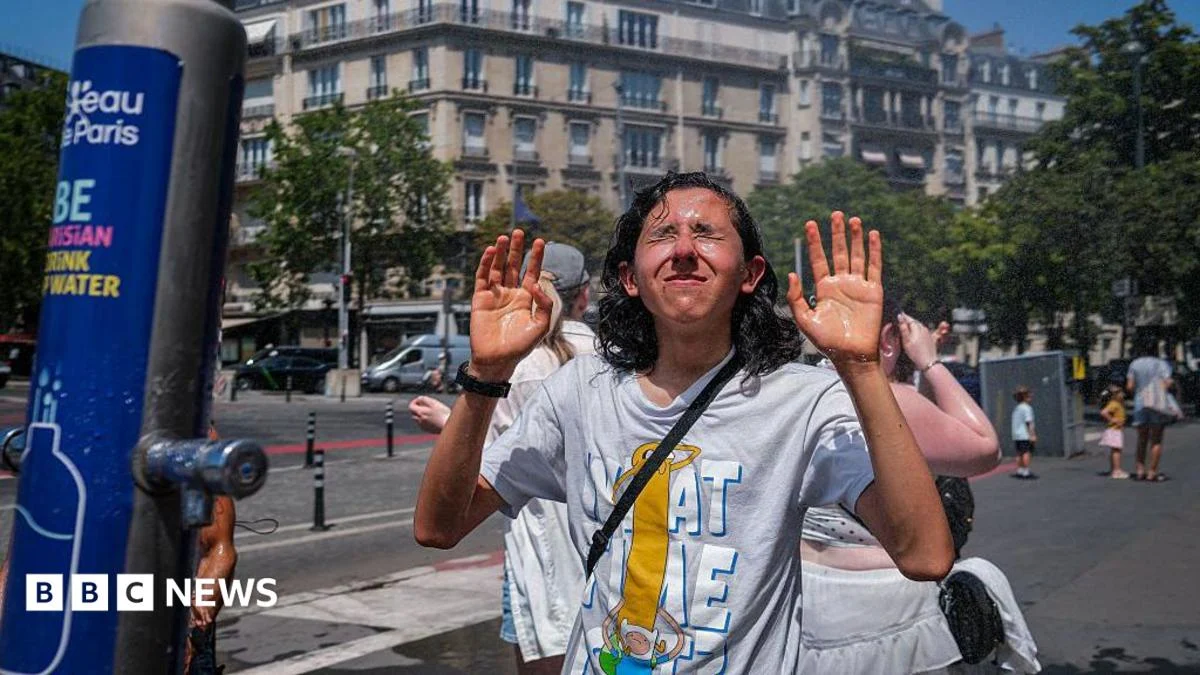
Temperatures in southern France peaked at 42.1°C on Tuesday, prompting officials to issue a level‑4 health alert – the highest level in the country’s emergency scale.
Heat‑soaked streets in Paris turned into outdoor ovens, and a teenage girl in Toulouse was rushed to hospital with heat‑stroke, underscoring the human toll.
Now the Europe heatwave is moving east. Meteo‑France and German weather services warn that parts of western Germany could see readings touching 40°C by the weekend.
What the numbers reveal
In the German state of North Rhine‑Westphalia, the forecast shows a 38‑40°C band stretching from Cologne to Dortmund. In Bavaria, the model projects a short‑lived 39°C spike in Munich.
France’s health ministry reports an uptick in heat‑related emergencies among people under 30, a demographic usually less vulnerable to extreme heat.
Why does this matter?
When a heatwave hits densely populated regions, hospitals strain under a surge of dehydration, heart‑failure and respiratory cases. The French health alert triggers automatic measures: opening cooling centres, extending opening hours of public pools, and advising workers to limit outdoor labor.
Economically, the economy and markets feel the pressure as energy demand spikes, pushing electricity prices higher and testing the resilience of Europe’s aging grid.
Who is affected?
Beyond the 67 million French citizens, the heat threatens roughly 83 million people in Germany, plus neighboring Belgium, the Netherlands and Luxembourg, all of which share the same high‑pressure ridge.
Younger residents, outdoor workers, and the elderly bear the brunt. Schools in several French departments have cancelled afternoon classes, and German municipalities are issuing “stay‑in‑cool” advisories.
What happens next?
The ridge that fuels the Europe heatwave is expected to linger into next week before a cold front from the Atlantic finally weakens it. Forecast models, however, show the possibility of a secondary surge in late August.
Health officials urge citizens to hydrate, avoid strenuous activity during peak hours, and check on neighbours who live alone.
As the heat drifts east, researchers monitor whether this pattern signals a new norm for European summers, a question that will shape policy, infrastructure and daily life for years to come.
Meta description: France raises health alert to level‑4 as the Europe heatwave moves east, with Germany facing temperatures up to 40°C and young deaths reported.