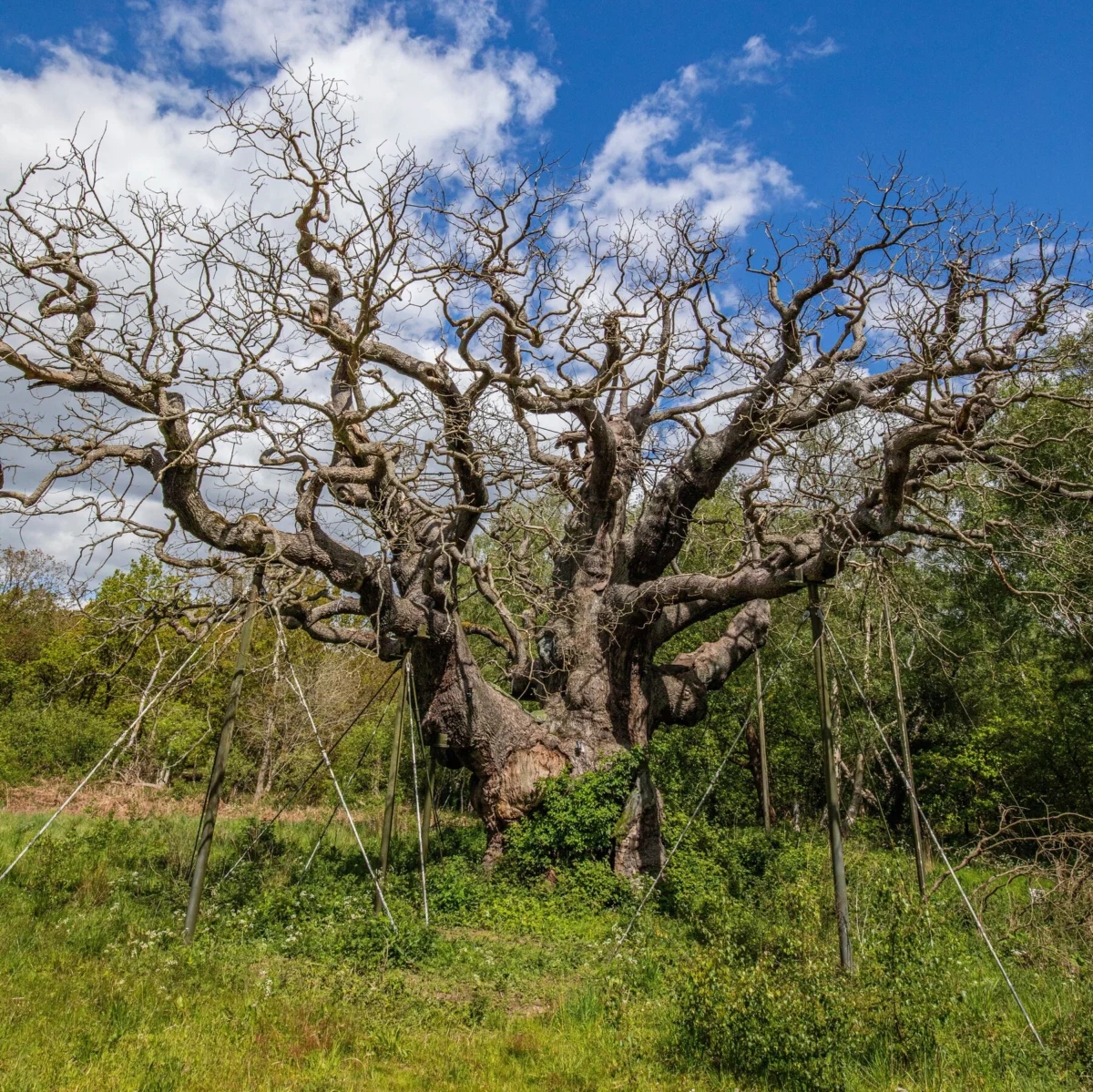
England’s ancient oak trees, some standing for hundreds of years, are dying due to extreme heat and prolonged drought. These trees, deeply rooted in the national imagination, face increasing stress from climate conditions that threaten their survival.
The loss of these oaks would not only impact the landscape but also the ecosystems and cultural heritage they support. Their decline highlights the broader effects of climate change on natural landmarks.
KEY FACTS
- England’s ancient oak trees are dying due to extreme heat and drought.
- These trees have lived for hundreds of years.
- They play a key role in the national imagination.
WHAT IS HAPPENING TO THE TREES?
The extreme temperatures and drought conditions in England are placing unprecedented stress on ancient oak trees. These trees, which have weathered centuries of change, are now struggling to survive the intensifying climate.
Oaks are particularly vulnerable to prolonged dry spells, which weaken their resilience to pests and diseases. The cumulative effect of these stressors is accelerating their decline, with some already succumbing to the harsh conditions.
WHY ARE THESE TREES IMPORTANT?
Ancient oak trees are more than just natural landmarks; they are living monuments to England’s history and culture. Many have stood witness to significant events and are woven into folklore and national identity.
Ecologically, these trees support diverse wildlife, providing habitats for countless species. Their loss would disrupt ecosystems and diminish biodiversity, with long-term consequences for the environment.
WHAT WE KNOW — AND WHAT WE DON’T
Verified by the source:
- Extreme heat and drought are causing the death of ancient oak trees in England.
- These trees have lived for hundreds of years and hold cultural significance.
Still unconfirmed:
- The exact number of trees affected by the current conditions.
- Whether mitigation efforts are being planned or implemented.
WHY IT MATTERS
The decline of England’s ancient oak trees underscores the far-reaching impacts of climate change. These trees are irreplaceable symbols of natural and cultural heritage, and their loss would be felt deeply by future generations.
WHAT TO WATCH
Monitoring the health of these trees and potential conservation efforts will be critical in the coming months. The response to their decline may signal broader strategies for protecting vulnerable ecosystems.