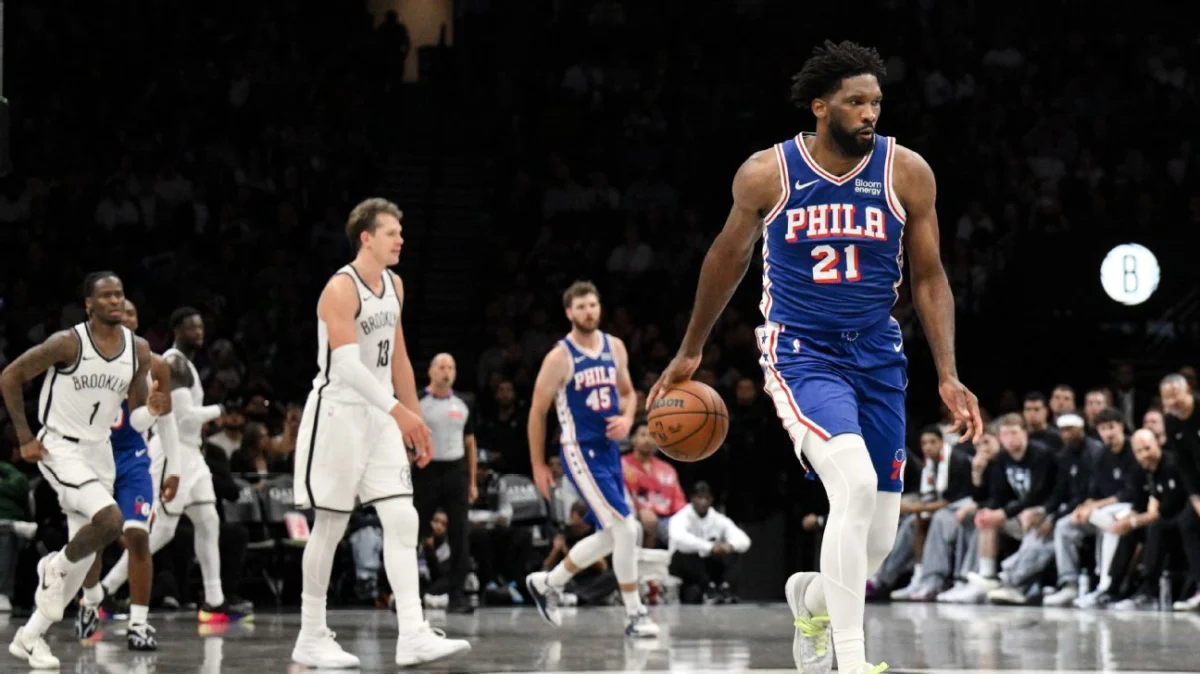
Joel Embiid rejected a recent report claiming LeBron James confronted him about tardiness to practice, saying the story ‘never happened’ and left him questioning why he is often targeted. The Philadelphia 76ers star described the report as ‘unfortunate’ and expressed frustration over what he called an ‘easy target’ dynamic.
In discussing the incident, Embiid emphasized that the alleged exchange did not occur and suggested that stories about him may be misleading or exaggerated. His comments came amid ongoing media attention surrounding both players and their teams.
Key Facts
- Joel Embiid called the LeBron James report ‘not true.’
- The reported confrontation allegedly involved LeBron James addressing Embiid over lateness to practice.
- Embiid stated the incident ‘never happened.’
- He labeled himself an ‘easy target’ due to the coverage.
- Embiid described the report as ‘unfortunate.’
What Happened With the Report?
The disputed story centered on an alleged interaction between Joel Embiid and LeBron James regarding punctuality at a team practice session. Embiid publicly disputed the narrative, insisting that no such conversation took place between the two NBA stars. His denial highlights the challenges athletes face when addressing media speculation about private interactions.
NBA players frequently become subjects of off-court narratives that blend hearsay with reported facts. In this case, Embiid’s pushback signals dissatisfaction with how the situation was portrayed, suggesting a pattern of being singled out in media coverage.
Why Athletes Push Back on Stories
Public figures like Joel Embiid often find themselves at the center of narratives that mix opinion with reported events. When denied a chance to respond, athletes risk being typecast by inaccurate accounts. Embiid’s characterization as an ‘easy target’ reflects broader concerns about how certain players are framed in sports journalism.
Calling the report ‘unfortunate,’ Embiid underscored the importance of factual accuracy in reporting sensitive interpersonal dynamics. This incident illustrates tensions between athlete privacy and media interest in high-profile personalities like himself and LeBron James.
Have Other Reports Been Addressed?
While Joel Embiid has responded directly to the LeBron James report, it remains unclear whether similar stories have prompted formal rebuttals. His openness in dismissing the claim suggests growing frustration among athletes over unchecked speculation. Whether other incidents will receive equal scrutiny depends largely on future editorial decisions by outlets covering the NBA.
The lack of confirmation from additional sources leaves much of the context surrounding the alleged confrontation unverified. As more attention turns to player conduct off the court, transparency becomes increasingly critical for maintaining credibility in sports reporting.
What We Know — and What We Don’t
Verified by the source:
- Joel Embiid denied the report involving LeBron James.
- Embiid referred to the report as ‘not true’ and ‘unfortunate.’
- He described himself as an ‘easy target.’
- The source is ESPN via www.espn.com – TOP.
Still unconfirmed:
- The specific details of the alleged confrontation.
- Whether LeBron James or his representatives commented.
- The timing and location of the reported incident.
- Any independent corroboration of Embiid’s version.
Why It Matters
This situation touches on the broader challenge facing modern sports media: balancing timely storytelling with rigorous fact-checking. For readers following the NBA, distinguishing verified exchanges from speculative narratives helps foster trust in reported coverage. [Link to sports category archive]
What To Watch
No further official statements have been announced by either player or their teams. Future developments may include clarifications from team spokespeople or additional reporting that either supports or refutes Embiid’s account. [Link to latest news]