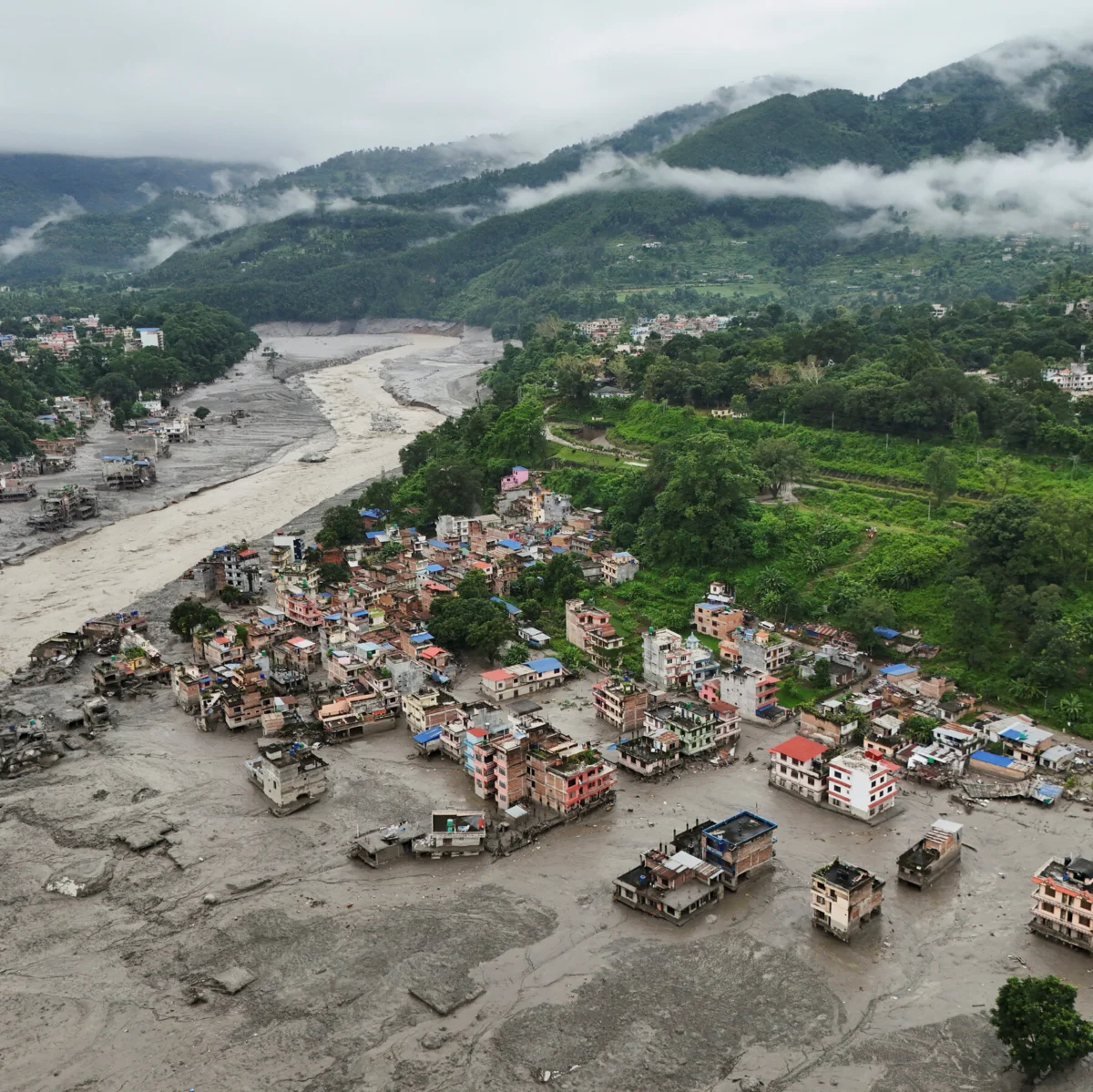
An ice avalanche high in the Himalayas triggered a deadly flood that swept through Nepal and Tibet, pulverizing ice into a massive volume of water. The event released vast amounts of energy as the ice tumbled thousands of feet, leading to significant destruction in the region.
The floodwaters caused by the avalanche have resulted in fatalities, though the exact number remains unclear. Emergency responses are likely underway, but details about rescue operations or damage assessments have not been confirmed.
KEY FACTS
- An ice avalanche in the Himalayas caused a catastrophic flood.
- The avalanche released vast energy, turning ice into a significant volume of floodwater.
- The flood impacted both Nepal and Tibet.
- Casualties have been reported, but exact numbers are unconfirmed.
HOW DID THIS HAPPEN?
The flood originated from a high-altitude ice avalanche—a phenomenon where large ice masses break free and cascade down steep terrain. As the ice fell thousands of feet, it fragmented and transformed into water due to the immense kinetic energy involved. Such events are rare but can be devastating, particularly in mountainous regions where communities are vulnerable to sudden water surges.
WHO IS AFFECTED?
The floodwaters spread through areas of Nepal and Tibet, likely affecting local populations, infrastructure, and ecosystems. The rugged terrain of the Himalayas makes rescue and relief efforts challenging, and remote communities may be particularly at risk. Authorities in both regions are expected to assess the damage and coordinate disaster response, though specific actions have not yet been detailed.
WHAT WE KNOW — AND WHAT WE DON’T
Verified by the source:
- A high-altitude ice avalanche triggered the flood.
- The flood impacted Nepal and Tibet.
- Significant energy was released as ice transformed into floodwater.
Still unconfirmed:
- The exact number of casualties or missing persons.
- Current rescue operations or emergency measures in place.
- Long-term environmental or infrastructural impacts.
WHY IT MATTERS
This disaster highlights the increasing risks posed by climate-related events in high mountain regions. As global temperatures rise, glacial instability may lead to more frequent ice avalanches and flooding, threatening vulnerable communities in the Himalayas and beyond.
WHAT TO WATCH
Official updates from Nepalese and Tibetan authorities will provide further clarity on casualties, damage assessments, and recovery efforts. Scientists may also analyze the event to better understand its causes and implications for future risks.