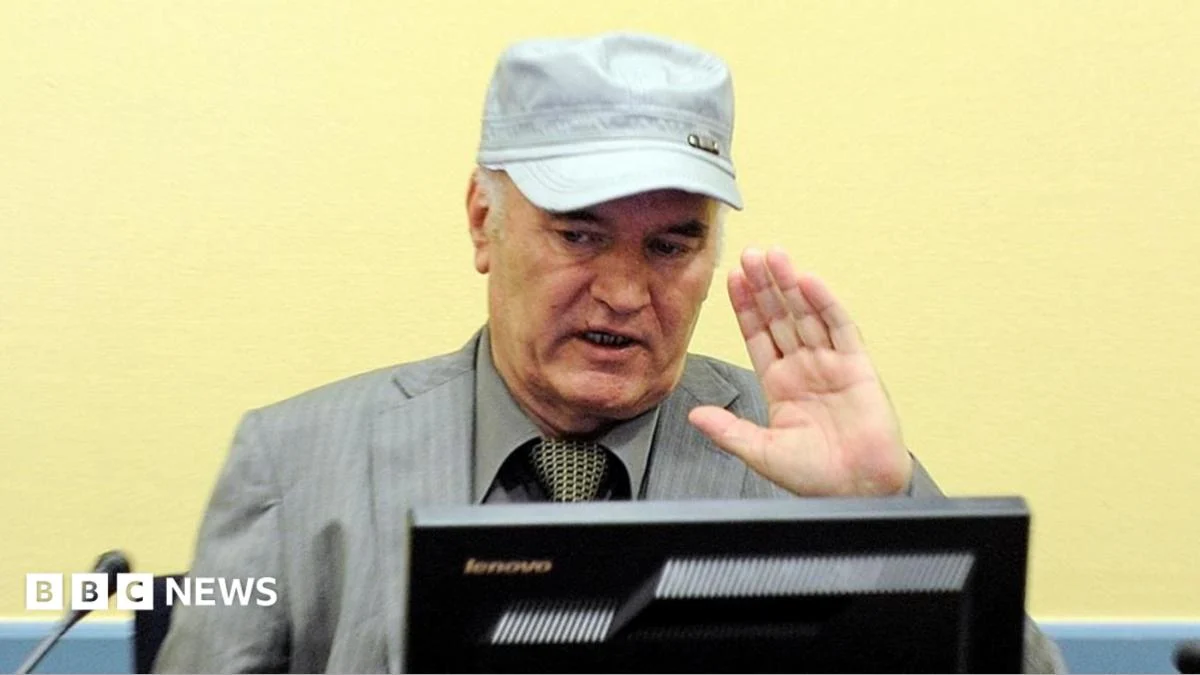
Ratko Mladić, the Bosnian Serb military leader convicted of genocide and war crimes during the 1990s Balkan conflicts, has died aged 84. His death marks the end of a dark chapter in European history that saw some of the worst atrocities on the continent since World War II.
Mladić was found guilty in 2017 by the International Criminal Tribunal for the former Yugoslavia (ICTY) for his role in the Srebrenica massacre and other crimes during the Bosnian War (1992-1995). The BBC reports he died while serving his life sentence, though no details about the cause or circumstances of his death were provided.
KEY FACTS
- Ratko Mladić died at age 84
- He was convicted in 2017 for genocide, war crimes and crimes against humanity
- His crimes occurred during the wars in former Yugoslavia between 1992-1995
- He received a life sentence from the UN tribunal
- The conviction related to atrocities including the Srebrenica massacre
WHO WAS RATKO MLADIĆ?
As commander of the Bosnian Serb Army during the break-up of Yugoslavia, Mladić became one of Europe’s most wanted men for his role in the ethnic cleansing campaigns that targeted Bosnian Muslims and Croats. The Srebrenica massacre in July 1995 — where approximately 8,000 Bosniak men and boys were killed — became the most notorious event under his command, later classified as genocide by international courts.
WHY WAS HIS CONVICTION SIGNIFICANT?
Mladić’s 2017 conviction represented one of the final major cases for the ICTY, which was established specifically to prosecute atrocities committed during the Yugoslav wars. The lengthy trial (2012-2017) and eventual life sentence marked an important, though belated, measure of justice for survivors and victims’ families. His death in custody means he served less than six years of his life sentence, a fact likely to stir mixed reactions across the Balkans.
WHAT WE KNOW — AND WHAT WE DON’T
- Verified by the source:
- Mladić died at age 84
- He was serving a life sentence for war crimes
- He was convicted in 2017 for genocide and crimes against humanity
- Still unconfirmed:
- Exact cause and date of death
- Location where he died
- Immediate reactions from victims’ groups or officials
- Plans for his burial
WHY IT MATTERS
Mladić’s death closes one of the final chapters of the Yugoslav wars’ legal reckoning, though divisions persist in the region. His crimes exemplified the brutality of ethnic conflict and challenged international institutions’ ability to prevent such atrocities. That he ultimately faced justice, however delayed, reinforced important principles of accountability even for high-ranking perpetrators.
WHAT TO WATCH
Reactions from the Balkans region — particularly Bosnia and Serbia — to Mladić’s death may indicate whether his legacy continues to divide communities. Independent verification of circumstances surrounding his death may emerge from official prison authorities or the UN tribunal system.