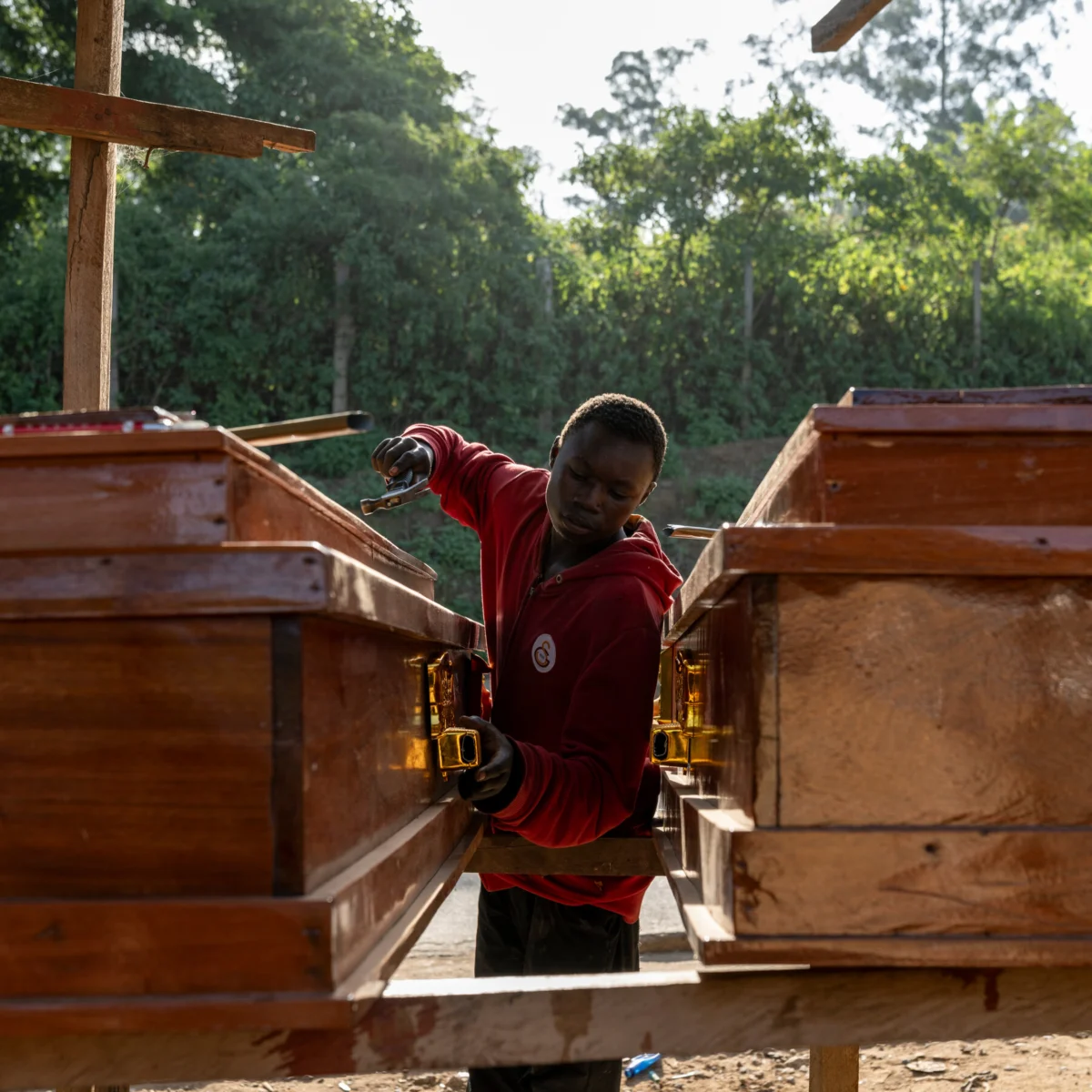
Coffin makers in Bunia, a city affected by Ebola, say they are performing a public service, but the virus has intensified discussions around safe burial practices. While their role is essential, concerns about contamination risks have made their work controversial.
The debate highlights tensions between cultural burial traditions and public health safety measures during disease outbreaks. With Ebola transmission risks linked to handling bodies, safe burials have become a critical part of containment strategies.
Key Facts
- Coffin makers in Bunia say they provide a public service.
- Ebola has placed them at the center of a debate around safe burials.
Why Safe Burials Matter
Ebola spreads through direct contact with bodily fluids, including those of deceased victims. Safe burials, conducted by trained teams, minimize infection risks. Traditional burial practices, however, often involve close contact, raising concerns about disease transmission. Coffin makers, while essential, operate in a sensitive space between cultural norms and medical necessity.
The Debate in Bunia
Multiple coffin makers in Bunia have defended their work as vital to the community. However, health authorities emphasize that burials must follow strict protocols to prevent further Ebola transmission. This tension between tradition and safety continues to shape local discussions.
What We Know — and What We Don’t
Verified by the source:
- Coffin makers in Bunia describe their work as a public service.
- Ebola has made safe burials a contentious issue.
Still unconfirmed:
- Whether health officials have imposed formal restrictions on local coffin makers.
- The exact number of Ebola cases linked to unsafe burials in Bunia.
Why It Matters
The debate over coffin makers in Ebola-affected regions underscores broader challenges in balancing public health precautions with cultural practices. Containment efforts must navigate local sensitivities while preventing disease spread.
What To Watch
Whether Bunia authorities issue new guidance for burial practices and how coffin makers adapt to any safety changes.