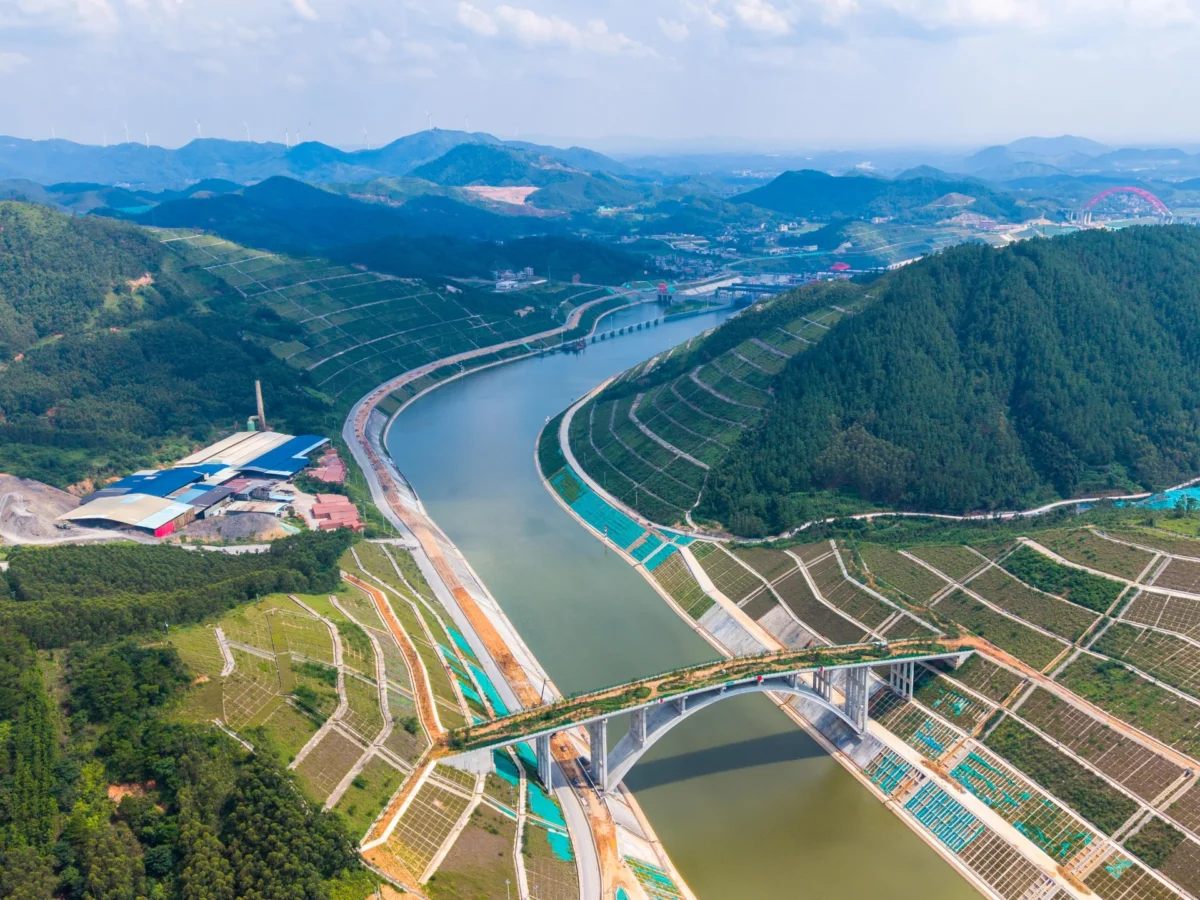
China’s first modern river-to-sea canal, known as the Pinglu Canal, is positioned to serve as a new gateway linking inland regions to Southeast Asian markets, according to reports. The waterway is designed to streamline maritime trade routes and support faster movement of goods between southern China and neighboring countries across the South China Sea.
By enabling vessels to bypass longer coastal passages, the canal could lower both transportation time and expenses for shippers, potentially reshaping how cargo flows between China and Southeast Asia. While specific operational timelines remain unconfirmed, project planners say the canal will connect existing river systems with deep-sea ports once completed.
KEY FACTS
- Pinglu Canal is China’s first modern river-to-sea canal.
- The canal is intended to function as a new gateway to Southeast Asia.
- It aims to cut down time and costs of trade to Southeast Asia.
What Is the Pinglu Canal?
The Pinglu Canal represents a significant infrastructure push by China to modernize its inland logistics network. Designed to bridge river transport with ocean-going shipping, the project aligns with broader national strategies to strengthen intermodal connectivity. Officials have described the canal as part of efforts to boost regional trade efficiency and reduce reliance on traditional coastal shipping lanes.
While the exact dimensions and route details are not publicly disclosed, canals of this type typically accommodate medium-sized freight vessels and integrate with rail and road networks along their corridors. Construction progress and technical specifications have yet to be independently verified beyond initial announcements referenced in the source material.
Why This Matters for Regional Trade
For businesses engaged in China-Southeast Asia commerce, the Pinglu Canal may offer a strategic shortcut that shortens delivery schedules and trims fuel costs. This advantage could be particularly relevant for perishable goods, time-sensitive shipments, and companies seeking alternatives amid shifting global supply chain dynamics.
Beyond commercial benefits, improved canal access might stimulate development in previously underserved provinces and cities along the corridor. Analysts note that such projects often attract investment in adjacent industries like warehousing, customs services, and manufacturing zones — though long-term outcomes depend heavily on implementation and maintenance standards.
What We Know — and What We Don’t
Verified by the source:
- The canal is referred to as China’s first modern river-to-sea canal.
- It is positioned as a new gateway to Southeast Asia.
- Its stated purpose includes cutting down trade time and costs.
Still unconfirmed:
- The precise location, length, or engineering features of the canal.
- Projected completion date or current construction status.
- Estimated reduction percentages in trade transit times or costs.
- Which ports or regions will directly benefit from the route.
Why It Matters
The Pinglu Canal reflects China’s ongoing effort to diversify and enhance its trade infrastructure, which can influence economic relationships throughout East and Southeast Asia. As regional powers compete to control logistics corridors, new transport links like this one play a crucial role in determining commercial advantage and geopolitical influence.
What To Watch
Future updates on construction milestones, port integrations, and trial operations would help clarify whether the Pinglu Canal delivers on its promised trade advantages. International observers may also watch for data on actual usage rates and cost savings once full operations begin.