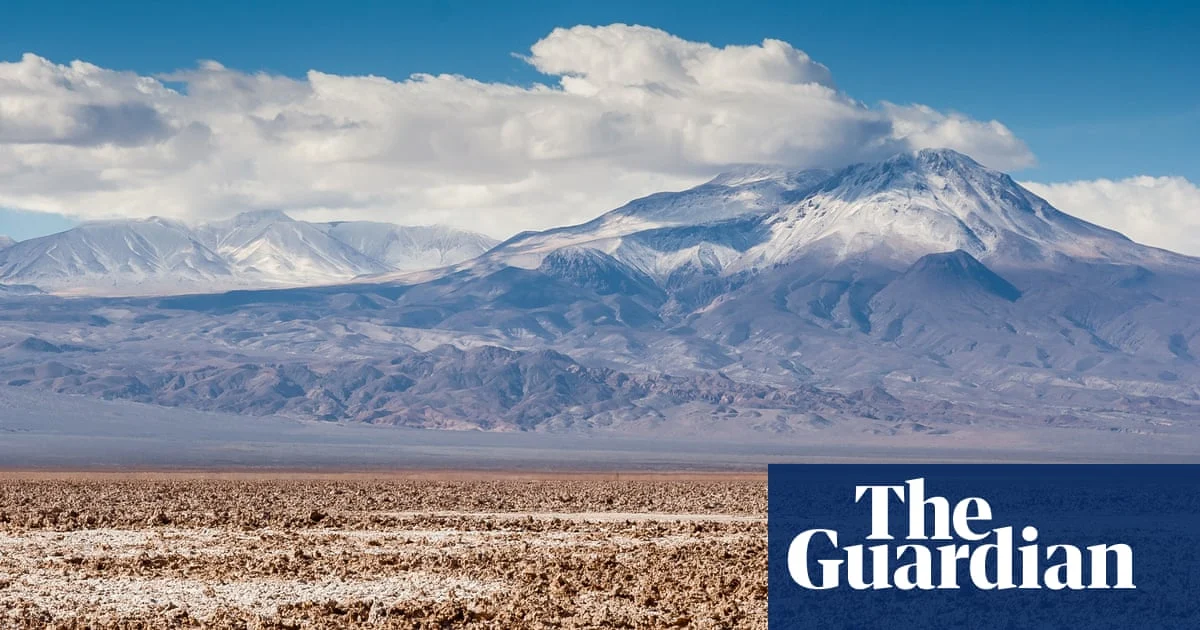
In Chile’s Atacama desert, lithium mining essential to the global climate effort is driving rising social and environmental harms — revealing the extractive frontiers of green capitalism.
Salt flats spanning parts of Argentina, Bolivia, and Chile host vast lithium reserves targeted for battery production. On the Chilean side, researchers observe stark terrain shifts — broad basins, steep ascents, and the looming Licancabur volcano — as altitude alters vegetation and humidity.
KEY FACTS
- Chilean salt flat reflects green capitalism’s extractive frontiers.
- Lithium extraction supports climate goals but triggers social and environmental costs.
- The Atacama desert spans Argentina, Bolivia, and Chile.
- Licancabur volcano overlooks the Chilean extraction zone.
- Altitude changes shift vegetation and humidity levels.
What drives the growing toll?
Lithium mining powers the renewable energy transition but demands intensive water use and land disruption in fragile desert ecosystems. Communities near extraction sites report dwindling water supplies and cultural displacement. Environmental groups warn of ecosystem collapse as brine pools expand across salt flats.
The Chilean government regulates mining licenses but struggles to balance economic gains with community protections. Indigenous groups voice concerns over land rights and resource access. International demand for clean-energy metals intensifies pressure on Andean regions.
Green capitalism frames lithium as a climate solution, yet critics argue it reproduces colonial extraction patterns. Investors pour capital into Chilean projects despite local opposition. Technology firms race to secure supplies for battery manufacturing.
Who is affected most?
Indigenous communities bear disproportionate impacts from lithium operations. Water scarcity forces migration from rural villages. Researchers and activists document rising tensions between developers and residents.
Regional governments seek revenue sharing agreements with mining companies. Labor unions demand safer working conditions and fair wages. Ecosystem researchers track biodiversity loss across high-altitude wetlands.
International climate policies indirectly fund extraction expansion. NGOs call for stricter oversight and restorative practices. Local leaders push for community-led consent mechanisms in project planning.
What We Know — and What We Don’t
Verified by the source:
- Lithium extraction occurs in Chilean portion of Atacama salt flat.
- Social and environmental costs are rising with extraction.
- Licancabur volcano is visible near extraction sites.
- Altitude influences vegetation and humidity in the region.
Still unconfirmed:
- Exact rate or volume of lithium output.
- Specific community names affected by mining.
- Government officials involved in licensing decisions.
- Total number of active mining concessions.
Why It Matters
This story connects green capitalism to real-world trade-offs shaping the [economy-markets](/) and [climate-environment](/) sectors. Readers should know how climate solutions can carry hidden costs for vulnerable populations.
What To Watch
Future policy changes or licensing reviews may reshape lithium extraction practices in Chile. Stakeholder negotiations between [economy-markets](/) actors and communities will determine long-term outcomes.