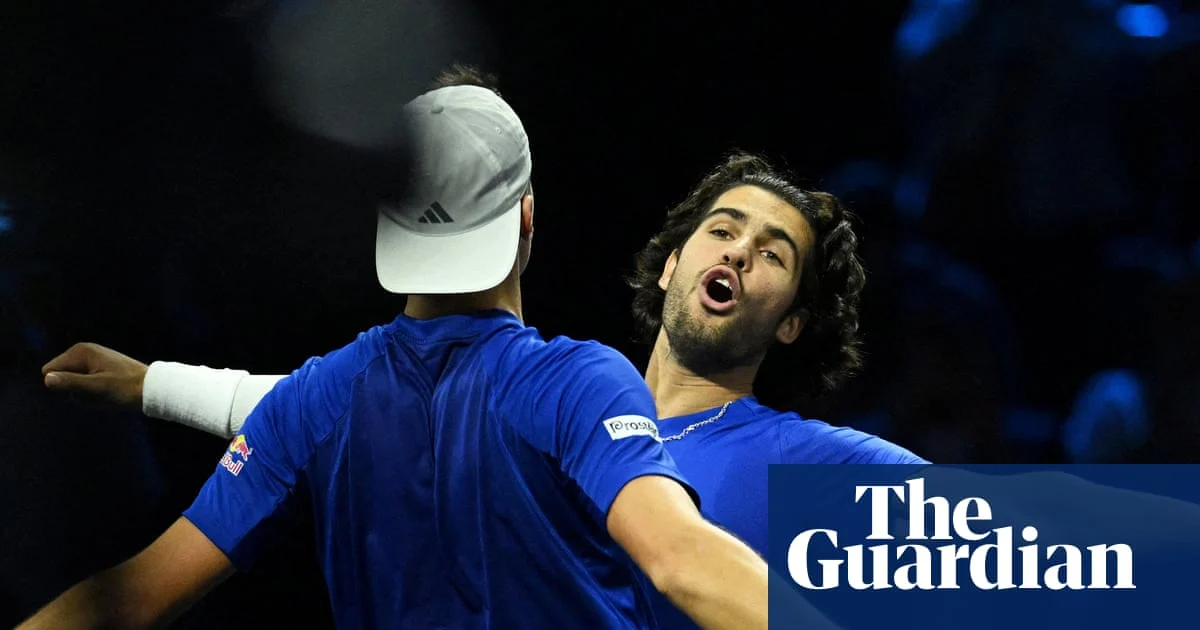
Carlos Alcaraz played a pivotal role in Europe’s commanding 3-1 lead over Team World after the opening day of the Laver Cup, combining competitive play with visible enthusiasm and tactical guidance from the sidelines. His animated support and strategic input stood out as Europe asserted early control in the team competition.
Key Facts:
- Europe leads Team World 3-1 after the opening day of the Laver Cup.
- Carlos Alcaraz won a doubles match alongside Jakub Mensik.
- Alcaraz actively cheered, encouraged teammates, and offered tactical advice throughout the day.
- He suggested specific strategies to Casper Ruud, including down-the-line backhands and drop shots.
- The event is Alcaraz’s third Laver Cup appearance.
On-Court Leadership Beyond Play
While Alcaraz may not have been the only player on the court, his energy off it was unmistakable. After Casper Ruud secured a hard-fought point with a decisive final shot, Alcaraz reacted with visible excitement, even sliding down his seat in celebration. This level of engagement reflects his awareness of his standing within the team environment. As a seven-time Grand Slam champion, Alcaraz has quickly become one of the defining figures of the Laver Cup format, where individual talent blends with collective strategy. His actions suggest that leadership in team tennis extends far beyond personal performance. By offering real-time coaching and encouragement, he reinforced Europe’s cohesion during critical moments. These interactions underscore how elite players adapt to collaborative formats where influence comes not just from skill, but also from presence and communication.
What Tactics Did Alcaraz Recommend?
During one exchange with Ruud, Alcaraz proposed tactical adjustments aimed at pushing opponent Francisco Cerundolo into difficult positions. Specifically, he advised using more down-the-line backhands and drop shots. Whether or not Ruud had the tools to execute those suggestions perfectly, Alcaraz’s reasoning revealed a mindset focused on control through unpredictability. He emphasized making the opponent think more rather than simply hitting harder. That philosophy aligns closely with modern doubles and team-based strategies that prioritize rhythm disruption. The insight adds another layer to Alcaraz’s profile beyond raw power or speed—an understanding of psychological warfare and pattern play. It also hints at how veteran captains mentor younger stars in adapting their game plans mid-match.
What Happens Next?
The outcome of the opening day sets a high bar for Team World heading into the second round. Europe will look to maintain momentum while managing player fatigue and scheduling complexities. Meanwhile, Team World must regroup tactically and emotionally following their slow start. The shift from singles to doubles and back again demands versatility—especially when facing teams buoyed by strong early results. Each session introduces new pairings, shifting dynamics, and opportunities for redemption or consolidation.
What We Know:
- Europe holds a 3-1 advantage over Team World after day one.
- Alcaraz won doubles with Jakub Mensik and provided sideline coaching.
- He recommended tactical changes to Ruud during match play.
- This marks Alcaraz’s third appearance in the Laver Cup.
Still Unconfirmed:
- Exact scores from individual matches are not detailed here.
- No information given about remaining roster availability or substitutions.
- Comments from coaches Yannick Noah or Tim Henman were not reported.
A single-source report limits our ability to validate claims independently, but it offers rare insight into how top athletes operate within team structures. The Laver Cup continues, and Europe’s strong start puts pressure squarely on their rivals. This dynamic illustrates why even informal leadership roles matter in professional sports contexts.
Why It Matters
The Laver Cup highlights evolving models of athletic collaboration, particularly in individual sport disciplines like tennis. Stories like Alcaraz’s demonstrate how personality, mentorship, and adaptability contribute to success. For fans and aspiring players alike, witnessing such moments helps reshape narratives around what makes champions—not only technically gifted, but also emotionally intelligent contributors to group efforts.
What To Watch
Future sessions will determine whether Europe can sustain its edge or if Team World mounts a comeback. Observers should note how Alcaraz influences subsequent matches, either through continued sideline presence or further on-court contributions.